(I actually wrote this back in 2019 for a university blog that fell through…but now I’m back in the office and therefore back working in cafes I thought why not publish this finally on my own blog!)
I don’t know about you but I appreciate a change of scenery and find it difficult to sit and work in the same place for hours or days on end. I get fidgety, I start to worry that I’m bothering my colleagues, I get distracted and then I just start wasting time. As such, I’ve already sussed out a handful of cafes around Aberdeen that I love to work in. Sometimes I just go to one before or after some office time, sometimes I spend the whole day away and take myself on a little café circuit. Strangely that almost feels like a little holiday. I’m a great believer in the saying ‘a change is as good as a rest’.
Short disclaimer – obviously check with your supervisor that it’s okay for you to go AWOL for a day. Open and honest communication between you and your supervisors is key but every supervisory relationship is different.
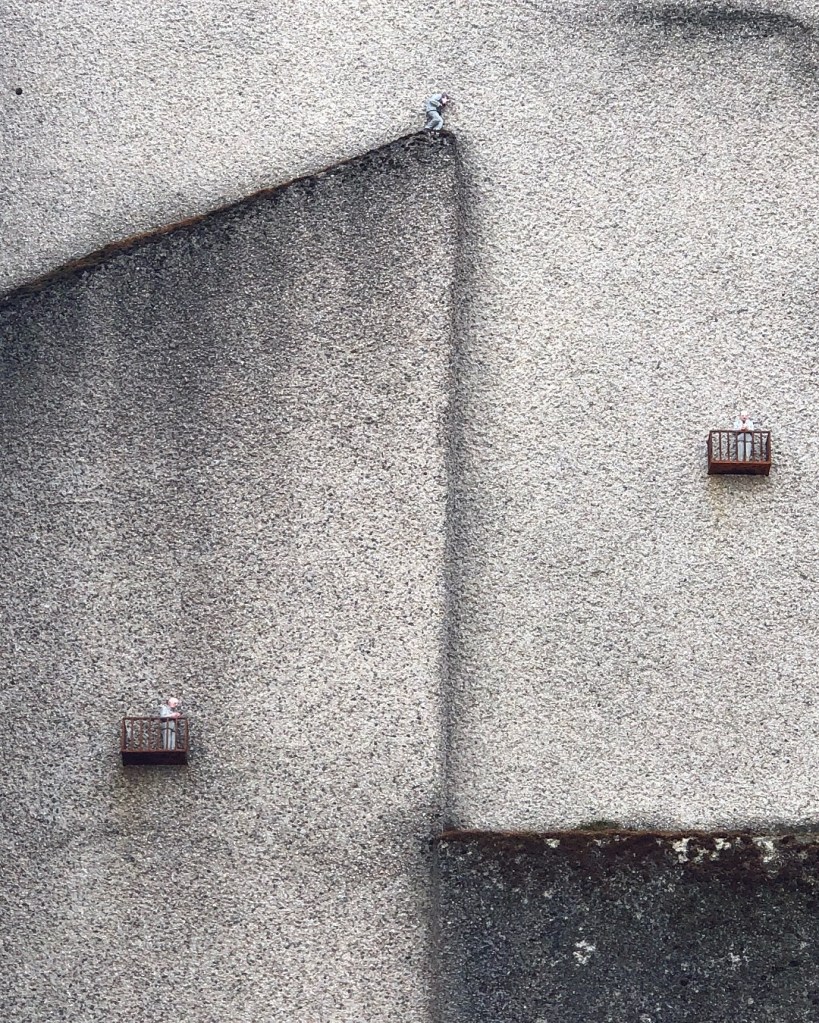
My first café stop is the Union Café and bistro on the corner of Union Street and Shiprow. From mine I can walk past two of my favourite sculptures in Aberdeen to get there. The giant cat perched up above the restaurants opposite the Marischal College and the Nuart piece of the little men perched near or on balcony’s on the side of The Illicit Still. Once at the Union Café I like to sit on the high chairs by the window so that I can people watch in between working. I’ve only had coffee and cake there before but they have an extensive range of cakes, some of which are more inventive flavours than those you’d normally find. I had a great piece of rose and pistachio cake in there once.
When I’m ready to stretch my legs or go for another coffee/snack I potter down to Contour Café in The Green. This is really close to the harbour so if I’m in need of a little fresh air and a walk I go and have a look at the ships. I appreciate that this isn’t every ones cup of tea but I briefly worked in the merchant navy on a standby vessel and some of that interest still lingers. There is actually a ship tracking app which lets you know which vessels are in harbour so that you can go and visit any favourite ships. Some of them have pretty cool patterns painted on their bows or interesting names and you start to learn who the regulars are. It’s pretty much train spotting but with ships. Don’t judge me! So, once I’ve appropriately nerded out in the harbour I grab any seat I can in Contour Café. There are some quite big tables in there to spread out on and they’d work pretty well for a group meeting. This place has THE best vegan sausage baps with ketchup. I don’t know if it’s the fresh bread or the sausages or the love that they’re made with but they’re just so good. I’ve tried lots of other things in there and they’re all nice but I always come back to the vegan sausage bap. They also do 10% student discount (or at least they did when I wrote this in 2019!).
After leaving Contour and on my way to Food Story I’m greeted by my favourite door in the Painted Doors Project. I heard two American tourists describe it as disturbing once, but to me, a doughnut worshipper, there is nothing better than two glazed parent doughnuts cradling a baby doughnut. Food Story is on Thistle street just off Union Street. The walk between the two is perfect for me to pop into any shops that I’d rather avoid on a weekend. Food story has great food, great coffee and a great atmosphere but one of the reasons it stands out for me is it’s bulk shop upstairs and it’s all round efforts towards sustainability. The store upstairs sells bulk grains, spices, beans, pasta (including gluten free), cereals, dried fruit and although I’m not sure if they do it at the moment I’ve got both olive oil and balsamic vinegar in there too. The staff are really relaxed, helpful and friendly so they’re more than happy to help you figure out the weighing system and answer any questions on how to move towards a more sustainable lifestyle. In case you’re a die-hard carnivore that can’t contemplate a single meal without the addition of something meaty you unfortunately (for you) won’t find that here, there is some dairy though. I think it’s probably also the most child and dog friendly of the places that I go to but seen as I have neither one of those it’s a little hard for me to judge properly.
After I’ve worked in Food Story and decided that it’s time to move on I pop over to Cup on Gaelic Lane off Belmont Street. Cup splits opinion a little in that many of my friends feel that it’s too busy in there to work…I guess maybe you have to time it well. I like the background noise though and the hustle of general activity. Just down the street from Cup there’s also a really great shop nearby called MacBeans that sells loose leaf teas and coffee beans. Treating myself to a nice new coffee that I can share with my colleagues (we’re all coffee fiends) is normally enough to lure me back up to the zoology department!
It’s probably worth noting that I never really use wifi when I’m working in a café so I have absolutely no idea of the wifi capabilities or speeds in any of these places. I just come armed with a pile of papers and make sure the things I want to work on are downloaded and offline. It probably doesn’t need to be said but I obviously buy something in every place I work in and try not to overstay my welcome, but I’ve never felt in any of these places that me working away was bothering anyone.
For a bonus ‘out of the office’ working location I love Brewdog on Gallowgate for the early evening. They make incredible pizzas and although I don’t suggest it’s a good work/life balance ethic to work into the evening I have enjoyed dinner and a bit of reading or writing in there on occasion. They have really big windows for people-watching and the window tables leave you feeling a little cosy and tucked away. There are always dogs in Brewdog too and that’s great for the morale, right?!
(FYI this is less about what I actually did day to day and more about my experience with PIPS (my PhD internship) as a whole. I know the NHS/SLDTRL aren’t secret societies but I don’t know how much they’d want me sharing so I’d rather just be incredibly general!! I’d very much like to stay friends with them!)
Raigmore Hospital
PIPS
So, as you probably already know, I’m a PhD student and I am part of a doctoral training programme funded by EASTBIO. As part of that training deal I had to do a 3-month internship that had nothing to do with my PhD. This, by the way, is called PIPS (Professional Internships for PhD Students).
I guess I should start by saying that my feelings around PIPS underwent peaks and troughs…but don’t worry we definitely end on a peak. Everybody’s experiences and opinions are different, and actually, often quite polarised! To some extent I think it’s what you make of it but also, I think it depends on luck and your past experiences.
When I first heard about PIPS I was super enthusiastic about the opportunity to spend 3 months exploring my options and doing something different. In the early days I sang the praises of PIPS to prospective EASTBIO students, had tonnes of ideas that I chatted to my supervisors about and thought by the time it came around I’d appreciate the ‘break’.
But after this initial bout of positivity I went to the PIPS meeting where the rules of PIPS were actually explained. This is when the trough started! Firstly, PIPS has to be PhD level. This was super blurry to me. What does it even mean? I still don’t know! I have a few problems with this. For a start how many jobs do you actually ‘need’ a PhD for? Jobs have worth regardless of the training level required to do them and have we failed if we leave our 4-year programmes as doctors but get a non-PhD level job? Secondly, we had to be in control of a project and we couldn’t be left to do ‘menial’ tasks. I understand that this is probably there as a rule to protect us so that we don’t end up making tea for 3 months, but, to me, it felt a bit rich to swan into a role that I’ve no experience of and not start at/or near the bottom. Thirdly, funding options were limited. There is funding but you’re only eligible if you get a PIPS far enough away from your city or home base. Okay, we’re still receiving our full stipend during that time but the money that is available is in no way enough to cover rent and travel for 3 months. Am I supposed to rent my flat for 3 months? Move out of the little flat I love and then find somewhere else to live when I return? In that case where do I put my stuff? Do I dip into my savings and pay double rent? Or do I stay within city and limit myself to positions I find there? After the meeting I felt pretty dejected, essentially none of the things I’d hoped I might do fit into the criteria which meant a huge rethink.
There are companies all over the country that advertise for PhD students specifically for internships of this nature but I can tell you now, there were very few (as in none that I saw) in Aberdeen, which is my city. Plus, these positions are obviously competitive so there’s no guarantee you’ll get it. Outside of these advertised roles you can organise your own project with a company of your choice…as long as it’s PhD level of course. You’re advised to ask the company to help pay for your internship which I found deeply uncomfortable. “Hi, you don’t know me, can I come and project lead something in your company for just 3 months and can you pay me for it”? Oof. Me being a negative nelly aside, the freedom to explore options within a company you like, does have the potential to be both rewarding and exciting.
I think overall I was just so disappointed that after all my enthusiasm and all of my ideas it boiled down to who are my contacts and who will make sure I’m not out of pocket for this? It just became a stressful hoop I had to jump through. Because of that it didn’t feel like a break from my PhD at all. I actively dreaded it. I’d swung into a position where it felt like a waste of time, I guess partly because I felt that at this point in my life (after 16 years of working in various roles) I didn’t need to do work experience for the sake of work experience.
I also think one of the trials of this situation was also the fact that I’m a student rep for my year, and whilst I was struggling to engage with the process, I was also trying to be encouraging and enthusiastic in front of students earlier in their PhDs. Ultimately, I didn’t want to influence their opinions but I didn’t want to lie about how I was feeling either. It was a razor fine line to tread and I generally said as little as possible!
Having said all that, I think I was incredibly lucky that my PhD supervisor was still in touch with one of his ex-students and they were in a position to take me on as part of a project just North of Aberdeen in Inverness. They were able to provide super cheap accommodation and because it was 50 miles from my home city, I could get EASTBIO funding. Yay! They promised me I wouldn’t be left out of pocket which was a huge relief. Not only this, but perhaps most importantly it was something I was interested in doing. The project plan took a bit of tweaking and I have to say that the PIPS co-ordinator in EASTBIO was really helpful with this. She very quickly advised me on exactly what would make my project PIPS appropriate and guided me until the deal was signed. Happily, at this point, I was coming out of my grump!
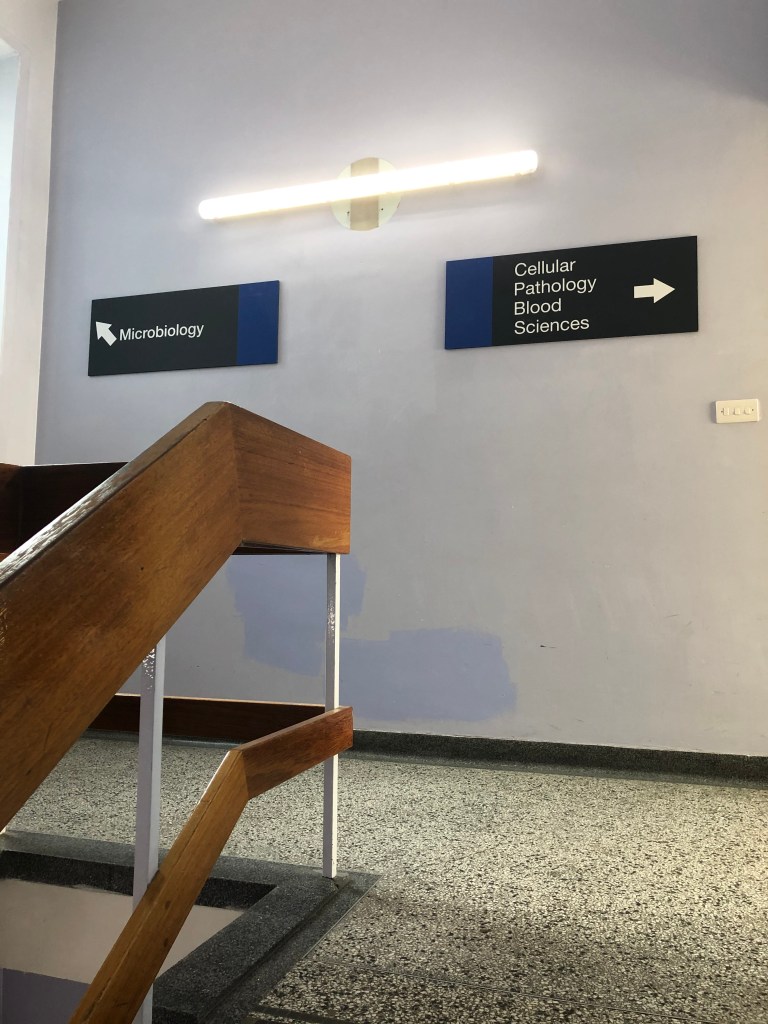
As you can probably ascertain from the title of this blog my PIPS was in the Scottish Lyme Disease and Tick Borne Infections Reference Laboratory (SLDTRL) which is situated within the microbiology lab in the Raigmore hospital in Inverness. The SLDTRL is THE reference laboratory for all tick related things in Scotland. “The aim of SLDTRL is to provide more comprehensive and standardised testing for Lyme disease and other tick-borne infections and to improve the epidemiological data provided to Health Protection Scotland (HPS)”. Which is very cool.
Okay, so with the moany downer bit out of the way I can tell you about some of my experiences in the PIPS I actually ended up doing!
Where did I live?
Anyway, I guess one of the most natural places to start is accommodation.
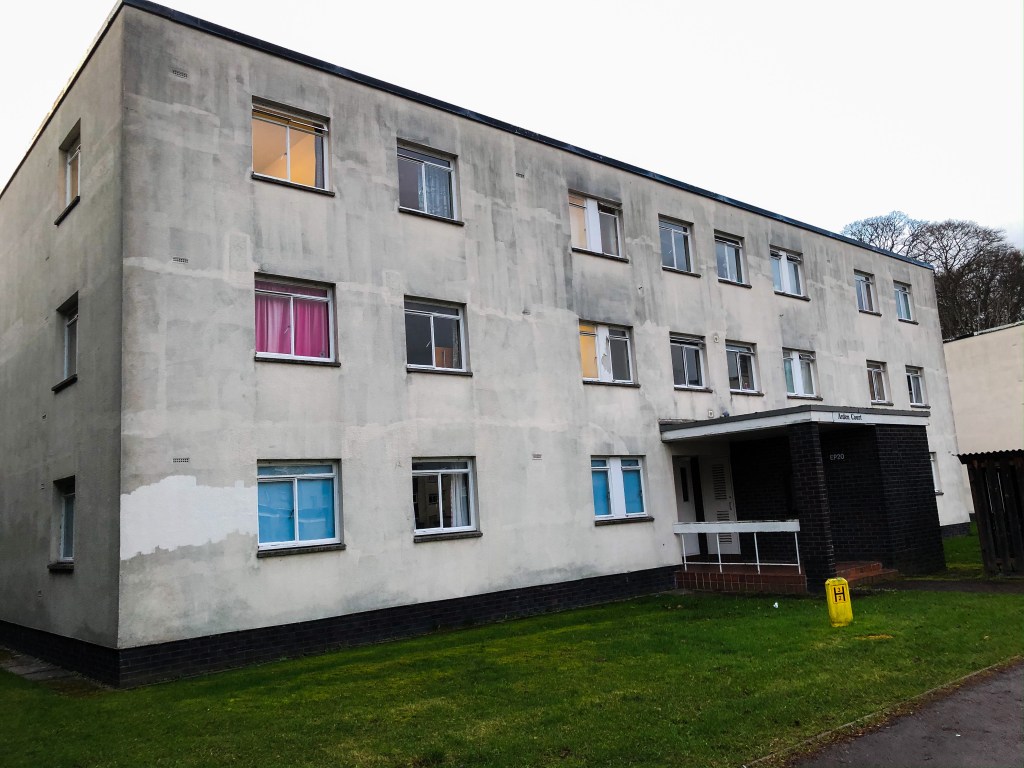
When I first arrived in Inverness I stayed in a little Airbnb in the city because there were a few days I wasn’t able to squeeze into hospital student accommodation, which was great. It meant the first part of my PIPS felt like a holiday and I like Inverness, so I enjoyed being in the city. On that first weekend my partner travelled up from Aberdeen to see me (obviously!) and help move me and my stuff up to the hospital. I collected the keys from a security guard who pointed me to an area of uniform grey buildings and I skipped off to find out where I’d be living for 3 months. We walked through the vast hospital carpark towards my block of flats, which resembled something from the series Chernobyl, albeit before the disaster! It didn’t get too much better inside the building which was brutally reminiscent of a Soviet Bloc stereotype. The pictures actually make it look better. It was so bad it was actually quite funny. I don’t think my partner knew what to say…other than that he didn’t want to have to leave me there!
Flats accommodated four people with all facilities shared…definitely not something I’m used to anymore. I rarely ran into the people I shared with which may have had something to do with the fact that I’d wait in my room until I could hear there wasn’t anyone else around! But, meeting people occasionally was unavoidable. Everyone was very nice and I was told that the accommodation was actually better, if not the best, that those people had experienced within the NHS. I totally get that the NHS have better things to spend their money on than staff/student accommodation and it’s not a priority butttt it’s still pretty grim! It did however eventually become ‘home’ and I got very used to it. It also encouraged me to spend all of my weekends away and explore the area whilst staying in nice hotels and airbnbs! Which was great.
People
Outside of the accommodation and inside the hospital I think the first thing I want to talk about is the people. Everyone was so friendly. I’ve never felt so welcome, so quickly, in a new place of work. I was introduced to everyone in the microbiology lab at one of their daily ‘pause’ meetings and regardless of the fact I was only around for 3 months people were actively interested in chatting to me and made a real effort to invite me to things. Perhaps it’s because they’re used to having locums around or perhaps they’re just a delightful team of people. But either way, it was hugely appreciated and made my transition to a new environment considerably easier. Outside of the lab, the cleaners, the people that worked in the cafes, the admin staff and the security folk were all lovely.
I shared an office with the director of the ref lab, Dr Roger Evans (who is now on a super cool sabbatical with the WHO for a year), the deputy director, Dr Sally Mavin (who is now the director) and specialist biomedical scientist, Rachel Milner. It was a great opportunity to share an office with my bosses. They took lots of time to make sure I was getting what I wanted out of my PIPS, they included me in meetings so I got a broader idea of what happened within the microbiology lab and were just generally open and available to answering any questions I had. They also made sure I got my free Hep B vaccines despite the fact I wasn’t directly handling human samples. Winner! From a women in STEM perspective, both Sally and Rachel were inspiring role models on a number of levels and I’d say the majority of staff in the department (in a number of varying positions) were female.
Attitude
The attitude towards work, for me, was one of the most glaring differences between the SLDTRL/microbiology lab and academia.
For a start, they take breaks, actual planned breaks! This revolutionised my life and I now take those same breaks whilst I work from home during lockdown. I started at 9 and I finished at half 5 every day. There is a coffee break at half 10/11ish, a whole hours lunch break at 1ish and another, optional, tea break at about 4ish. As a PhD student I have coffee at my desk, I normally eat at my desk and a break is me scrolling through Twitter or doing a quick bit of online shopping. I found that in taking breaks I actually organised and broke down my workload better and actually worked harder and more efficiently. It was also just nice to have a change of scenery from my office for a bit. It’s not that my supervisors don’t give me the freedom to take breaks, of course they do, I think it’s more that overworking is just an insidious part of academic culture. On the theme of breaks one of the first things Sally asked me was whether I had any holiday due as part of the PIPS, this definitely struck me as something very non-academic to ask! I, along with everyone else was actively encouraged to take all holiday owed.
On top of the breaks Roger, Sally and Rachel were all firm that I should leave close to half 5, or earlier! I never felt the need to work longer. As a PhD student I often find myself taking work home with me. The hours I’m in the zoology office don’t necessarily reflect the hours that I work and there’s generally a feeling that whatever I am not doing isn’t ‘enough’. There can also be this weird posturing between students sometimes about the amount of hours they’re putting in. This has definitely changed since I’ve got back. Sharing an office with the people in charge of me meant they knew what I was up to pretty much all the time and I knew they were happy with my progress. Since returning I’ve sent my supervisors an email every Friday with the work I’ve done and this has both kept me feeling accountable during lockdown, and created an air of transparency in that if my supervisors didn’t think I was doing enough work week to week they could tell me. Of course, they haven’t said anything!
I also found that in the Raigmore they just generally stopped more frequently and reflected on things before proceeding further. I often feel the pressure in zoology to just get on with things and think about it later. If it was just a bad day in the microbiology lab, as in machines were being fickle or I (or whoever else) was making mistakes, the general attitude was to stop. Tomorrow is a new day. As a PhD student my attitude would have more likely been to keep working until I got it right, even if that means working very late.
People at the Raigmore worked really hard but there was just a much better balance. Okay, people skipped breaks sometimes, worked extra hours, took work home with them occasionally but the weighting of that was totally different. I feel like in academia those things are expected on the regular and quite frankly I have craft projects to finish!
Teaching
So, academic labs and biomedical labs are very different in what they do and as a result of this training is also very different. It’s not unusual to be handed a protocol and told to just have a go, to design a protocol yourself, tweak somebody else’s or be quickly taught by someone how to do something whilst you’re furiously trying to scribble down everything they’re saying. Learning how to do this as well as learning how to troubleshoot your problems with protocols is a huge skill and sometimes pretty fun. I’m not knocking that…but, I found the handholding approach in a biomedical lab to be incredibly comforting. I can’t remember the exact timing and process so don’t quote me but people are shown how to do something a number of times, then they are watched as they do that thing themselves a number of times and only then can they start running tests without direct supervision.
Biomedical labs do the same tests over and over again on very important samples and therefore they have standard operating procedures (SOPs) and a tonne of quality control measures. Just knowing that everyone did everything the same way, being able to compare quality results to other peoples and having everything be traceable was just fab! I thought I might find it all a bit restrictive but actually it gave me ideas of how I would like to plan, document and run my PhD experiments in the future.
(Female (left) and male (right) ticks.)
This blog is already too long so well done if you made it all the way to the end! I guess the takeaway was that I’m glad I remained somewhat open-minded despite being very grumpy about the PIPS journey at one stage. I think we’re often made to do things that we’re not totally thrilled about and okay, it’s alright to have moan and it’s okay to be unenthusiastic about something…nobody’s perfect! But, I think it’s equally important to admit when you were somewhat wrong and that you found an experience more valuable than you ever would have imagined.
I’m just hugely grateful to the SLDTRL, the microbiology lab and the Raigmore in general.






 In A Kingdom By The Sea