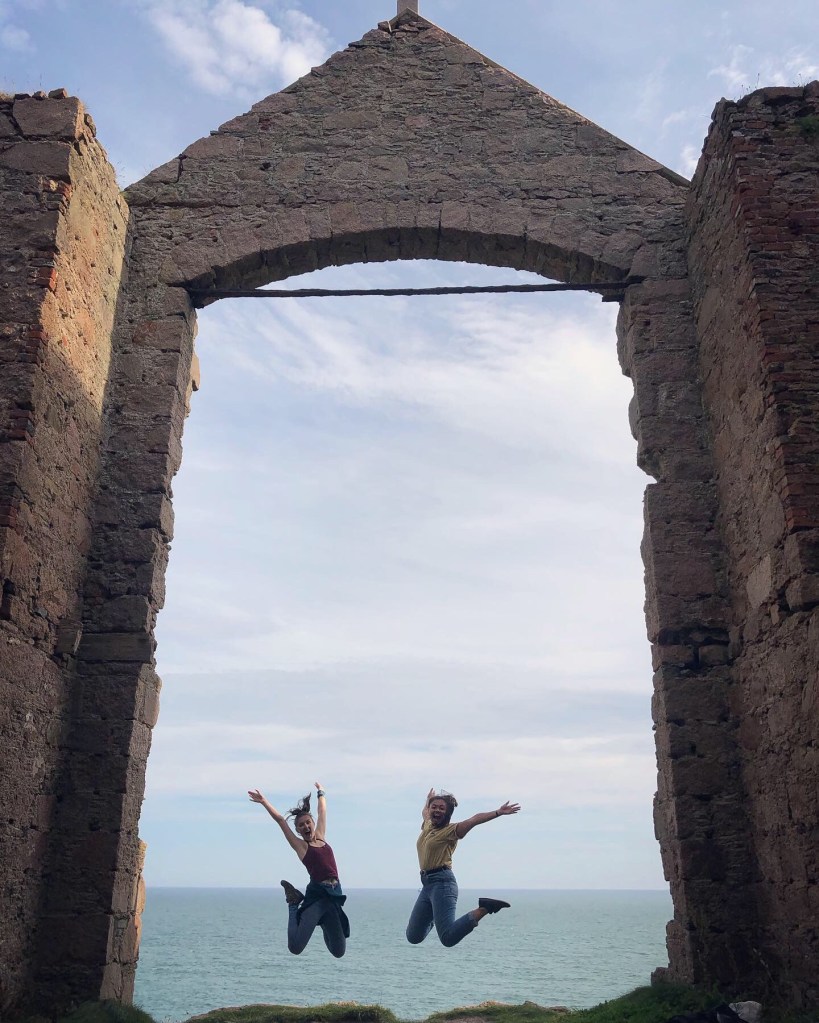
(I actually wrote this back in 2019 for a university blog that fell through…but now I’m back in the office and therefore back working in cafes I thought why not publish this finally on my own blog!)
I don’t know about you but I appreciate a change of scenery and find it difficult to sit and work in the same place for hours or days on end. I get fidgety, I start to worry that I’m bothering my colleagues, I get distracted and then I just start wasting time. As such, I’ve already sussed out a handful of cafes around Aberdeen that I love to work in. Sometimes I just go to one before or after some office time, sometimes I spend the whole day away and take myself on a little café circuit. Strangely that almost feels like a little holiday. I’m a great believer in the saying ‘a change is as good as a rest’.
Short disclaimer – obviously check with your supervisor that it’s okay for you to go AWOL for a day. Open and honest communication between you and your supervisors is key but every supervisory relationship is different.
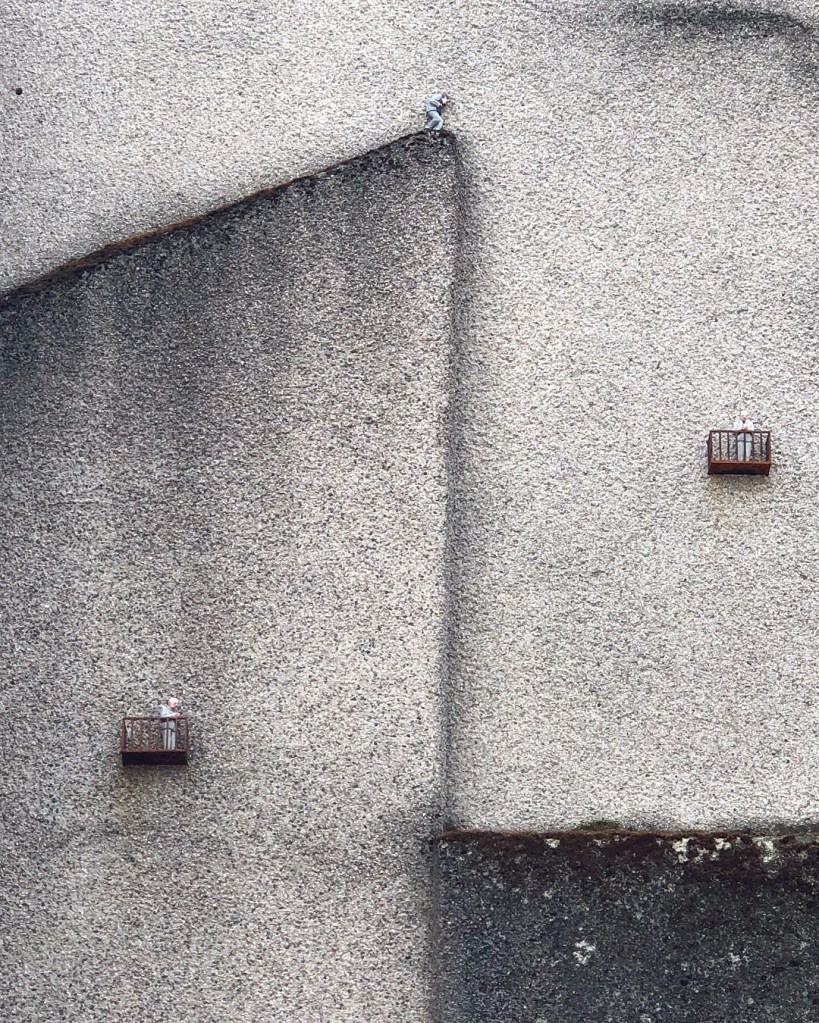
My first café stop is the Union Café and bistro on the corner of Union Street and Shiprow. From mine I can walk past two of my favourite sculptures in Aberdeen to get there. The giant cat perched up above the restaurants opposite the Marischal College and the Nuart piece of the little men perched near or on balcony’s on the side of The Illicit Still. Once at the Union Café I like to sit on the high chairs by the window so that I can people watch in between working. I’ve only had coffee and cake there before but they have an extensive range of cakes, some of which are more inventive flavours than those you’d normally find. I had a great piece of rose and pistachio cake in there once.
When I’m ready to stretch my legs or go for another coffee/snack I potter down to Contour Café in The Green. This is really close to the harbour so if I’m in need of a little fresh air and a walk I go and have a look at the ships. I appreciate that this isn’t every ones cup of tea but I briefly worked in the merchant navy on a standby vessel and some of that interest still lingers. There is actually a ship tracking app which lets you know which vessels are in harbour so that you can go and visit any favourite ships. Some of them have pretty cool patterns painted on their bows or interesting names and you start to learn who the regulars are. It’s pretty much train spotting but with ships. Don’t judge me! So, once I’ve appropriately nerded out in the harbour I grab any seat I can in Contour Café. There are some quite big tables in there to spread out on and they’d work pretty well for a group meeting. This place has THE best vegan sausage baps with ketchup. I don’t know if it’s the fresh bread or the sausages or the love that they’re made with but they’re just so good. I’ve tried lots of other things in there and they’re all nice but I always come back to the vegan sausage bap. They also do 10% student discount (or at least they did when I wrote this in 2019!).
After leaving Contour and on my way to Food Story I’m greeted by my favourite door in the Painted Doors Project. I heard two American tourists describe it as disturbing once, but to me, a doughnut worshipper, there is nothing better than two glazed parent doughnuts cradling a baby doughnut. Food Story is on Thistle street just off Union Street. The walk between the two is perfect for me to pop into any shops that I’d rather avoid on a weekend. Food story has great food, great coffee and a great atmosphere but one of the reasons it stands out for me is it’s bulk shop upstairs and it’s all round efforts towards sustainability. The store upstairs sells bulk grains, spices, beans, pasta (including gluten free), cereals, dried fruit and although I’m not sure if they do it at the moment I’ve got both olive oil and balsamic vinegar in there too. The staff are really relaxed, helpful and friendly so they’re more than happy to help you figure out the weighing system and answer any questions on how to move towards a more sustainable lifestyle. In case you’re a die-hard carnivore that can’t contemplate a single meal without the addition of something meaty you unfortunately (for you) won’t find that here, there is some dairy though. I think it’s probably also the most child and dog friendly of the places that I go to but seen as I have neither one of those it’s a little hard for me to judge properly.
After I’ve worked in Food Story and decided that it’s time to move on I pop over to Cup on Gaelic Lane off Belmont Street. Cup splits opinion a little in that many of my friends feel that it’s too busy in there to work…I guess maybe you have to time it well. I like the background noise though and the hustle of general activity. Just down the street from Cup there’s also a really great shop nearby called MacBeans that sells loose leaf teas and coffee beans. Treating myself to a nice new coffee that I can share with my colleagues (we’re all coffee fiends) is normally enough to lure me back up to the zoology department!
It’s probably worth noting that I never really use wifi when I’m working in a café so I have absolutely no idea of the wifi capabilities or speeds in any of these places. I just come armed with a pile of papers and make sure the things I want to work on are downloaded and offline. It probably doesn’t need to be said but I obviously buy something in every place I work in and try not to overstay my welcome, but I’ve never felt in any of these places that me working away was bothering anyone.
For a bonus ‘out of the office’ working location I love Brewdog on Gallowgate for the early evening. They make incredible pizzas and although I don’t suggest it’s a good work/life balance ethic to work into the evening I have enjoyed dinner and a bit of reading or writing in there on occasion. They have really big windows for people-watching and the window tables leave you feeling a little cosy and tucked away. There are always dogs in Brewdog too and that’s great for the morale, right?!
Realised? Learned? Experienced? I wasn’t quite sure which word to go with but whichever way you look at it the following 10 things have made me grow as a student, and in general as a human being.
Imposter syndrome is a constant.
This probably needs no introduction, but, just in case; imposter syndrome describes feelings of inadequacy and self-doubt that aren’t relieved by external proof of your competence. It’s the feeling that you’re going to be ‘found out’ as being incompetent after winning an award or that someone’s made a mistake in letting you speak at a conference or attend a meeting. That somehow you’ve slipped through the net and you shouldn’t be amongst your peers doing a PhD!
Maybe there are some unique individuals out there that don’t experience any level of uncertainty in their abilities, academic or otherwise…but I’d say pretty much everyone I’ve spoken to has at some point felt like an imposter.
For me, what I’ve realised is that feeling like an imposter is actually pretty constant and I don’t think these feelings will ever go away. But, actually, that’s okay! I think firstly, it makes me more understanding of other people’s anxieties and secondly, I’m pretty used to it now so I can more or less acknowledge those thoughts and then work alongside them. What’s that cheesy saying’? ‘Feel the fear and do it anyway’!?
In fact I had ‘impostery’ feelings writing this section because I found out imposter could, and is more commonly spelled impostor…which made me doubt ever writing anything at all!
Pulling some excellent facial expressions whilst presenting data I wasn’t so confident about at a conference in Valencia!
When you gather your data together it never looks like much.
I feel like I can work super hard, spend some long hours in the lab running experiments and then when the time comes for me to gather that data together to show my supervisor it looks like…*drumroll*…‘nothing’! Several weeks worth of work can sometimes culminate in a single graph. That graph doesn’t show the time spent fixing a problem with experimental design, waiting for a machine to be fixed, collecting difficult samples, the mandatory course you had to attend, the demonstrating you did, reading and planning in preparation for another project you’re working on…you get the idea! Sometimes, if the weight of doing or achieving ‘enough’ (whatever that means) is pressing down on me I write lists of the things I do each day. Each email I’ve sent, each paper I’ve read, each academic conversation/meeting I’ve had etc… It helps me to see that although I might not have achieved as much toward the completion of a particular project as I feel I ‘should’ have I can physically see the list of all the other shit I’ve had to do.
Paying too much attention to other people’s projects is dangerous.
In a nutshell I’ve realised it’s dangerous to compare my PhD project to others. In general, the vast majority of us have projects which are totally different. Some are really prescriptive with papers and chapters already pre-planned but others are totally blue sky and are led by what their experimental data suggests could be interesting next. Neither are wrong and both come with their own challenges.
Also, lots of people you pass in the corridor will give you something akin to the highlights reel. They’re writing a paper, they’re preparing for a conference, they’ve won an award or they’re finishing an experiment. Obviously, sometimes people will talk about a problem they’re having, especially if they think you might be able to help them solve it, but those moments rarely come when you’re feeling a bit fragile!
It’s easier said than done, but I try to focus on whether my supervisors and I are happy with where my project is at and where it’s going and put my blinkers on to most of the other stuff.
Humble bragging is a thing.
I think academia, and especially academic twitter is the first place I’ve truly experienced humble bragging and it is rife! Initially people saying things like ‘we’re already one month into the new year and I’ve only managed to write 2 papers, speak at a conference and win a Nobel prize’ would have me panicking that I wasn’t working hard enough or achieving as much as I should be. Now, when a postdoc tells me that they’re annoyed because a new PI keeps asking for their advice or a PhD students tells me they just don’t know how they’ll find the time to make the corrections to an otherwise accepted paper from their undergrad project I inwardly roll my eyes, smile, sympathise and carry on with my day.
It pays to be honest.
I think recognising moments when I need help has developed over time, and figuring out what kind of help I need and how to ask for it has come over even more time…and a little bit of practice! Although having said that, I still don’t find it easy.
Having developed M.E. about 3 years ago I consider being honest a matter of PhD survival! I can’t push through, I can’t overwork for a couple of months with the promise of a holiday at the end and I can’t continually say yes to things without it affecting my health. I’ve had to become more honest with my supervisor about when I need a day (or three) to work from home, when I need to postpone an experiment, when I need to scale back on my commitments and when I’m feeling stressed or overwhelmed so he can help me figure out how to fix that. Prolonged stress is definitely a relapse trigger for me and isn’t good for you anyway! You don’t need to have a chronic illness to be deserving of a helping hand and some advice when things are fraying at the edges!
Holiday is important. Take it.
…even if that means not going anywhere fancy, or anywhere at all!
In my first year I didn’t take my holiday. Idiot!
I have a spreadsheet with my research grant budget on it and also the amount of holiday days I have as a PhD student so I can keep track. I got into the messy habit of feeling if I didn’t work ‘hard enough’ one day I’d consider it a half day or I’d make up the time over the weekend or in the evening. If I’d I worked a day on the weekend I sometimes felt like that meant I could take a day off in the week, but I rarely enjoyed them because I felt guilty. So I stopped taking them. I also had the added complication that I shouldn’t take holiday in bee season or at least if I did I shouldn’t be away for long. If I did go on holiday for a couple of days I took work with me. I also know a couple of people who don’t take their holiday, almost as a matter of pride, and this for some reason made me feel awkward taking mine. All of this is just straight up unhealthy!
On top of this I had a couple of small M.E. relapses in my first year and I wonder if those could have been avoided or lessened if I’d have given myself proper time off. (Although ultimately your physical health should have nothing to do with holiday hours taken). In my second year I vow to take my full holiday…and not to pack any work!
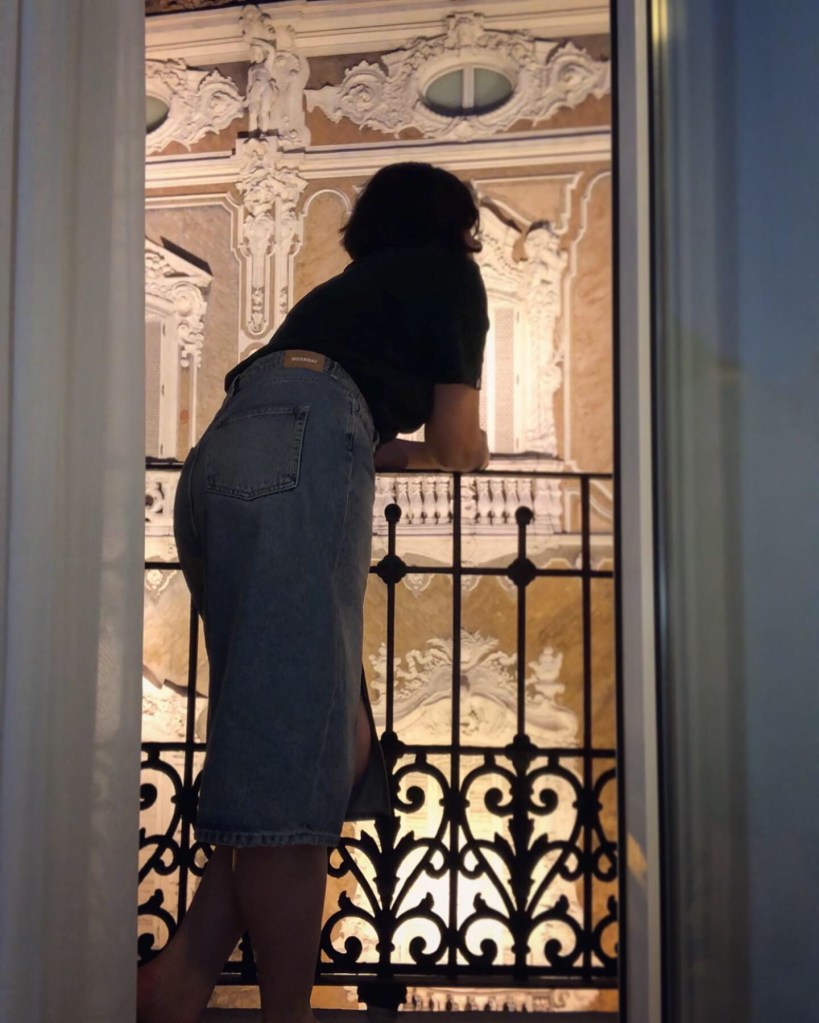
Ironically taken during a conference which turned into a holiday!
It’s a good time to get out of my comfort zone.
This, in it’s very nature is obviously pretty uncomfortable, but I’ve found the first year of my PhD great for trying new things. I try to get in amongst the thick of it as much as my introvert personality will allow! I accept all the talks I get offered, I apply for conferences, I attend networking events and I try to engage in conversations with ‘strangers’ in a vague attempt to build connections but mostly to learn how to ‘do academic chat’. As I’m still early in my PhD career people aren’t really interested in collaborating with me yet, but they might be some day and when they are I’d like to be a little bit better at engaging with them. I feel like the PhD is the perfect time to make mistakes, I mean I’m still training and I’m still finding my feet so I’m allowed to give a bad talk or make a rubbish poster, right?…Right?!!!
EASTBIO; getting me out of my comfort zone as often as they can!
In many ways the PhD is easier than my masters and my undergrad.
First of all, just a disclaimer, I’m not in any way saying a PhD is easy or diminishing the trials of PhD life BUT…
…for me, my PhD in many ways feels ‘easier’ than my undergrad and my masters and actually lots of the “real world” jobs that I’ve had. This is of course different for everyone. I think some of that comes down to the fact that I’m just generally happier now but there’s a tonne of other stuff that contributes to that too. When I did my undergrad I’d been out of education for about a decade and I hadn’t done any A-levels (or highers) so I had to learn how to learn again, plus I joined the university dance team, and I worked in a lab as an unpaid research assistant. So, I just generally had a lot going on! But, also, I had to turn up to a lot of stuff I wasn’t super interested in or I just didn’t understand and the topics change ALL the time. I floundered a bit. Plus you have to write assignments and do exams on all of those things and I remember it feeling a bit relentless.
During my masters I was still recovering from my first and worst bout of M.E. (which I contracted/developed in the final year of my undergrad), so I was pretty scared and lonely and Biomedical Science was quite a change of direction from Zoology and Microbiology. As with the undergrad, the topics changed a lot and quickly. It was great for giving tasters that taught me what I liked and what I didn’t but it was tough going. I felt like I never got good at anything, like I was just scratching the surface, and if I didn’t ‘get’ something I didn’t have time to figure it out before the module was over.
I felt ready to focus on one topic and explore that as fully as I could. I also felt ready not to have to hand in assignments or do exams! And a PhD gives me both of those things and a bit like an undergrad or masters (but unlike a job) I more or less run my own schedule.
So although I’ve had a little cry in quiet stairwells (I’m an emotional bean), I’ve ranted down the phone to my mum and I’ve felt utterly bewildered about what I’m supposed to be doing… I’d still say that doing a PhD is one of the best things I’ve done and yes, in many ways easier.
Aberdeen is fab, but quite far away.
I made some pretty bold statements about visiting people after I moved to Aberdeen and none of it has come to fruition! A lot of my friends are spread out; across West Wales, the Welsh Borders and London. I said I’d go and visit and I really did mean it, but I didn’t quite acknowledge just how far away Aberdeen is and how difficult and costly it would be to go South… especially to West Wales.
Although Aberdeen is a bit of a marmite city, as in people seem to love or hate it, I’m a lover and I think it’s totally worth the relative ‘remoteness’! To me it is the goldilocks zone, not too big or too small, it has everything I need, it’s friendly but not everyone knows your business, it’s easy to get into the countryside, it has history, it has lots of craft ale (although it could do with a decent wine bar!), it’s not too busy etc… etc… which makes up for the fact that seeing Southern dwelling friends or relatives is going to be infrequent or expensive or both!
New Slains, Castle Fraser, Aberdeen NuArt and Seaton park. 🙂
It’s hard to feel enough for academia.
I think one of the hardest things for me so far is struggling to learn what ‘enough’ is. It’s hard sometimes to keep the blinkers on my own project and focus on what I’m doing and how hard I’m working. People will always work early or late or on the weekend but it doesn’t mean that I have to. Everybody works differently.
I feel like I could also work all the hours, stress myself out, go above and beyond and yet someone will always ask why I didn’t attend a particular event, haven’t read something yet, haven’t finished writing a paper or haven’t replied…and I can bust a gut and be super proud of something and someone will tell me that what I’ve just accomplished was easy or unimportant or ask what I’m doing next or why I didn’t do it another way. Like, I said, it’s my biggest struggle and although I’m pretty good at saying no to things and limiting my work hours to 9-5 (ish) I feel like I’m constantly justifying how much work I’ve done and I always feel like I should be more, that who I am and what I’m doing is not enough.
This year I made a resolution of sorts that I’d celebrate my achievements regardless of whether other people thought they were achievements or not and to try and become a bit tougher!
Done.
So there it is, 10 things, in no particular order that I have realised in the first year of my PhD.