
The Potters

In previous blogs I’ve written about my grandmother’s mother’s side (the nailers) and my grandmother’s father’s side (the miners) and this time we’re staying with my grandmother’s mother’s side but we’re going down a slightly different line…the potters. I hope you’re still with me after that sentence!
So, the father of my great grandmother, Dorothy Amy (from my previous blogs) was James Bradshaw. James was born in 1862 and is most regularly listed in the records as a potter/thrower. Although in his younger years he is listed as a bottle thrower and for a brief period in 1909 he’s listed as a labourer. However, like many men he joined the First World War efforts and he went off with the Royal Hussars. I’m not quite sure how long he spent with them but unfortunately I do know that he died with them in 1916 fighting in Mesopotamia. In general it sounds like the Royal Hussars had a particularly terrible time frequently suffering from starvation, dehydration and sickness (fever, jaundice or dysentery). Understandably morale was also pretty low. On the 5th April 1916 there was an attack on Hanna in Mesopotamia where the starving 14th Hussars surrendered. It was considered one of the low points in British and Indian military history. I’m pretty sure that this is the incident in which my great great grandfather died because his death is recorded as the being the 6th April 1916.
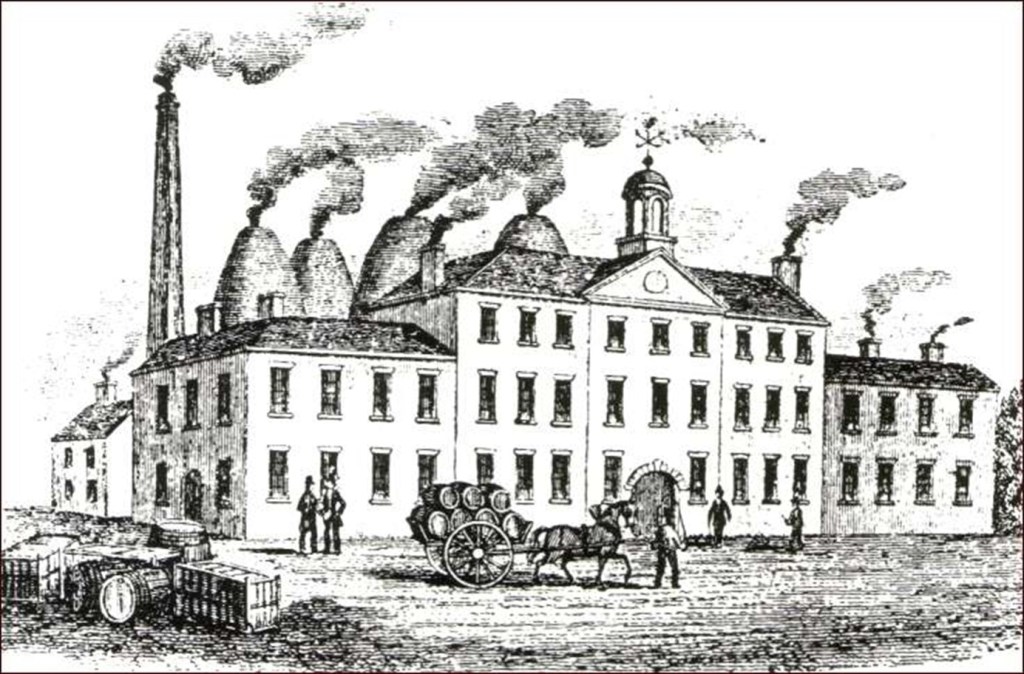
James’s father was John Bradshaw, he was born and died in Belper, and he lived as a potter. John was first listed as working as a ‘potter labourer’ in 1841 at just 14 years old. Conditions were generally rather poor for potters, including (and probably especially for) child labourers. In 1840 many of the workers were under 15 years old and these children spent around 72 hours a week working, meaning that they were poorly educated and exhausted. If they were late to work because they overslept they were often beaten. Its also worth noting that at the time wages were paid in the local pub, meaning that men were encouraged to spend their wages immediately. Their wives often stood outside begging them just to pick up their wages and leave, but instead went home with a drunk husband and little money to get them through the week. Poverty and the desperation to stay out of the workhouse drove potters to keep turning up to work, despite the conditions and long hours of labour. I’ve obviously got no idea if John’s wife, Ellen, was one of the wives waiting outside the pub. What I do know is that at 12 years old she was working with cotton hosiery and then at 22 she was a ‘getter up of hosiery’. I don’t really know what that means! The only thing I can think of was that there was a ‘knocker up’ during the Industrial revolution who woke people up ready for work. Was a ‘getter up’ the same thing? At 23 she got married to John and then was never listed as working again. She outlived her husband though and lived on her own (with her mother who was also widowed) and received relief from the parish, which I don’t imagine was very much.

John’s father James was also listed as a potter throughout his life, and his father Moses was also a potter or ‘bottle turner’ in the Derbyshire area. Their wives are never listed as having jobs and the trail runs cold for additional information beyond birth and death dates from them. I couldn’t find out much about what life was like as a potter in 1780 (not from a google anyway), but I don’t imagine it was any better than in the industrial revolution.
The furthest back I’ve gone on this particular line is 1484, with my 15th Great Grandfather, Roger Fretwell, which is crazy! It’s the furthest back I’ve gone so far. Just to give you a little idea of what the world might have been like, in 1484 Richard the 3rd was on the throne of England (England had not yet united with Scotland, Wales or Ireland (North or South)…although Richard the 3rd did agree a 3 year truce with Scotland this year). This is the one and only Richard the 3rd that died at the Battle of Bosworth effectively ending the Wars of the Roses and the Middle Ages in one foul swoop, the same man who inspired a play by William Shakespeare and the same man whose body was found under a carpark in Leicestershire. In 1484 the Wars of the Roses was still ongoing, but the folk of England only had a few years left to endure of that particular set of battles. They had to endure it alongside other horrors like the sweating sickness though. The sweating sickness was a series of epidemics in the UK and Europe that popped up in rural areas killing folk in a matter of hours after the onset of symptoms. Medical historians still don’t know what caused it but it could have been a rogue hantavirus. Delightful. Outside of the UK the pope deputised a couple of chaps to go and hunt out witches in Germany, a Portuguese chap found the mouth of the Congo (which was very unfortunate for the people residing in that area) and on a lighter note Aesop’s fables were translated into English.
So, all in all, probably a rather challenging time to be alive! I’m not sure what was better, nailer, miner or potter? I’m sure they were all difficult. I’m already intrigued what I’ll find next, and although it’s a goal of mine to ‘finish’ my grandmothers line this year I’m looking forward to finding out if my grandad came from a similar group of people.




 In A Kingdom By The Sea