ME Awareness Month 2021

Where I’m at…

(Just before I start, if you want to know more about ME/CFS in general follow the link to another one of my blogs just here, if you want to know how I developed ME/CFS follow this link here, and if you want to know how I was doing a couple of years ago follow this link here.)

I haven’t written an ME related blog for a long while, but seeing as it’s ME awareness month, I’ve recently had a little flare up, AND I’ve been chatting to some chronically ill friends and acquaintances recently it seemed like a good time.

As a bit of very speedy background, after being a very healthy individual for 29 years I developed ME in the last year of my undergraduate degree. Although I had a really rough period where I was pretty much housebound, spending most of my time in bed, I’ve more or less recovered at a fairly consistent (albeit seemingly glacial) rate over the last 4 years. In this, I am incredibly lucky. There is no diagnostic test for ME, no established treatment plan, and no prognosis. Many folk, like myself, go home and just try to figure it out for themselves.

So, ~4 years after diagnosis, where am I at now? I guess that’s somewhat complicated! According to the NHS, ‘severe ME’ describes people that are bedbound (or at least housebound), ‘moderate ME’ describes people who can’t work or continue full time education, and ‘mild ME’ describes those who can carry out everyday activities whilst maintaining a job, but they do this with difficulty and have to sacrifice hobbies or social activities. If you’re thinking that mild ME doesn’t sound too bad, imagine your entire life being stripped back so it just revolves around work and basic chores, because you have no reserves left for anything else. No beers with friends on a Friday, no playing footie in the garden with your kids, no midweek French class…you get the drift. Doesn’t sound so mild anymore, right? Anyway, where do I fit into this short list of NHS definitions? I’m definitely not severe, I’m certainly not moderate, and actually I’m not even mild. I exist in a space that would be considered by many as recovered, but I feel remiss to accept that definition.

I think I would be considered ‘recovered’ because I hold down a full-time job (well, a PhD), a social life and multiple hobbies, which even include a certain amount of physical activity. I even started running and playing badminton for a brief period a couple of years ago (before I had a relapse)! I would disagree with the term recovered though, as sometimes I still have relapses or flare ups, I’m certainly not at pre-ME fitness and ME still, to some extent, shapes how I live my life. It’s hard to say why I have flare-ups. Sometimes I think it’s stress, or that I’ve overdone trying to build up my exercise, or even that I’ve eaten something that doesn’t agree with me. But, if I’m honest, I never really know. I generally just pick the option that seems most sensible and settle on it because I want an answer. Relapses for me most commonly mean one, or a combination of the following symptoms: Chest pain, headaches, joint pain, muscle pain, brain fog and/or fatigue. I also developed IBS as a fun side gig to ME, but I almost consider that an entirely separate entity now! Nowadays relapses normally have a peak in which I have to rest totally for a full day with time either side where I just need to cut back on activities. It’s rare that flare-ups last longer, but this most recent relapse had a peak of about a week and then of course time either side where things were ramping up or cooling down.

I have a lot of feelings about where I’m at now and I’ll share some of those below. I’ve tried to be open and vulnerable and I appreciate that might not make for comfortable reading. I think it’s important for me to share though and if it makes just one person feel even slightly less alone or slightly more seen then I think it’s worth me exposing myself!

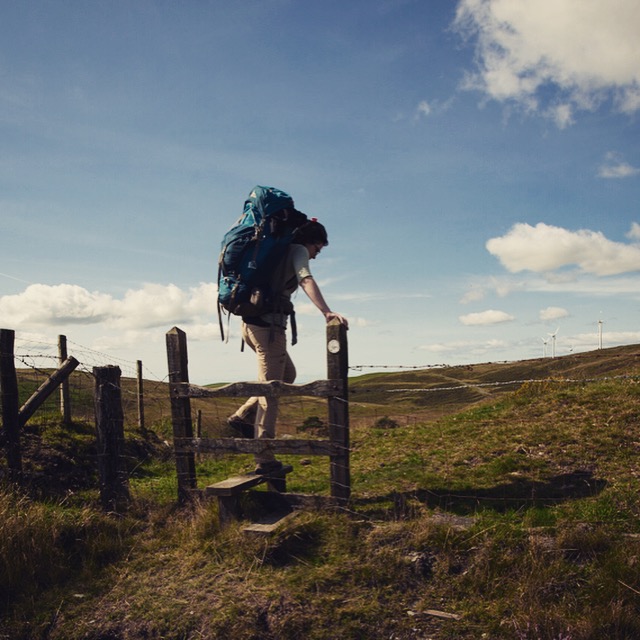
Let’s start with a positive (I’m a silver lining’s kind of girl)! I’m so grateful that I have recovered so much as I know many folk suffer a lot more for a lot longer. I’ve learned to enjoy a tonne of new things like playing videogames, chilling in cafes, sitting and watching the world go by (generally just being) and deep diving into various crafts. But, I‘m also grieving the life and the person I feel like I’ve lost. I miss regularly climbing mountains, I miss running, I miss pushing myself and I miss trusting my body and feeling fearless in what it can achieve.

In some ways I think having ME has helped me manage my PhD, and well, life for that matter. It’s taught me to get better at managing my stress, asking for help and saying no. I’m not by any means saying I’m flawless at those things by the way! I still get stressed, I still say yes when I don’t want to sometimes, and I still forget I can ask for help from time to time. But, I’m infinitely better at those things than I was before! Whilst things are fine with the PhD, I’m low key terrified about what I’m going to do next. I worry about being able to keep up with the fixed hours of a ‘normal’ job, I worry about what that would mean financially and in terms of my independence. I’ve always fallen on my feet and I’m trying to have faith that that will happen again. I’m hoping I’ll just stumble across some super flexible, well-paying unicorn job that matches my skillset whilst I’m doing my careers searches. I know some of your values, needs and fears change with age, but I used to have wild dreams and be fairly carefree about where I would move and what I would do. I just knew that I’d be fine and I’d figure it out. I knew I could physically push through any difficulties that come as part of the new job/ new move upheaval. I struggle to think past the PhD now (although admittedly that’s not all to do with ME). A little while ago a job came up in conservation working with a friend on a reserve I’d lived and worked on before. (Pre-ME, I always thought of going back to conservation if science didn’t work out.) This job was a unicorn job! Now, ME aside, I want to finish my PhD, I don’t think I’d want to live on an island separated from my partner, I don’t think I was entirely qualified anymore and literally the perfect person got the job anyway. So, it was never going to happen, but I think what I found so difficult is that for all the time I spent thinking and talking about how cool that job could be I always had to admit the hard truth to myself that I’m not physically capable of working in conservation anymore (or at least for the foreseeable future). I’m just not well enough…and yeah, maybe I will be in the future (I still trust that I will continue to gradually get better), but it was still a hard thing to swallow.

Things like I’ve just talked about can leave me feeling a little trapped in a body that doesn’t work like it used to… and yes, I know it could be worse, but that’s not a helpful way of thinking either. ME has had a huge impact on my body confidence. It’s not just about what my body can do, it’s about how it looks now. It just doesn’t feel like ‘me’. I’m a lot fluffier now, as in I’m the fluffiest I’ve ever been! I have to say that there are of course other factors, I’m older, it’s a pandemic, I’m in a relationship etc… but ultimately, I can’t exercise like I used to. It’s such a hard thing to try to balance. I start exercising, build it up, get excited, struggle to listen to my body, relapse, take a break, get disheartened… It’s a vicious cycle. Because exercising is temperamental, I’ve also tried to just control my weight with food, but that quickly becomes unhealthy (I’ve not always had the healthiest journey with eating anyway). Counting calories becomes obsessive, then I don’t eat enough, then I get lethargic, then I have a flare-up. It’s another unpleasant cycle. I’m trying a novel new thing at the moment, which is eating and exercising intuitively and learning to be comfortable in my body. It’s the opposite of easy, but actually it’s making me face some of the unhealthy attitudes I’ve held surrounding weight gain throughout my entire life and that cannot be a bad thing.

Having said all that, I also feel guilty. I know that someone with even mild ME might read this and think “how dare she complain with the life she’s leading”?! By all intents and purposes, I’m living a totally ‘normal’ life and my Instagram shows me being in the lab, going on walks (even up the occasional small mountain/big hill), hanging out with friends etc… Don’t get me wrong, I am SO grateful, and I have so many wonderful things going on, but I have the before and after ME comparison in my head and I still feel limited. I want more. I know I’ve written about this before, but I also still worry sometimes that it’s not ME. I worry that it’s something else, or that it’s a crutch, an excuse, something psychological. That makes me feel a strange type of guilt and fear too, like I’m going to get found out as a fake. Imposter syndrome but for a chronic illness!

Despite everything though I’m not sure I would choose for it to never have happened. I’ve learned so much and grown emotionally. I’ve made choices and friends that I don’t think I would have made before and they’ve led on to some excellent experiences. It just hurts sometimes, and I really wish there was an end date. I used to spend a lot of time wearing a bit of a mask, kind of a toxic positivity mask. As a matter of survival I thought I had to stay positive and optimistic about my ME pretty much all the time lest it effect my recovery, but that took a toll and now I’m just trying to let myself feel everything. I can have good days and bad. I can be grateful and think it’s all a bit shit simultaneously. I’m a good multi-tasker! I have a long way to go mentally and physically, but I have a delightful support network of friends, family and now even a therapist. Look at me go!

Anyway, a big thank you for reading this. These posts are never easy to write so I always hugely appreciate anyone making it this far!

How ME/CFS still shapes my life…(mostly what goes on in my noggin)!

So, as with my first two blog posts I have a horrible feeling that this might a bit bleak and sobering. Guess it’s hard to be anything but when you’re talking about an illness really!

Apart from the bloody awful first 9 months that I described in my previous blog post, I am incredibly fortunate that 2 and a half years after first falling ill my ME is predominantly very, very mild. I put some of that down to the fact that I pretty much lucked out with the NHS. Sure, a lot of people didn’t know or understand what it was that I had or what I was going through but nobody outright or openly disbelieved me. Nobody in the NHS ever told me that they didn’t believe that ME was real and from what I’ve read I think I was very fortunate to get a diagnosis quite quickly. I’m also very lucky to be living independently, doing my PhD and maintaining a social life. A few months ago I was even so well I started to play Badminton with my office mates and I started a couch to 5k. I’ve had to stop doing both of those things for the time being, but I’m still grateful because it had flitted across my mind, more than once, that I might never be able to do anything that active again.

The words lucky, grateful and fortunate, like I’ve mentioned above, are words that cycle through my mind often. Almost like a mantra. They’ve helped me to keep things in perspective. I’ve held firmly onto words like that throughout the past 2 and a half years because they’re a life line. I’ve honestly been terrified that if I was anything but strong for more than a moment that I might crumble. It’s only been recently that I admitted to myself that I probably needed a wee bit of counselling, because believe it or not, there are actually a lot of emotions to deal with when your life has been changed by an illness! Shocking huh?

If lucky, grateful and fortunate are words that I hold onto, then fear, guilt and frustration are the ones that I try to let go of and the ones that I struggle with. I guess a good place to start is the fear. Most of the fears that I have are ones that you’d expect. I’m scared I’ll never get better, I’m scared I’ll get worse again, I’m worried about what people think but a fear that you probably wouldn’t expect is the fear that I don’t have ME at all! The seed was planted in the first 9 months after seeing multiple doctors. There is no diagnostic test, it’s a diagnosis by exclusion and by fitting your symptoms to one or more of several different diagnostic criteria. It’s also an illness, like MS once was, that some people firmly believe is psychological. I don’t doubt that there is a psychological aspect to ME but then you try being ill for years and not having your mental health challenged! I also worry that it’s not really ME that I have because I don’t know anyone with ME that is as healthy as I am…in fact I think by several standards I am considered ‘recovered’. Sure, I still get all of the symptoms that I got when I was at my worst if I don’t pace myself properly but they are a fraction of the intensity. The people that I know with ME are on social media and I started following them because there are so many unknowns with ME it helped me figure out what I was dealing with. Those people that I follow are really poorly, they’re mostly house/bedbound and have been for years or decades. So, if I don’t have ME then what is wrong with me and if I really do have ME will I end up like them?

That leads me nicely from fear to guilt! I love a bit of social media and of course, like most people, what I post is a highlights reel. I have one account where I post all the pretty places I visit, the walks I go on, the social events, some PhD stuff and another account where I post all about yoga. I love yoga because there are so many different aspects/levels to it that it doesn’t matter how good or bad I feel I can practice somehow. But when you tell someone that you have ME and then post a picture of yourself in a headstand or tell someone you’re too sick to visit them for the weekend but then post a picture of yourself at an art gallery it all starts to seem a bit incongruous…and that makes me feel guilty. But, as with all social media, people don’t see what goes on behind that. Even with very mild ME I am constantly evaluating my energy levels, constantly weighing up what I have planned for the day/week/month and balancing out how I might be able to manage all those things. Because I obviously still want my life to be as full as it possibly can be and that takes careful thought. So, working out whether I can do a spontaneous activity, for me, looks a little something like this…

But, of course, nobody sees that.

I spent the year that I studied for my masters in bed most of the time. One of the main reasons I picked the course was that there were long gaps between intensely delivered modules. It meant that I could spend 3 – 4 days in lectures and then 4 – 6 weeks recovering. I started that year going out for about 5 – 20 minutes on days I wasn’t in uni and built it up. I rarely socialised but I did have remedic massages every other week as massage for me was a complete game changer. What people would have seen from the outside was probably someone who looked healthy, fairly active and pretty productive. I guess that became somewhat true towards the end but in general the life that people saw and the life that I lived were worlds apart.

Now when I say ‘built it up’ I want to make it clear that I am not a proponent of graded exercise therapy (GET). GET prescribed as a treatment for ME is not okay, the PACE trial is not okay. Recovery is not linear, every body is different and you have to learn to trust yourself and listen to your body (although that is way easier said than done!).

So, yeah I guess what I was also trying to say back there was that sometimes I feel guilty that I’m doing so well and that my symptoms are so mild/sometimes non existent when other people are suffering so badly. It doesn’t make sense…but then I never said that it did!

That leads me to frustration. Woo! We’re almost there folks! Having ME, yes, even mild ME, is incredibly frustrating. Making friends, keeping friends, starting a new job, joining a club, adjusting to inevitable weight gain etc… are all things that can be quite hard anyway but having to do them with newly defined limits is even harder. Telling someone I’ve just met that I love hiking, being outdoors, yoga, keeping fit, doing crafts, going to the pub etc… etc… etc… and then consistently saying no to invitations or cancelling plans makes me feel like a liar and you’ve guessed it is incredibly frustrating. ME is part of my life now and I don’t hide it but I also don’t shout about it. I don’t want to tell someone prematurely because I don’t necessarily want to be questioned or judged, most people don’t know what ME is and it can be awkward to explain it. It can also be bloody annoying. The amount of times someone has asked me if I’ve tried drinking more water or if I’ve been tested for anaemia/pernicious anaemia makes me want to lose my shit. But the people that say those things are just trying to help so I keep the rage inside!

As I’ve mentioned I’m halfway through the first year of my PhD. I love it and I’m enthused about the work I’m doing, which means that I want to do everything! That’s great but it’s also dangerous. I guess that having these physical limits means that I can’t afford to overwork myself which means I pretty much do my 9 – 5 and I don’t work evenings or weekends if I can help it and I have valid reasons to say no to things that many PhD students can feel pressured to say yes to. But it’s very frustrating. What’s also frustrating is unprofessionally and explosively crying in your supervisor’s office because you’re having a little relapse, you feel like poop, you’re asking for a few days off and you’re terrified that he’s going to think that you’re not capable. Oof! 

I’m learning that I have to be quite vocal about how I’m feeling with my lab group because unless you know my ‘tells’ you can’t see my ME. I find this really hard but I have to say I’ve been blown away by how delightful my lab mates/supervisors have been. I’ve been incredibly lucky.

(when you have to lie on the floor for a bit once you’ve got back from work because you’re pretty much in an energy deficit).

Right, I’m done. Again, if you’ve made it this far…well done! If you had moderate/severe ME then you’d probably struggle to read this in one go if at all. Crazy huh? I don’t think I have any take home message for this post. I guess I just hoped that this would perhaps provide some enlightenment with regards to ME for someone, somewhere.

How I went from writing my undergad dissertation and comfortably running 10ks to struggling to walk or talk within 9 months.

Sounds like an inspirational heading written the wrong way around, right?! I’ve sat down to write this a few times but what I’ve start writing always seems too sombre, too moany. It’s hard to get the balance right. But, it’s ME awareness week (6 – 12th May) so I thought I should try again. Warning: It is still a bit too bleak for my liking but it’s important to me so hopefully it’s not too painful a read!

Let’s just dive straight in.

About two and a half years ago now I was in my last year of my undergraduate degree. I was busy. I worked whenever I could as an unpaid research assistant for my two supervisors, I was part of the university dance team who were starting to prepare for a competition, I was generally pretty fit and active; running 10k pretty regularly, doing lots of yoga, hiking and going to exercise classes (Zumba was my favourite). I was busy, but I was happy and I was busy because I was enthusiastic about everything I was doing (most of the time). I got a throat infection, nothing too major, and didn’t really take any time off because like I said, I was busy. I didn’t really think much of it and although I was still a bit tired my throat got better and I got over it.

The first thing I noticed was that I was starting to lose my balance a bit more than usual in dance class but I’ve never been a very good dancer so I thought I just needed to improve my core! It felt fairly innocuous. But then I started to lose my balance a little when I was just walking and I have a history of being pretty accomplished at that! It was a small enough blip that no one would notice and I could convince myself it wasn’t really happening. After wilfully ignoring everything for a couple of weeks I tried to go for a run and barely made it around the block, I didn’t know it then but that was the last time I’d run in two years. At that point I realised that I should probably ease off a little, take a break maybe. I was tired all the time, although tired doesn’t quite cut it. My body felt heavy like the air had become thicker or gravity more pronounced. I’d notice the weight of my arms when I brushed my teeth or washed my hair. Everything became that little bit harder.

Within about three months I had a headache from the moment I woke up to the moment I went to bed. Painkillers wouldn’t touch it and unless it was a particularly bad day I just got used to it. I felt nauseous often and the ground felt like rubber whenever I walked anywhere. I finally went to the doctors and got diagnosed with benign paroxysmal positional vertigo (try saying that 10 times quickly). I had some exercises to do at home which would miraculously make me better. Only they didn’t.

Within about 6 months I started getting a bit confused about things. Like, I got lost in my local supermarket. I bought my shopping and couldn’t remember how to get out of the store. In the same time period I also had to ask for something at the library and I couldn’t remember how. Both times I managed to stall until I figured things out but it left me shaken. I was also having chest pains which radiated into my back and left shoulder and down my left arm, which isn’t traditionally a good sign! I went back to the doctors and had lots of blood tests, an ECG and an MRI but they all eventually came back clear. Which is a good thing, right? This second doctor also asked about my mental health and my stress levels… a valid question. I really struggled with depression and self-harm as a teenager and that’s prominently on my record. I stood my ground in the surgery assuring him that my symptoms weren’t a result of university pressures and deep down I knew I was right, I knew something was seriously wrong with me. He agreed, which was a huge relief, but it did however leave me with a niggling doubt. Was it all actually just in my head? Was I just really stressed? Had I done this to myself somehow? Spoiler alert: that doubt still niggles away at me sometimes.

Anyway, despite everything I was still looking at masters courses. The 6 months hadn’t been a constant, linear decline. There were moments where everything lifted a little and felt ‘okay’ and that was enough to give me hope that I could still move forwards with my academic career. So, I dragged myself from Aberystwyth where I was doing my undergrad to Chester with my mum to have a look at the city and university (and more importantly find a graduation dress). The trip was as a whole all a bit too much. It floored me. There was a point when I was so exhausted that moving much wasn’t an option, my body was like lead and I had to crawl to the bathroom when I needed to go. I cried myself to sleep in my mum’s arms, well I say cry, but I was too tired for that so the tears just kind of rolled out. It was all very pitiful, but I was scared. I didn’t know what was wrong and I didn’t know how to fix it.

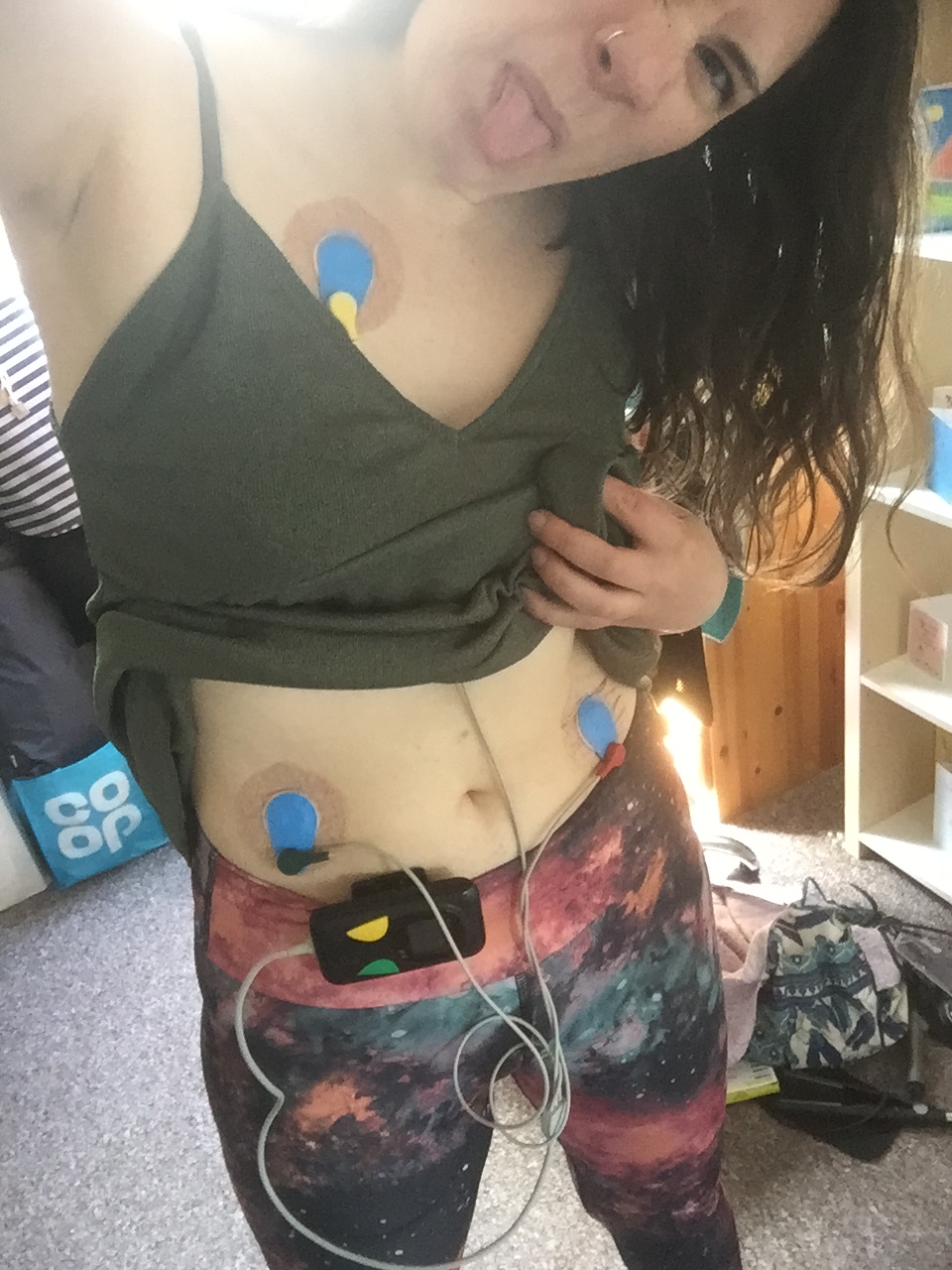
I recovered enough to make it back to Aberystwyth but my health was still following a general downward trajectory. To cut a long and meandering story short it wasn’t long before my best friend, G, who had been heroically doing her best to look after me dragged me to A&E. I’d been told by one of the doctors I’d seen that I probably had something ‘like’ post viral fatigue syndrome and I just needed to keep pushing through. That unfortunately wasn’t the best advice though and things escalated to a point where I was struggling to stay upright. G rescued me and intervened. I think I needed that. When all of your tests say that you’re fine you start to doubt yourself and I felt guilty about taking up a doctor’s time when I was just going back with the same problems. There comes a point when they run out of tests and ideas and you just lose hope. In hospital I had more blood tests, my third ECG and a CT scan. I had the CT scan because my left rib cage had become swollen and very uncomfortable. Still is a bit. All of the tests came back absolutely fine (no surprise at this point) and the doctor explained that it was ‘probably’ something chronic like chronic fatigue syndrome but as an A&E doctor it wasn’t her area of expertise. But she did arrange an echocardiogram, a weeklong ECG and an exercise test to check that my chest pains definitely weren’t anything more sinister (they weren’t). She also sent me back to see another GP.

As usual I felt like a total hypochondriac explaining my history and reeling off my long list of wide-ranging symptoms but the GP listened, had a little think and told me that it did indeed sound like I had ME/CFS (Myalgic Encephalomyelitis/ Chronic Fatigue Syndrome). She also told me that there was nothing I could do and that I probably wouldn’t get better, which was just magical news!      

Within 9 months I was living back with my parents after somehow managing to finish my degree. There were some bright periods where I felt better and managed to get out and about but never with the same freedom and vigour that I’d had before and there was always payback. Something like celebrating a friend’s birthday could leave me bedbound for a few days…and I don’t just mean with a hangover! For the most part I was scared and housebound. It was awful. At my worst my muscles and joints hurt so I could never get comfortable, my muscles would twitch, I struggled to have a conversation because I couldn’t remember words or sentence structure, walking was incredibly difficult, I had to avoid loud noises, strong smells and bright lights because they increased my nausea and caused me physical pain, I had dreams and nightmares that were so vivid that it would take me a while to figure out that I was awake and then I’d struggle to get back to sleep despite being exhausted, I was always too hot, often itchy and I felt lightheaded.

It was about this time I also had my graduation. I was absolutely determined to go even if someone had to wheel me across the stage. I never thought I’d go to university and after finally deciding to in my late 20s with no formal qualifications it felt like an immense achievement. I spent the weeks beforehand doing as little as possible in preparation and managed to walk across the stage and bluff my way throughout the whole day. I had to wear earplugs to get through the constant clapping, took as many painkillers as I possibly could, barely spoke to anyone and lent heavily on both G and my parents but I genuinely think nobody noticed. By looking at my photos you’d never know how much I was struggling.

So lucky to have a friend like G! Mega babe.

That was me at my worst and I’m obviously much better now because I’m living in Aberdeen and I’m halfway through the first year of my PhD. But, I still have ME, no matter how mild it is or how high functioning I am, it still dictates how I live my life.  It has changed my life completely. How ME affects me now, 2 and a half years after it all started is what I’ll write about in my next blog post.

If you’ve made it all this way to the end I commend you! Bit of a slog I imagine! I think if I could give you one take home message from this it’s listen to your body. Don’t rest on something like ‘I’m young and fit’ to carry you through an illness. If you’re sick take some bloody time off, ease up a little. The amount of times someone with a raging cold tells me they can’t take a day or two off because they’re too busy, they’re fine, they’ll push through…it makes me want to scream! Listen. To. Your. Body!