PIPS: My Internship at the Scottish Lyme Disease and Tick-Borne Infections Reference Laboratory (SLDTRL).

(FYI this is less about what I actually did day to day and more about my experience with PIPS (my PhD internship) as a whole. I know the NHS/SLDTRL aren’t secret societies but I don’t know how much they’d want me sharing so I’d rather just be incredibly general!! I’d very much like to stay friends with them!)

Raigmore Hospital

PIPS

So, as you probably already know, I’m a PhD student and I am part of a doctoral training programme funded by EASTBIO. As part of that training deal I had to do a 3-month internship that had nothing to do with my PhD. This, by the way, is called PIPS (Professional Internships for PhD Students).

I guess I should start by saying that my feelings around PIPS underwent peaks and troughs…but don’t worry we definitely end on a peak. Everybody’s experiences and opinions are different, and actually, often quite polarised! To some extent I think it’s what you make of it but also, I think it depends on luck and your past experiences.

When I first heard about PIPS I was super enthusiastic about the opportunity to spend 3 months exploring my options and doing something different. In the early days I sang the praises of PIPS to prospective EASTBIO students, had tonnes of ideas that I chatted to my supervisors about and thought by the time it came around I’d appreciate the ‘break’.  

But after this initial bout of positivity I went to the PIPS meeting where the rules of PIPS were actually explained. This is when the trough started! Firstly, PIPS has to be PhD level. This was super blurry to me. What does it even mean? I still don’t know! I have a few problems with this. For a start how many jobs do you actually ‘need’ a PhD for? Jobs have worth regardless of the training level required to do them and have we failed if we leave our 4-year programmes as doctors but get a non-PhD level job? Secondly, we had to be in control of a project and we couldn’t be left to do ‘menial’ tasks. I understand that this is probably there as a rule to protect us so that we don’t end up making tea for 3 months, but, to me, it felt a bit rich to swan into a role that I’ve no experience of and not start at/or near the bottom. Thirdly, funding options were limited. There is funding but you’re only eligible if you get a PIPS far enough away from your city or home base. Okay, we’re still receiving our full stipend during that time but the money that is available is in no way enough to cover rent and travel for 3 months. Am I supposed to rent my flat for 3 months? Move out of the little flat I love and then find somewhere else to live when I return? In that case where do I put my stuff? Do I dip into my savings and pay double rent? Or do I stay within city and limit myself to positions I find there? After the meeting I felt pretty dejected, essentially none of the things I’d hoped I might do fit into the criteria which meant a huge rethink.

There are companies all over the country that advertise for PhD students specifically for internships of this nature but I can tell you now, there were very few (as in none that I saw) in Aberdeen, which is my city. Plus, these positions are obviously competitive so there’s no guarantee you’ll get it. Outside of these advertised roles you can organise your own project with a company of your choice…as long as it’s PhD level of course. You’re advised to ask the company to help pay for your internship which I found deeply uncomfortable. “Hi, you don’t know me, can I come and project lead something in your company for just 3 months and can you pay me for it”? Oof. Me being a negative nelly aside, the freedom to explore options within a company you like, does have the potential to be both rewarding and exciting.

I think overall I was just so disappointed that after all my enthusiasm and all of my ideas it boiled down to who are my contacts and who will make sure I’m not out of pocket for this? It just became a stressful hoop I had to jump through. Because of that it didn’t feel like a break from my PhD at all. I actively dreaded it. I’d swung into a position where it felt like a waste of time, I guess partly because I felt that at this point in my life (after 16 years of working in various roles) I didn’t need to do work experience for the sake of work experience.

I also think one of the trials of this situation was also the fact that I’m a student rep for my year, and whilst I was struggling to engage with the process, I was also trying to be encouraging and enthusiastic in front of students earlier in their PhDs. Ultimately, I didn’t want to influence their opinions but I didn’t want to lie about how I was feeling either. It was a razor fine line to tread and I generally said as little as possible!

Having said all that, I think I was incredibly lucky that my PhD supervisor was still in touch with one of his ex-students and they were in a position to take me on as part of a project just North of Aberdeen in Inverness. They were able to provide super cheap accommodation and because it was 50 miles from my home city, I could get EASTBIO funding. Yay! They promised me I wouldn’t be left out of pocket which was a huge relief. Not only this, but perhaps most importantly it was something I was interested in doing. The project plan took a bit of tweaking and I have to say that the PIPS co-ordinator in EASTBIO was really helpful with this. She very quickly advised me on exactly what would make my project PIPS appropriate and guided me until the deal was signed. Happily, at this point, I was coming out of my grump!

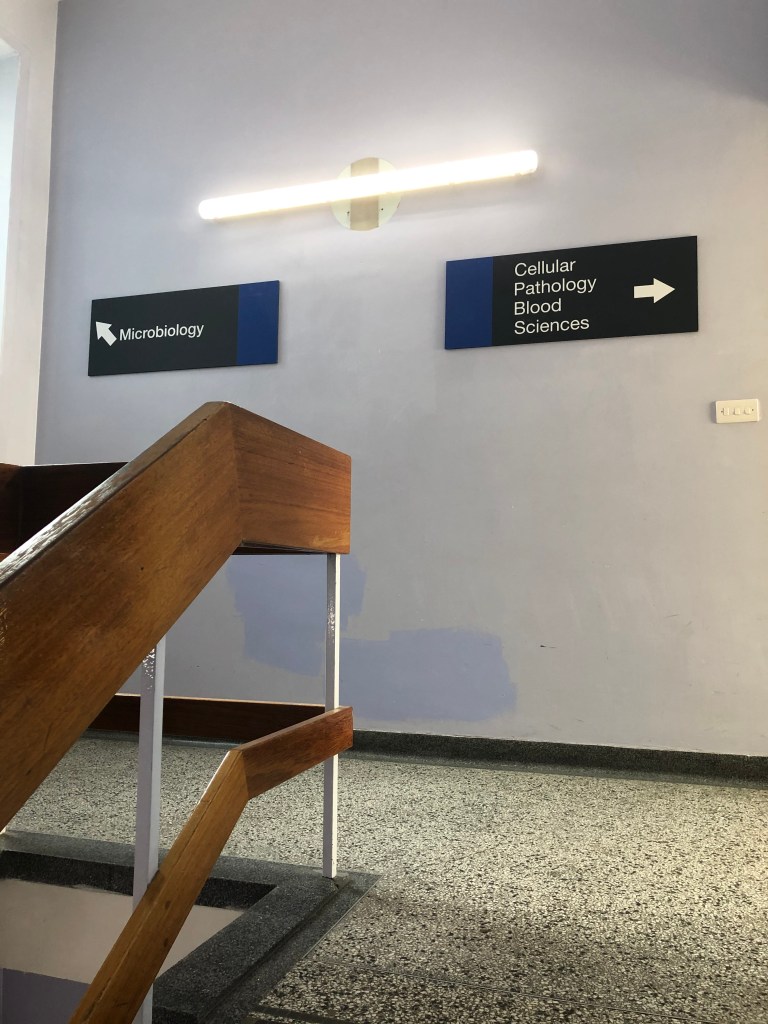
As you can probably ascertain from the title of this blog my PIPS was in the Scottish Lyme Disease and Tick Borne Infections Reference Laboratory (SLDTRL) which is situated within the microbiology lab in the Raigmore hospital in Inverness. The SLDTRL is THE reference laboratory for all tick related things in Scotland. “The aim of SLDTRL is to provide more comprehensive and standardised testing for Lyme disease and other tick-borne infections and to improve the epidemiological data provided to Health Protection Scotland (HPS)”. Which is very cool.
Okay, so with the moany downer bit out of the way I can tell you about some of my experiences in the PIPS I actually ended up doing!

Where did I live?

Anyway, I guess one of the most natural places to start is accommodation.

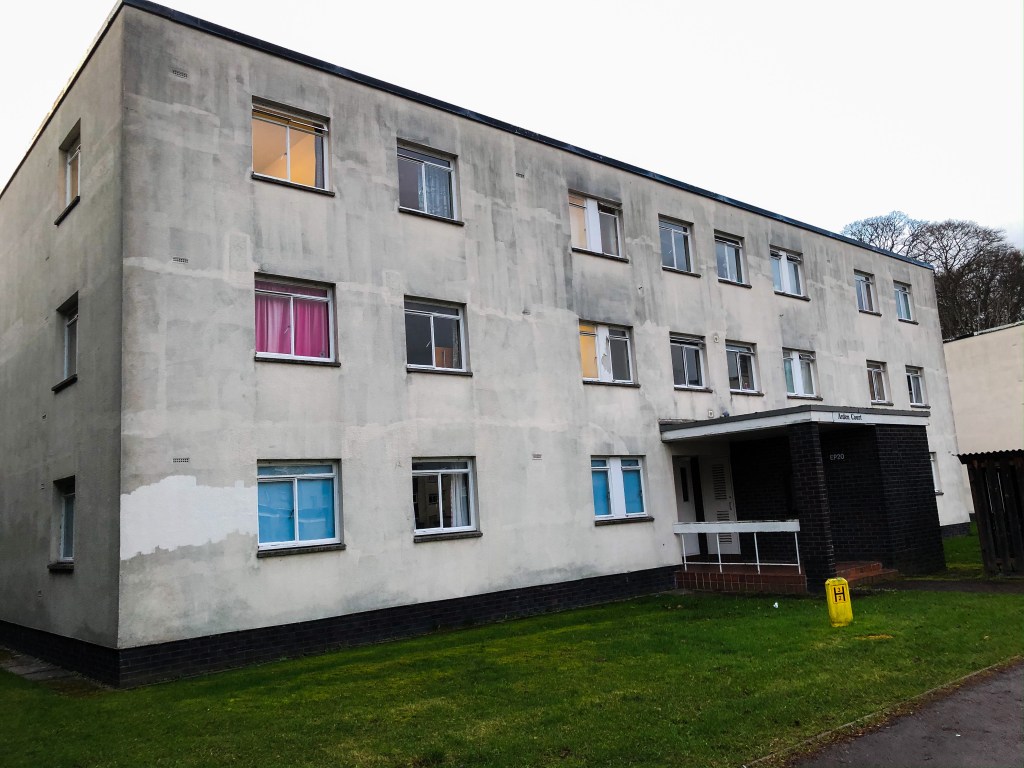
When I first arrived in Inverness I stayed in a little Airbnb in the city because there were a few days I wasn’t able to squeeze into hospital student accommodation, which was great. It meant the first part of my PIPS felt like a holiday and I like Inverness, so I enjoyed being in the city. On that first weekend my partner travelled up from Aberdeen to see me (obviously!) and help move me and my stuff up to the hospital. I collected the keys from a security guard who pointed me to an area of uniform grey buildings and I skipped off to find out where I’d be living for 3 months. We walked through the vast hospital carpark towards my block of flats, which resembled something from the series Chernobyl, albeit before the disaster! It didn’t get too much better inside the building which was brutally reminiscent of a Soviet Bloc stereotype. The pictures actually make it look better. It was so bad it was actually quite funny. I don’t think my partner knew what to say…other than that he didn’t want to have to leave me there!

Flats accommodated four people with all facilities shared…definitely not something I’m used to anymore. I rarely ran into the people I shared with which may have had something to do with the fact that I’d wait in my room until I could hear there wasn’t anyone else around! But, meeting people occasionally was unavoidable. Everyone was very nice and I was told that the accommodation was actually better, if not the best, that those people had experienced within the NHS. I totally get that the NHS have better things to spend their money on than staff/student accommodation and it’s not a priority butttt it’s still pretty grim! It did however eventually become ‘home’ and I got very used to it. It also encouraged me to spend all of my weekends away and explore the area whilst staying in nice hotels and airbnbs! Which was great.
People

Outside of the accommodation and inside the hospital I think the first thing I want to talk about is the people. Everyone was so friendly. I’ve never felt so welcome, so quickly, in a new place of work. I was introduced to everyone in the microbiology lab at one of their daily ‘pause’ meetings and regardless of the fact I was only around for 3 months people were actively interested in chatting to me and made a real effort to invite me to things. Perhaps it’s because they’re used to having locums around or perhaps they’re just a delightful team of people. But either way, it was hugely appreciated and made my transition to a new environment considerably easier. Outside of the lab, the cleaners, the people that worked in the cafes, the admin staff and the security folk were all lovely.

I shared an office with the director of the ref lab, Dr Roger Evans (who is now on a super cool sabbatical with the WHO for a year), the deputy director, Dr Sally Mavin (who is now the director) and specialist biomedical scientist, Rachel Milner. It was a great opportunity to share an office with my bosses. They took lots of time to make sure I was getting what I wanted out of my PIPS, they included me in meetings so I got a broader idea of what happened within the microbiology lab and were just generally open and available to answering any questions I had. They also made sure I got my free Hep B vaccines despite the fact I wasn’t directly handling human samples. Winner! From a women in STEM perspective, both Sally and Rachel were inspiring role models on a number of levels and I’d say the majority of staff in the department (in a number of varying positions) were female.

Attitude

The attitude towards work, for me, was one of the most glaring differences between the SLDTRL/microbiology lab and academia.

For a start, they take breaks, actual planned breaks! This revolutionised my life and I now take those same breaks whilst I work from home during lockdown. I started at 9 and I finished at half 5 every day. There is a coffee break at half 10/11ish, a whole hours lunch break at 1ish and another, optional, tea break at about 4ish. As a PhD student I have coffee at my desk, I normally eat at my desk and a break is me scrolling through Twitter or doing a quick bit of online shopping. I found that in taking breaks I actually organised and broke down my workload better and actually worked harder and more efficiently. It was also just nice to have a change of scenery from my office for a bit. It’s not that my supervisors don’t give me the freedom to take breaks, of course they do, I think it’s more that overworking is just an insidious part of academic culture. On the theme of breaks one of the first things Sally asked me was whether I had any holiday due as part of the PIPS, this definitely struck me as something very non-academic to ask! I, along with everyone else was actively encouraged to take all holiday owed.

On top of the breaks Roger, Sally and Rachel were all firm that I should leave close to half 5, or earlier! I never felt the need to work longer. As a PhD student I often find myself taking work home with me. The hours I’m in the zoology office don’t necessarily reflect the hours that I work and there’s generally a feeling that whatever I am not doing isn’t ‘enough’. There can also be this weird posturing between students sometimes about the amount of hours they’re putting in. This has definitely changed since I’ve got back. Sharing an office with the people in charge of me meant they knew what I was up to pretty much all the time and I knew they were happy with my progress. Since returning I’ve sent my supervisors an email every Friday with the work I’ve done and this has both kept me feeling accountable during lockdown, and created an air of transparency in that if my supervisors didn’t think I was doing enough work week to week they could tell me. Of course, they haven’t said anything!

I also found that in the Raigmore they just generally stopped more frequently and reflected on things before proceeding further. I often feel the pressure in zoology to just get on with things and think about it later. If it was just a bad day in the microbiology lab, as in machines were being fickle or I (or whoever else) was making mistakes, the general attitude was to stop. Tomorrow is a new day. As a PhD student my attitude would have more likely been to keep working until I got it right, even if that means working very late.

People at the Raigmore worked really hard but there was just a much better balance. Okay, people skipped breaks sometimes, worked extra hours, took work home with them occasionally but the weighting of that was totally different. I feel like in academia those things are expected on the regular and quite frankly I have craft projects to finish!

Teaching

So, academic labs and biomedical labs are very different in what they do and as a result of this training is also very different. It’s not unusual to be handed a protocol and told to just have a go, to design a protocol yourself, tweak somebody else’s or be quickly taught by someone how to do something whilst you’re furiously trying to scribble down everything they’re saying. Learning how to do this as well as learning how to troubleshoot your problems with protocols is a huge skill and sometimes pretty fun. I’m not knocking that…but, I found the handholding approach in a biomedical lab to be incredibly comforting. I can’t remember the exact timing and process so don’t quote me but people are shown how to do something a number of times, then they are watched as they do that thing themselves a number of times and only then can they start running tests without direct supervision.

Biomedical labs do the same tests over and over again on very important samples and therefore they have standard operating procedures (SOPs) and a tonne of quality control measures. Just knowing that everyone did everything the same way, being able to compare quality results to other peoples and having everything be traceable was just fab! I thought I might find it all a bit restrictive but actually it gave me ideas of how I would like to plan, document and run my PhD experiments in the future.  

(Female (left) and male (right) ticks.)

This blog is already too long so well done if you made it all the way to the end! I guess the takeaway was that I’m glad I remained somewhat open-minded despite being very grumpy about the PIPS journey at one stage. I think we’re often made to do things that we’re not totally thrilled about and okay, it’s alright to have moan and it’s okay to be unenthusiastic about something…nobody’s perfect! But, I think it’s equally important to admit when you were somewhat wrong and that you found an experience more valuable than you ever would have imagined.

I’m just hugely grateful to the SLDTRL, the microbiology lab and the Raigmore in general.

Dry January

I honestly never thought that I’d be prepared to give up alcohol for a whole month! I love a glass of peaty whisky on a cold evening or a pint after a long walk. I love trying the new craft beers, especially the sours, brought out by Brewdog and Fierce in my home city of Aberdeen and there are countless academic networking events where I’ve enjoyed a glass of boxed wine to help the chat flow a little smoother!

BUT, I hit Christmas pretty hard and I get really bad hangovers now (thanks 30s). I was starting to really resent the fact that I could lose a whole day after a heavy event; struggling to get up, ordering Burger King to my bed and sometimes being in so much pain even watching Netflix for the first half of the day was too much. I’d also seen tweets about academic drinking and started to notice for myself that ALL of the academic events revolved around alcohol and that there were a number of non-drinkers that maybe felt a bit pushed out and jaded at the lack of interesting alternatives.

Now, people have different opinions on non-alcoholic or low alcoholic alternatives to classic bevvies. I heard a lot of people ask ‘what’s the point?’ or say ‘just have a coke’. But I like the taste of all the alcohols and a lot of the time I crave the taste of a glass of wine with dinner not the effects of the alcohol in it. I also found that in social situations having a bottle of low alcohol beer made me feel more involved than a glass of coke would have. However I appreciate that is a highly personal thing. Not that this would have pushed me to having a drink but it also meant that people didn’t question the fact that I wasn’t drinking when I was out, because it looked like I was!

My biggest concerns for the month were that I’d struggle to enjoy things because I’d find it difficult to chat freely and to have conversations with people I didn’t know very well and that my friends would think that I wasn’t any fun or that I was somehow changing.

So anyway throughout January I tried quite a few of the low and non-alcoholic alternatives out there…and here is what I thought.

(Although, to make it quite clear… I don’t really know what I’m talking about. I like what I like and I’m pretty much making it up as I go along, so I’m not going to go on about mouthfeel, or colour, or nose or whatever! But well done you if this is a connoisseur level skill that you do have…I only have the experience and fervour to critique donuts this way!)

Right, without further ado…

BEER

Okay, let’s start with the BrewDogs. I was quite curious to try some of the BrewDog AF’s because I of course love BrewDog but also they’ve just opened the world’s first alcohol free bar in London called…well…BrewDog AF. Now, maybe it’s because I’m used to their alcohol full sours and stouts which are among my favourites or maybe it’s because I only managed to try four of their AF beers (I’ve reliably been told Hazy AF is the best) but I was a little disappointed. I got more used to them the more I drank and I’ve even had one or two since dry January has ended but I was never fooled into thinking I was drinking a real beer!

Wake Up Call – I ended up with two.

Wake Up Call (0.5%)

A dark, coffee stout…with something missing! I love a pint of Jet Black Heart or Zombie Cake, which feels a bit like eating a meal. They’re thick and full of flavour whereas Wake Up Call is a little thin and sad. This was one of the only low alcohol stouts that I managed to try so maybe they’re just hard to do.

3/10

Punk AF (0.5%)

This was the moment it clicked that it was not Punk ‘As Fuck’ but Punk ‘Alcohol Free’. Idiot! So, in all honesty IPA’s with their hoppy flavours aren’t my favourite anyway. This was certainly hoppy but still felt a bit thin and lacking depth. I’ve had this in the Aberdeen BrewDog’s since January when there have been no other alcohol free beer options but I always look at my pals bevvies or scan the options on the menu board and wish I was drinking something else.

4/10

Nanny State (0.5%)

This is my favourite of the BrewDog AF range that I’ve tried so far. It’s hoppy, which as we know isn’t my favourite, but it’s certainly the most flavourful. I think it’s the closest in taste to having a ‘real’ beer. I’d happily drink this on a night out or maybe have a few of these between alcoholic beverages so I’m not quite so hanging in the morning!!

7/10

Raspberry Blitz (0.5%)

For a hot second I’d forgotten I’d tried this one! I think that’s because it makes me think less of a sour beer and more of a sour fizzy drink. I love it though and I drank this many times last summer, usually after beekeeping. It’s super sharp and fresh and tasty. I’m not sure that it would quite fill the gap of an alcoholic beer for me, but I would drink it again and again and again on many occasions.

7/10

Okay, time to move away from BrewDog and onto all the other non and low-alcoholic beers I managed to get my hands on!

‘Pale Ale’ – Big Drop Brewing Company (Suffolk) (0.5%), found in Morrisons.

Excellent! This was 100% one of my favourites. It was rich, full of flavour, it didn’t taste/feel thin…it was one of the few that was so convincing that I managed to unexpectedly feel a bit like I’d ‘had a drink’. Not tipsy, but warm and relaxed! I wanted another one and I definitely want to try other non-alcoholic beers from this breweries range.

9/10

Low Tide – Shipyard (0.5%), found in Morrisons.

Admittedly what first attracted me to this beer was that it has a gull on the label and…I like gulls. But it had depth and flavour and it didn’t have the thin ‘feel’ that I grew to find super disappointing in other beers. It was fruity and tropical and I could even taste the promised hint of blueberry when I concentrated hard enough. This was another low alcohol beer that I could drink over and over again and another that made me feel psychologically tipsy!

8/10

Braxzz Porter – Braxzz brewery (0%), drunk in the Black Isle Brewery pub in Inverness.

(I love this pub!)

I don’t actually remember drinking this! Which potentially tells you all you need to know, BUT luckily, I did make notes on it in my phone. They read, “tastes kinda alcoholic. Best stout/porter yet”. So I must’ve liked it…but not enough to commit it to memory.

5/10 (Totally hedging my bets there)

Brooklyn Special Effects – Brooklyn brewery (0.4%), drunk in Hootenanny in Inverness.

I think we need to start by saying that this was so convincing that when I left the pub after having three of these the thought crossed my mind to ‘sober up’ so I could keep my wits about me getting home (I was completely sober!) AND I woke up with a hangover. Now, okay, it wasn’t a hangover – I think I was just over tired and dehydrated but I still had that beery taste in my mouth and the feeling of shame about ‘drinking on a school night’ hovered over me. All of that collectively made me feel hungover. Definitely one of the things I was trying to avoid! I mean I had three, so I obviously like it…a lot. It was hoppy and piney, with lots of flavour and good ‘depth’.

8/10

St Peter’s without, Gold (0%), found in Morrisons.

Dear lord, do not do this to yourself. This is up there with my least favourite beers of all time and I’ve tried a lot of very funky sours (usually ordered by my supervisor and friend Ewan). I took a few swigs, made a few other people suffer it and then abandoned it on a table mid party. It was SO malty/yeasty. I like both of those things, but not with that level of pungency. It reminded me of when you do a brewery tour and they get you to try and taste the malt before it goes through the brewing process. That experience is great on a tour…. I just do not want to drink a whole bottle of that flavour. The one positive thing I have to say about this is the bottle. It made me think of an old medicine bottle, the kind you’d dig up at the bottom of your garden. For that I can give this beer half a mark!

0.5/10

WINE

‘The Bees Knees’ by North South Wines ltd (0%), found in Morrisons.

In mid-January I did my first 45 minute talk to a group of beekeepers and this was an achievement I wanted to celebrate. The Bees Knees doesn’t claim to taste like a sparkling wine but that doesn’t mean that I wasn’t disappointed that it didn’t! It reminded me of Schloer or sparkling elderflower and it was probably in a similar price bracket. What I did like was that I had a cork to pop! It made it feel more like an event. Without that I feel like I might as well just have bought a bottle of my favourite, coke zero, and called it a day. I wouldn’t not buy this again…but I’m not going to look forward to my next bottle or crave the taste of it!

5/10

McGuigan zero – Shiraz, from Morrisons (0%).

Looked like wine, smelled like wine…tasted like disappointment. Honestly, every mouthful of this was bitterly sad. I wanted real wine and I wanted real wine more than before I started drinking this alternative. I would not buy this again…ever.

1/10

GIN (yes gin!)

Ceders Wild (0%)

The only note I made on this on my phone was, ‘pointless’! I tried it with tonic, quite a strong one to be fair, and I don’t think I really got any notes of botanicals at all. I tried it straight from the bottle too, just to make sure I gave it a fair shot and, I mean, it tasted of something (probably juniper) but not a lot. If I’m honest I think I’d get just as much of a mock-G&T feeling by just drinking the tonic with a bit of ice and lime. I should probably add here that it was quite expensive at about £15-£20 for a medium sized bottle.

1/10

Seedlip Spice 94 and grapefruit tonic in a can (0%)

I’d heard a lot of people talk about this non-alcholic gin alternative but after the failure of ceders wild I didn’t fancy forking out another £20-£30 for a bottle. Luckily my friend bought me a pre-mixed can to try at a party…and it was great. I think it’s worth bearing in mind that obviously the company have carefully mixed the drink for you, so they’ve undoubtably ensured that you’re getting the maximum flavour. I do wonder what it’d be like if you mixed it yourself with whatever tonic you have lying around the house…but I’m not curious enough to spend any money!

6/10

So, all in all it was easier and I enjoyed it way more than I thought I would. I’ve even gone for non-alcoholic options since the end of January! It’s early days but I’ve loved not being hungover. Maybe it’s a ‘new me’, maybe it’s not, maybe it’ll be a fairly hangover free year, maybe I’ll have a wild couple of months after this post goes up …who knows?! I’m not telling you how to live your life, I’m not a paragon of health! But if this has given you food for thought and it’s something you want to try too at least you know there’s plenty of decent non-alcoholic options out there (and some not so decent ones)!

Now let’s get back to it.

10 things that I’ve realised…during the first year of my PhD

Realised? Learned? Experienced? I wasn’t quite sure which word to go with but whichever way you look at it the following 10 things have made me grow as a student, and in general as a human being.

Imposter syndrome is a constant.

This probably needs no introduction, but, just in case; imposter syndrome describes feelings of inadequacy and self-doubt that aren’t relieved by external proof of your competence. It’s the feeling that you’re going to be ‘found out’ as being incompetent after winning an award or that someone’s made a mistake in letting you speak at a conference or attend a meeting. That somehow you’ve slipped through the net and you shouldn’t be amongst your peers doing a PhD!

Maybe there are some unique individuals out there that don’t experience any level of uncertainty in their abilities, academic or otherwise…but I’d say pretty much everyone I’ve spoken to has at some point felt like an imposter.

For me, what I’ve realised is that feeling like an imposter is actually pretty constant and I don’t think these feelings will ever go away.  But, actually, that’s okay! I think firstly, it makes me more understanding of other people’s anxieties and secondly, I’m pretty used to it now so I can more or less acknowledge those thoughts and then work alongside them.  What’s that cheesy saying’? ‘Feel the fear and do it anyway’!?

In fact I had ‘impostery’ feelings writing this section because I found out imposter could, and is more commonly spelled impostor…which made me doubt ever writing anything at all!

Pulling some excellent facial expressions whilst presenting data I wasn’t so confident about at a conference in Valencia!

When you gather your data together it never looks like much.

I feel like I can work super hard, spend some long hours in the lab running experiments and then when the time comes for me to gather that data together to show my supervisor it looks like…*drumroll*…‘nothing’! Several weeks worth of work can sometimes culminate in a single graph. That graph doesn’t show the time spent fixing a problem with experimental design, waiting for a machine to be fixed, collecting difficult samples, the mandatory course you had to attend, the demonstrating you did, reading and planning in preparation for another project you’re working on…you get the idea! Sometimes, if the weight of doing or achieving ‘enough’ (whatever that means) is pressing down on me I write lists of the things I do each day. Each email I’ve sent, each paper I’ve read, each academic conversation/meeting I’ve had etc… It helps me to see that although I might not have achieved as much toward the completion of a particular project as I feel I ‘should’ have I can physically see the list of all the other shit I’ve had to do.

Paying too much attention to other people’s projects is dangerous.

In a nutshell I’ve realised it’s dangerous to compare my PhD project to others. In general, the vast majority of us have projects which are totally different. Some are really prescriptive with papers and chapters already pre-planned but others are totally blue sky and are led by what their experimental data suggests could be interesting next. Neither are wrong and both come with their own challenges.

Also, lots of people you pass in the corridor will give you something akin to the highlights reel. They’re writing a paper, they’re preparing for a conference, they’ve won an award or they’re finishing an experiment. Obviously, sometimes people will talk about a problem they’re having, especially if they think you might be able to help them solve it, but those moments rarely come when you’re feeling a bit fragile!     

It’s easier said than done, but I try to focus on whether my supervisors and I are happy with where my project is at and where it’s going and put my blinkers on to most of the other stuff.

Humble bragging is a thing.

I think academia, and especially academic twitter is the first place I’ve truly experienced humble bragging and it is rife! Initially people saying things like ‘we’re already one month into the new year and I’ve only managed to write 2 papers, speak at a conference and win a Nobel prize’ would have me panicking that I wasn’t working hard enough or achieving as much as I should be. Now, when a postdoc tells me that they’re annoyed because a new PI keeps asking for their advice or a PhD students tells me they just don’t know how they’ll find the time to make the corrections to an otherwise accepted paper from their undergrad project I inwardly roll my eyes, smile, sympathise and carry on with my day.

It pays to be honest.

I think recognising moments when I need help has developed over time, and figuring out what kind of help I need and how to ask for it has come over even more time…and a little bit of practice! Although having said that, I still don’t find it easy.

Having developed M.E. about 3 years ago I consider being honest a matter of PhD survival! I can’t push through, I can’t overwork for a couple of months with the promise of a holiday at the end and I can’t continually say yes to things without it affecting my health. I’ve had to become more honest with my supervisor about when I need a day (or three) to work from home, when I need to postpone an experiment, when I need to scale back on my commitments and when I’m feeling stressed or overwhelmed so he can help me figure out how to fix that. Prolonged stress is definitely a relapse trigger for me and isn’t good for you anyway! You don’t need to have a chronic illness to be deserving of a helping hand and some advice when things are fraying at the edges!

Holiday is important. Take it.

…even if that means not going anywhere fancy, or anywhere at all!

In my first year I didn’t take my holiday. Idiot!

I have a spreadsheet with my research grant budget on it and also the amount of holiday days I have as a PhD student so I can keep track. I got into the messy habit of feeling if I didn’t work ‘hard enough’ one day I’d consider it a half day or I’d make up the time over the weekend or in the evening. If I’d I worked a day on the weekend I sometimes felt like that meant I could take a day off in the week, but I rarely enjoyed them because I felt guilty. So I stopped taking them. I also had the added complication that I shouldn’t take holiday in bee season or at least if I did I shouldn’t be away for long. If I did go on holiday for a couple of days I took work with me. I also know a couple of people who don’t take their holiday, almost as a matter of pride, and this for some reason made me feel awkward taking mine. All of this is just straight up unhealthy!

On top of this I had a couple of small M.E. relapses in my first year and I wonder if those could have been avoided or lessened if I’d have given myself proper time off. (Although ultimately your physical health should have nothing to do with holiday hours taken). In my second year I vow to take my full holiday…and not to pack any work!

Ironically taken during a conference which turned into a holiday!

It’s a good time to get out of my comfort zone.

This, in it’s very nature is obviously pretty uncomfortable, but I’ve found the first year of my PhD great for trying new things. I try to get in amongst the thick of it as much as my introvert personality will allow! I accept all the talks I get offered, I apply for conferences, I attend networking events and I try to engage in conversations with ‘strangers’ in a vague attempt to build connections but mostly to learn how to ‘do academic chat’. As I’m still early in my PhD career people aren’t really interested in collaborating with me yet, but they might be some day and when they are I’d like to be a little bit better at engaging with them. I feel like the PhD is the perfect time to make mistakes, I mean I’m still training and I’m still finding my feet so I’m allowed to give a bad talk or make a rubbish poster, right?…Right?!!!

EASTBIO; getting me out of my comfort zone as often as they can!

In many ways the PhD is easier than my masters and my undergrad.

First of all, just a disclaimer, I’m not in any way saying a PhD is easy or diminishing the trials of PhD life BUT…

…for me, my PhD in many ways feels ‘easier’ than my undergrad and my masters and actually lots of the “real world” jobs that I’ve had. This is of course different for everyone. I think some of that comes down to the fact that I’m just generally happier now but there’s a tonne of other stuff that contributes to that too. When I did my undergrad I’d been out of education for about a decade and I hadn’t done any A-levels (or highers) so I had to learn how to learn again, plus I joined the university dance team, and I worked in a lab as an unpaid research assistant. So, I just generally had a lot going on! But, also, I had to turn up to a lot of stuff I wasn’t super interested in or I just didn’t understand and the topics change ALL the time. I floundered a bit. Plus you have to write assignments and do exams on all of those things and I remember it feeling a bit relentless.

During my masters I was still recovering from my first and worst bout of M.E. (which I contracted/developed in the final year of my undergrad), so I was pretty scared and lonely and Biomedical Science was quite a change of direction from Zoology and Microbiology. As with the undergrad, the topics changed a lot and quickly. It was great for giving tasters that taught me what I liked and what I didn’t but it was tough going. I felt like I never got good at anything, like I was just scratching the surface, and if I didn’t ‘get’ something I didn’t have time to figure it out before the module was over.

I felt ready to focus on one topic and explore that as fully as I could. I also felt ready not to have to hand in assignments or do exams! And a PhD gives me both of those things and a bit like an undergrad or masters (but unlike a job) I more or less run my own schedule.

So although I’ve had a little cry in quiet stairwells (I’m an emotional bean), I’ve ranted down the phone to my mum and I’ve felt utterly bewildered about what I’m supposed to be doing… I’d still say that doing a PhD is one of the best things I’ve done and yes, in many ways easier.

Aberdeen is fab, but quite far away.

I made some pretty bold statements about visiting people after I moved to Aberdeen and none of it has come to fruition! A lot of my friends are spread out; across West Wales, the Welsh Borders and London. I said I’d go and visit and I really did mean it, but I didn’t quite acknowledge just how far away Aberdeen is and how difficult and costly it would be to go South… especially to West Wales.

Although Aberdeen is a bit of a marmite city, as in people seem to love or hate it, I’m a lover and I think it’s totally worth the relative ‘remoteness’! To me it is the goldilocks zone, not too big or too small, it has everything I need, it’s friendly but not everyone knows your business, it’s easy to get into the countryside, it has history, it has lots of craft ale (although it could do with a decent wine bar!), it’s not too busy etc… etc… which makes up for the fact that seeing Southern dwelling friends or relatives is going to be infrequent or expensive or both!

It’s hard to feel enough for academia.

I think one of the hardest things for me so far is struggling to learn what ‘enough’ is. It’s hard sometimes to keep the blinkers on my own project and focus on what I’m doing and how hard I’m working. People will always work early or late or on the weekend but it doesn’t mean that I have to. Everybody works differently.

I feel like I could also work all the hours, stress myself out, go above and beyond and yet someone will always ask why I didn’t attend a particular event, haven’t read something yet, haven’t finished writing a paper or haven’t replied…and I can bust a gut and be super proud of something and someone will tell me that what I’ve just accomplished was easy or unimportant or ask what I’m doing next or why I didn’t do it another way. Like, I said, it’s my biggest struggle and although I’m pretty good at saying no to things and limiting my work hours to 9-5 (ish) I feel like I’m constantly justifying how much work I’ve done and I always feel like I should be more, that who I am and what I’m doing is not enough.

This year I made a resolution of sorts that I’d celebrate my achievements regardless of whether other people thought they were achievements or not and to try and become a bit tougher!

Done.

So there it is, 10 things, in no particular order that I have realised in the first year of my PhD.