So, when I say ‘all’ of them…I didn’t quite make it. My festive eyes were bigger than my belly and I overstretched myself! It’s like when I moved to Aberdeen and decided that I’d visit all the castles in Aberdeenshire only to find that there are well over 200 of them! I thought there’d be about 30 Christmas movies, but the more I watched the more that were suggested to me. It was overwhelming. Most of them were kid’s movies too and some of them can be real gems, most of them are not!
I don’t even want to admit how short an amount of time I watched these in and how many of these I watched in a day but it probably says something that I pretty much ended with Krampus, a Christmas horror movie!
Anyway, I’ve rated them most into 4 groups; the best with a hands up emoji, then those with an okay sign, then a thumbs up…then everything else. I should probably mention in advance that I’m no film critic! I’m easily pleased and I love the unpredictable feminist masterpieces that are hallmark movies! So take my opinions with a handful (not just a pinch) of salt.
The Best!
Dash and Lily. (This series is an absolute treat.)
Princess Switch. (I LOVE these movies!!)
Princess Switch: Switched Again.
The Christmas Chronicles. (Delightful.)
The Christmas Chronicles 2.
Arthur Christmas.
Christmas Wedding Planner. (I especially love the peak unrealistic ending!)
The Knight Before Christmas.
Operation Christmas Drop. (A new one…and loosely based on something real).
A Bad Mom’s Christmas.
I’ll be Home for Christmas.
Klaus. (Oh my goodness I loved this film!)
Angela’s Christmas. (CUTE!)
Over Christmas. (What a surprise? A nice German series – well dubbed so you don’t have to read!)
A California Christmas.
The Great.
Nailed it – Christmas Specials.
A Christmas Prince. (These are almost top tier, but not quite.)
A Christmas Prince: The Royal Wedding.
A Christmas Prince: The Royal Baby.
Christmas With the Coopers.
Nativity.
Let it Snow.
Christmas Inheritance.
My Christmas Inn.
Angela’s Christmas Wish.
Pottersville.
Christmas Break-In.
48 Christmas Wishes.
Holiday Calendar.
Alien Xmas. (Also a good surprise considering I am not the person meant to be watching this!)
Krampus. (A great palate cleanser!)
The Okay (and Largely Forgettable).
Holiday Makeover with Mr Christmas. (You’ll need to be feeling very festive.)
A Cinderella Story. (Pleasant.)
A Wish for Christmas.
Nativity 2.
Nativity 3.
Christmas Made to Order.
Christmas Wonderland.
Holiday Rush.
A Perfect Christmas List.
Jingle Jangle: A Christmas Journey.
Grinch. (The cartoon – the one with Jim Carey would rate higher than this but it’s not on Netflix.)
Santa Claws. (I’m not really the target demographic for this but it could have been worse!)
Santa in Training.
Free Reign. The 12 Neighs of Christmas. (Maybe I was losing my mind at this point because, actually, this wasn’t so bad!)
The Ugly.
Merry Happy Whatever. (I really struggled to get through this. The sheer amount of canned laughter was appalling. Nothing funny about it.)
Christmas Land (Oof.)
Christmas With the Kranks.
Santa Girl. (Okay, this is really bad…but almost so bad it’s good.)
Christmas With a View.
Puppy Star Christmas. (OH MY GOD, WHAT DID I DO? This was one of THE worst things I’ve ever played on my TV. Don’t do this to yourself.)
There are plenty that I missed, and Netflix are still bringing out/adding in new films over the season, so we’re all spoiled for choice. I’d love to hear what your favourite Christmas movies are.
How That Happened and My General Musings About Food!
This doesn’t happen to me often, but I wrote most of this already, didn’t save it and then lost it. Gutting.
Better luck this time, eh?!
Recently I wrote a blog about Vegan Aberdeen and in it, I mentioned that I was vegan but I’m not anymore. I was hoping to not just sell Aberdeen’s vegan restaurants to vegans but also encourage fellow meat eaters to give vegan food a chance. I thought that making it clear that I was a meat eater again now would help with that. Sometimes people are interested in my dietary ‘journey’ (sorry for using that word), but it’s often an awkward conversation for both parties. Conversations about diet can be divisive and inflammatory depending on who you’re talking to. I normally try to cut the conversation short because a) I don’t want to be boring and b) I don’t want to get myself in trouble. So, I’m going to try and get it all out here.
Phase 1: Teens to early 20s.
Right, so the first part’s easy. My parents eat meat, so I grew up eating meat. Simple. But, at some point during my teens I decided that eating something dead was gross and I stopped. Although, to be fair, it was probably a little more gradual than that. I just don’t remember.
Then, I booked a trip to hike along the Great Wall of China (not all of it, obviously). What has a trip to China got to do with any of this I hear you ask?! Well, this was back in 2006 and vegetarianism/veganism was less of ‘a thing’. I was worried that I wouldn’t find enough to eat alongside all the hiking, so I made a conscious decision to start eating meat again. I don’t think it was quite as easy as that, I think there was a mental barrier, but it was definitely the right decision. I remember the vegetarians in the party didn’t get the quantity or variety of food that the rest of us did. It all looked pretty difficult and depressing. Then when I got back from China I just kept going!
It’s funny because people always assume I’m veggie or vegan because, apparently I give off that vibe. Don’t ask me what that means, I don’t know! I’ve learned that a lot of prejudgements are based around what you eat. On my first day as a volunteer conservation warden on a Hebridean island I walked into the office to meet all the conservation farmers clutching my ham sandwich for lunch. I later learned that their opinion of me changed in that moment. They thought I was just another young conservationist coming along with big ideas and big opinions on how they should manage their land (I think they’d been burned before!) and just that ham sandwich made them slightly more open minded towards me. It gave me an ‘in’. I also found out that on a small island with very little new blood coming in it also made me more attractive! Who’d have thought a ham sandwich could do all that! Being vegetarian or vegan (or even assumed to be one) can lead to lots of assumptions about your character.
Phase 2: Late 20s in Aberystwyth University.
I’d just finished a year and a half working in conservation and went to do a degree in Zoology with Microbiology in Aberystwyth. At some point I started to feel a bit hypocritical. I was all about the environment and I said all the right things but I felt like I wasn’t doing anything to back those words up! The first thing I addressed was palm oil. I’m not going to go into it here but, essentially, I found out that broadly palm oil = bad! So, I cut it out. I started reading every label of every item I bought and I soon got used to what I could and couldn’t buy. Then, I read a lot of stuff about how going vegan was better for the environment and that ultimately it was more sustainable (not to mention better for animal welfare), so I went vegan. I say vegan, but I really became a plant-based eater. I still used leather because I thought that was better than using a plastic alternative, I still used natural wool because synthetic fibres are a big ocean pollutant and I was never really that bothered about bees making honey for me! I was also fairly relaxed in that if someone kindly made me a meal but had accidentally added a little butter into the mix, I would just graciously accept the food. I also distinctly remember my friend dropping a sausage on the beach and making moves to throw it away because it had sand on it. I had a quick moral conversation in my head about how I didn’t buy the sausage or ask someone to buy it for me, and how it was just going to go to waste so I brushed it off and ate it!
Anyway, I was originally meant to go vegan for a month to try it out and that turned into a year and a bit. I actually found it pretty easy. I quickly got used to it and it didn’t take me long to stop missing certain items of food, like cheese. It was probably made easier by the fact that there was a wave of people going vegan at the same time.
So that ticked along nicely until I developed a chronic illness in my final year of undergrad. To cut a long story short it just got to a point where it was more important for me to look after my body and just eat food rather than put restrictions on what that food was. I’d held some pretty classic plant-based opinions in that I thought anybody could go vegan, that everybody should and that it was pretty much a cure all (I’m face palming just admitting that). I lost count of the amount of times people told me to try going vegan or drink more water to help with my illness. I appreciate people don’t know what to say and they’re just trying to help but I now realise just how ableist those values are. Not everyone can go vegan. I was wrong and it is not that simple!
Apart from it just being easier when I was really poorly, the other reason I swung from vegan straight back to eating meat (without stopping at vegetarian first) was that, for me, the dairy/egg industry has the same, if not larger ethical question marks than the meat industry…so my opinions are fairly black and white. I either choose to use animals or I don’t. I understand that people are vegetarian for lots of complex reasons though so it’s highly personal. You do you!
Phase 3: Early 30s at the University of Chester and Aberdeen.
Anyway, my chronic illness improved to a point where I was well enough to go and do my MSc in Chester. I wasn’t vegan anymore and I felt a lot of ex-vegan guilt! I felt like I wasn’t doing enough for the environment and I felt a bit hypocritical, so I started to adopt different eco-friendly habits. Eventually, that culminated in me going ‘plastic-free’ for a month and by coincidence that meant I ate vegan most of the time anyway. If I bought cheese or meat it was local and I’d get it wrapped in my little beeswax wraps. After my ‘plastic free’, almost ‘zero-waste’ month was up I relaxed a bit but a lot of the habits I’d formed were already ingrained so I kept them up until I moved to Aberdeen to start my PhD.
Aberdeen is a much bigger city than Chester and I had to re-learn where I could buy grains etc… in bulk. It was tough and it was absolutely a lifestyle…as in I spent so much time sourcing and buying goods that were as waste-free/vegan/local as possible that it was pretty all consuming. If it was vegan it was often wrapped in plastic or contained ‘exotic’ produce, if it was local it was often meat or dairy, or it was in something non-recyclable/reusable, and similarly if it was waste-free it was often non-vegan, or least flown into the UK from some far off land. I started to find it really stressful.
It got to the point where I’d end up standing in a shop going through some sort of moral dilemma over whether to buy something. I’d be making all these hard decisions to go without stuff, or to save up to buy more eco-friendly versions of things, or buying things I didn’t really fancy eating but at least they fit into this system of rules I’d laid out for myself. Then I’d get to the till and notice folk who’d bagged their bananas in plastic or loaded the conveyer belt with meat and single use plates for a summer BBQ and I’d just feel heavy looking at it all. I’d wonder what the point was of me trying so hard and I’d feel angry about it! I distinctly remember having a little cry down the phone to my mum on a train platform once because it was so hot and I was so thirsty but neither the cafes, shops nor toilets were open so I couldn’t refill my water bottle. There was however a vending machine with bottles of water inside. I just couldn’t bring myself to use it.
For me, it was just unsustainable. I was cutting a lot of things out of my diet, being ‘eco’ dominated my thoughts and I just wasn’t happy.
It took a certain transition period but I’ve now totally chilled out. I obviously still try to make eco-conscious decisions but if I want a pepperoni pizza I have it, if I’ve forgotten my reusable cup I still get the odd takeaway coffee in a single use cup, if I buy a fast fashion t-shirt which was made in China because I love it then I try not to have an existential crisis over it. I feel so much healthier and happier and sourcing a new environmental alternative is now a joy not a chore. If you could put my diet into a triangle I’d say that now I eat mostly vegetarian, then vegan (partly because I’m really shit at cooking meat), then meals with meat. It works for me and I think that works for my body. I think the only time I feel self-conscious about my eco credentials is when I go to a vegan cafe. I have this moment where I look myself up and down and notice my leather boots and bag or my lack of reusable cup because I’m scared of pre-judgement! It’s irrational, I know!
I just think that as normal folk on the street we need to be kind to each other and do the little things that we can to make the world a better place…without beating ourselves or others up. I don’t think that being an eco-martyr like I was, was really helping anyone!
I’d just say if you’re thinking about going vegan or vegetarian or plastic free then you go for it. Good on you. If you want to stop being vegan for whatever reason, then you do you. If you want to start having vegetarian Monday or meat free lunches, whatever, it’s all good. Maybe, like me, you’ll go through a few of those things before you settle and maybe I still have a few changes in me yet!
Firstly, I say vegan, but, I guess I really mean plant-based.
Secondly, I say ‘non-vegan’, but I was a plant-based eater once, I’m just not anymore.
Just so we’re up to speed, the definition of a vegan according to the Oxford Learners Dictionary is, ‘a person who does not eat any animal products such as meat, milk or eggs or use animal products like leather or wool’. Plant-based is a term used more specifically to describe diet. I’m going to use vegan and plant-based interchangeably throughout this blog, just for ease. People become vegan for lots of reasons such as animal welfare, sustainability or health…and people stop being vegan for lots of reasons too.
Often plant-based food is sold to vegans by other vegans and I wanted to put it out there in my blog title that I’m a meat eater, I love vegan food and I’d love for other meat eaters to love it too! I’m not going to go into my diet and the many transitions it’s been through here but there is a second post talking about that for those that are interested. I’m also not going to sell the vegan ethos to you as a) that would be deeply hypocritical and b) there’s plenty of information out there to sift through if that’s something you’re interested in. What I do want to do is tell you about all the great vegan food within Aberdeen, and maybe inspire you to try something different, especially if you’d normally steer clear of plant-based meals.
Roots
Roots@The Beach
Let’s start with Roots Plant Based Catering. Roots has several different faces, and I must admit I’ve only sampled Roots@The Beach. BUT I’m super keen to try out Roots Takeaway, Roots Butchery and Roots@Home at some point!
Roots@The Beach is featured in the pictures above and is stationed on the Beach Boulevard close to Footdee. As it’s a bright green food truck it’s not too hard to find. The truck is open Friday to Sunday, 11am to 4pm. I went with my pal Alysha for a late lunch a while ago but I didn’t write down what I had (good work Amy!). I just remember it was some sort of chick’aint burger with some form of delightful plant-based milkshake and Alysha had special Korean BBQ pulled ‘pork’ tacos and a coffee. We both really enjoyed our meals and weeks later I’m still thinking about it…even if I can’t quite recall exactly what it was! For both the burger and the milkshake I’d say that they hit the flavour and texture points of animal products really well. I think one of the things that often puts committed meat eaters off trying vegan alternatives is the misconception that it’s all too ‘health foody’, it’s bland or that fake meat is a poor cousin to real meat (so why would you bother). Both of the things I ate from Roots@The Beach were a bit naughty, very flavourful and great animal product substitutes. I follow @rootscatering_UK on Instagram and it seems that they’re quite flexible with the menu, changing things up regularly and keeping it fresh. Its such a cool little spot, especially as the winter sun goes down.
I’ve not tried Roots Takeaway yet, but I keep thinking about it. I really need to try it out soon! They do deliveries Wednesday to Sunday, 4pm to 9pm and they serve different types of burgers, fried chickn’, loaded fries, drinks and dessert. They deliver all around Aberdeen City, but if you’re not sure if you’ll be in their delivery radius they have a handy little map on their website.
Finally, Roots Butchery and Roots@Home are not available yet but I’ll condense the information on their website so you don’t have to look yourself! Roots Butchery will provide plant-based butchery products such as Seitan Bacn’ and Fajita Chickn’ Strips. I believe you’ll need to pick up these bits and pieces from 99 Bar and Kitchen on Back Wynd, but as I said, it’s not quite ready yet so maybe follow them on Instagram and watch that space. Roots@Home is described as “chef prepared plant-based food delivered to your door’. This is offline for now, as in I don’t know any more about it. I also don’t know how this will be different to Roots takeaway…but I’m sure it’ll be great.
Bio-Café
I’m somewhat reluctant to say this but I was actually a little dubious about Bio-Café before I ate from there…twice. It’s healthy, as in it has cakes that are gluten free, dairy free and without added sugar plus it’s Deliveroo options are limited to things like ‘vegan nourish bowls’. It’s not that I don’t like healthy food, it’s just I’d rather make it at home than spend money on it and quite frankly if I’m going to eat cake then I’m going to eat CAKE!
The first thing I had from Bio-Café was one of those vegan nourish bowls with a vegan ‘snickers’ on the side. The bowl was fresh, colourful and made me feel like I was doing something really great for my body. The ‘snickers’, which was rich and naughty, definitely went some way to balancing out that feeling!
Bio-Cafe – Deliveroo
Although this wasn’t the kind of thing I’d buy myself very often it did make me want to try Bio-Café again. The daily Instagram pictures from their account @biocafe_aberdeen encouraged me to try it again ASAP! From what I can gather the menu, or at least elements of it change regularly. I went during a WFH day and ordered a beetroot latte (solely because of the colour, let’s be honest), a savoury waffle with chickpeas, mushrooms and avocado AND some Matcha cheesecake. The waffle was straight up incredible, the latte’s colour did not disappoint (and it tasted much better than I expected), and the Matcha cheesecake was understated but pleasant. It is worth bearing in mind that vegan cheesecake is nothing like ‘real’ cheesecake though. It’s an entity of it’s own!
Honestly, after starting off a little unsure I’m now totally converted. I’m just looking forward to my next WFH day so I can sneak off at lunch to try something else that’s slightly out of the norm for me.
(Just as a little update Bio-Café has just now extended their Deliveroo menu)
Biff’s
So, Biff’s was a bit of a surprise, as in I didn’t know it existed until my boyfriend picked them out from Deliveroo. This was also a surprise as he’s a pretty committed meat and dairy eater! From what I can gather Biff’s originated in London but is collaborating with BrewDog to reach a larger audience. Biff’s is all about serving the classic junk food; burgers, fries and ‘wingz’, and they do it well. They only soft launched in Aberdeen a couple of months ago so they’re definitely worth hitting up and showing some support. Deliveroo just happens to be my food delivery company of choice but I believe they’re also available on Just Eat.
Bonobo
Bonobo was one of the first places I visited when I moved to Aberdeen a couple of years ago. I have no memory of what I ate because it was during the height of wasp season and Bonobo has a delightful terrace garden area which was attracting a lot of them. I strongly dislike wasps at the best of times, but I dislike them even more when I’m trapped inside with them. I sat there quietly panicking until mercifully it was time to leave.
Two years later I’m over the wasp trauma and thought it was time to try out Bonobo again! Like Bio-Café I’d put this in the category of ‘healthier’ vegan cafes and likewise it also keeps it’s menu fresh, changing it regularly. They have a great Instagram page (@bonobotribe) which makes me feel hungry ALL the time. When I went the other week they were only open for takeaways but I believe they’ve just spruced up their outside area so I think you can eat there now. I made a snap decision of ‘seitan sandwich’ because it all looked so good and I didn’t know what to have. I also grabbed an oat milk chai tea latte which was delightful. The picture doesn’t do it justice, but the sandwich was really, really flavourful and definitely hit the spot. I’m looking forward to going back soon.
Foodstory
Everybody in Aberdeen knows Foodstory and everybody loves it! Foodstory isn’t a strictly vegan café but their meals are largely plant-based. There’s a lot going on with Foodstory, there’s a great café (obviously), they run yoga and craft classes, they have a zero waste style store upstairs selling shampoo bars and loose grains, they run reggae nights (I learned that I’m way to uncool for these) and they now have an online shop and delivery service. It’s worth checking out their website…especially as a fair few of things I’ve just listed will be running differently due to COVID.
My favourite time to visit Foodstory is Sunday brunch as they do vegan pancakes. On Sunday they only make pancakes and they are fantastic. You have lots of different toppings options and of course Foodstory has all the relevant vegan milks for you to have a fancy coffee to go with it.
Notable Mentions
Nope, notable mentions is not the name of a vegan café but I wanted to mention a couple of non-vegan restaurants and café’s that I think have some great vegan options.
Firstly, Contour Café. I haven’t been to Contour Café on The Green since the COVID palaver started, but I believe it’s open. They do a stunning vegan sausage cob (or bap or roll…whatever your persuasion is!), which is the perfect breakfast. They also have a range of plant-based milks.
Secondly, BrewDog. We’ve already established that they’re collaborating with Biff’s but they also have their own great vegan food options. Actually, out a whole menu of meat options I always choose the vegan…which I think says a lot about how good they are.
Thirdly Refillosophy. Refillosophy on Albyn Grove in the West End is a store full of eco-friendly goodies that aim to help you live a life with less single-use plastic. The main reason I wanted to go to Refillosophy was the vegan doughnuts I kept seeing on their Instagram page! Refillosophy sells many, many baked goods by The Vegan Bay Baker who is based down in Newburgh. I had a Biscoff Brioche, a caramel doughnut and I got 2 vegan butteries for my partner. He didn’t believe that they were vegan…and I think that says all you need to know!
Finally, @plantbasedaberdeen, it’s not a store but an Instagram account. @plantbasedaberdeen is a great way to stay on top of all things vegan/plant-based in Aberdeen. So, go check it out.
And that’s it, that’s your lot. If you are vegan then I hope I’ve mentioned somewhere you haven’t tried yet and if you’re not vegan then I hope I’ve encouraged you to try something new. Now go out and eat!
(I tried to take some eating shots for the blog BUT I think this gives you a good example of why none of them made the cut!)
I wanted to do something in-keeping with October and Halloween but noticed that ‘haunted Aberdeen’ has been done more than once AND promoted on all ‘Visit Aberdeen’ social channels! So, I thought, how about a guide to the kirkyards and cemeteries of Aberdeen city?! Although, if I’m honest, I don’t find them spooky at all!
I considered ‘the city’ as anywhere within walking distance and I considered that as having the Don and Dee as Northern and Southern boundaries, Anderson Drive as my Western boundary and, well, the sea as my Eastern boundary. Obviously! There were 9 cemeteries and kirkyards that I could find but please let me know if I’ve forgotten any. I couldn’t find much interesting historical or official information on most of the places so it’s more about what I happened upon whilst I was having a mooch about.
Before we get into it, there are 3 things I want to say about visiting cemeteries or kirkyards. Firstly, it’s crazy what you can learn about people and the local history just from reading headstones. Secondly, it’s interesting what kind of conversations walking around a cemetery with another person can spark. Thirdly, it doesn’t have to be a morbid or morose event but obviously be respectful of where you are. Don’t be a dick!
St. Machar – The Chanonry
St Machar Cathedral is in Old Aberdeen. It sits above Seaton Park, near Cruickshank botanical gardens and the pretty part of the University of Aberdeen and because of that I think this is the prettiest and most peaceful out of the 9 to go for a wander.
I first came here because it’s close to work and I wanted to go for a wander over lunch…but also, I had read in multiple places that the left upper quarter of William Wallace was interred in the cathedral behind a star. I then found out from the lovely staff at the cathedral that this is very much not true. It seemed to be something that they get asked a lot! Deep down, I still hope that part of William Wallace is there and that for some inherently mystical reason the cathedral staff have to throw tourists, like me, off the scent!
As St Machar is the first place I visited when I intended to write this blog it’s the first place I noticed the square and compass mark of the Freemasons with the G in the middle. Apparently, this stands for God, Geometry or Great Architect depending on your persuasion. I guess it doesn’t tell you much, other than the owner of the grave is a Freemason, but once I’d seen it on one headstone, I started to see it everywhere!
Snow Kirk – College Bounds
I’ve actually written about the Snow Kirk before in another blog (https://fromakingdombythesea.wordpress.com/2020/07/30/aberdeen/). The Snow Kirk, also known as the kirkyard of St Mary of the Snows, is a secret graveyard tucked right in the midst of the Old Aberdeen university campus. It was once the home of a Catholic church and, as such, the Snow Kirk is a Catholic place of burial. As we all know Catholics weren’t super popular during the reformation but what happened to the Snow Kirk during this time of upheaval is apparently a matter of debate. The church no longer stands but the graveyard still remains and is still in use, although rarely. As far as I know, very few people know that the Snow Kirk is there and even fewer have actually visited. It’s worth going. I think it’s a weirdly haunting place, not because of the dead, but because of where it is and what surrounds it now. It’s almost like people just shut it away and forgot it was there.
St. Peter’s – King Street
St. Peter’s spans a large area between King Street and Spital, although, as far as I’m aware, the gate leading onto Spital is always locked. This graveyard is really quite stunning with lots of trees, a small mausoleum (although that sounds a bit grand), a fair bit of wildlife and some very old and interesting gravestones. In fact, now I think about it, it might just top St. Machar as the most beautiful graveyard.
Having said that, it also feels a bit dark and isolated in parts. Or, maybe it’s better to say I felt a bit isolated when I visited there alone! I walked right to the back of the graveyard towards Spital where the oldest graves are and noticed that the exit was locked…and then I noticed how many hiding places there were…and then I thought about the couple of lone men I’d seen walking around towards the King Street part of the graveyard. (Men who were almost definitely just minding their own business!) For some reason the Margaret Atwood quote, “‘Men are afraid that women will laugh at them. Women are afraid that men will kill them.” then came to mind and I powerwalked out of St. Peter’s so fast I probably looked like I’d seen a ghost!
But before I ran away, I did spot a few interesting things. This graveyard holds a lot of people who had very grand jobs; tea planters, magistrates, accountants and authors, including the author of ‘Thrummy Cap’. I suggest you look it up, it’s pretty cute. I always like to spot old job titles and also find the oldest headstone. In this case, the oldest grave I found was from 1806, one Euphemiae Mathison.
I also came across the pretty tragic story of Thomas M. Stuart born in 1860. He was the Chief Engineer of the Arrow Liner, Principia. The Principia was on fire for 3 days before it was wrecked on “a dark stormy night” off the Faroe Islands in 1885. He was thought to have survived in the sea for 40 hours before he “perished of the cold”. He was picked up 2 days after the wreck and buried on the Faroes, only to be re-interred in Aberdeen later. This was all written on the monument in St. Peter’s. I later found out that only 1 man was rescued from the Principia disaster and 27 men drowned.
Like the Snow Kirk I’ve also talked about Trinity Cemetery before, specifically the Titanic story, which is in the same blog post I mentioned earlier (https://fromakingdombythesea.wordpress.com/2020/07/30/aberdeen/). In short, buried here is the Cornishman Robert Hichens. Robert Hichens was the steersman and quartermaster of the Titanic and was at the helm during it’s tragic accident. He survived the Titanic in a lifeboat alongside an American millionairess, but tragedy apparently followed him until he had a heart attack of the Aberdeenshire coast. He was buried by the shipping company in a cheap grave without a marker. But years later, his family who thought he’d been buried at sea, learned about his situation all the way up here in the Northeast of Scotland. Originally, they laid a wooden cross in his space but later funded a new memorial which has only recently been placed. As a nice touch it also pays tribute to another man that was interred with him.
Before and After: Unmarked to Marked
There is also an interesting memorial “in memory of those who gave their bodies for the increase of knowledge and the advance of medicine”. (It’s at the top of the hill, closest to the sea.) It’s not big or fancy but I’ve just never seen anything like that before.
John Knox – Mounthooly
The John Knox church on the Mounthooly roundabout has now been converted into flats but of course the pretty kirkyard behind the old church still remains.
I actually went here a while back, way before I thought about doing this blog because I’d heard about an interested wooden plaque/headstone/monument…I can’t quite remember now! I couldn’t find it. I can’t find any pictures of it and information on it is scanty, which makes me wonder if it’s really there at all. I would like to go back in winter though when there are fewer leaves to have another look. If you know if it exists or where it is, please give me a shout!
St. Nicholas – Union Street
St. Nicholas is a very old and higgledy-piggledy kirkyard, which seems to be full of interesting folk such as Captain William Penny, an arctic explorer who assisted in the Franklin search expeditions. It’s too long a story to tell here but tale of the Franklin expedition and the search parties that followed is really interesting. I really need to go back at some point and have more of a read around. St. Nicholas is right in the centre of the city, on Union Street so it’s definitely an easy place to locate and walk through.
I came to St. Nicholas with my best pal, Anneli, and she provided me with the story I’ll tell here. I haven’t found it yet, but the grave of John Henry Anderson is in this kirkyard. My guess is that you’ve never heard of him, but Houdini certainly had, and he actually paid for his memorial. John Anderson was an excellent illusionist and great at promoting himself. At his height he had a theatre in Glasgow and performed all across the globe. Apparently his most notorious illusion was the ‘Great Gun Trick’, also known as the ‘Bullet Catch’. From these names I bet you can guess what that entailed! The young Houdini admired John Anderson so much that he paid his grave in Aberdeen a visit. Once he was at the graveside however, he noted how poorly kept the grave and memorial was so decided to pay for a new one. That memorial is still in St. Nicholas.
East St. Clement’s – St. Clement Street
St. Clement’s is the kirkyard I almost missed. I read that there was something in the old fishing village of Footdee but I didn’t remember it and when I went to have a look I couldn’t find it. Footdee is tiny so if there was a kirkyard then I would have seen it…so I thought whatever I’d read was wrong and I went home! Luckily whilst I was making the map for this blog I noticed a church and kirkyard in the centre of the harbour industrial area near Footdee. It’s not the prettiest area and the kirkyard is unfortunately littered with condoms, but despite that, the boarded up church and old kirkyard are rather nice.
This, like many of the graveyards in Aberdeen, is the home to many folk with seafaring careers. Mostly Ship Builders, Shipmasters, Ship Owners, Tide Masters (Customs Officials) and Merchants. There are however also a few Stay Makers (Corset Makers), Bookbinders and Skinners.
There was one headstone in particular that caught my interest. Robert Cattanach (Shipmaster) died in Jamaica in 1824. His son, a Shipmaster, died in Laguna, South America in 1839. Another son, also a Shipmaster, died at the mouth of the Danube in 1847. Finally, a Son in Law was ‘lost at sea’. All of the men in this grave died young, all of the women lived well into their 70s. I think that probably says something about the life and times of seafaring folk in the 1800s!
Nellfield – Nellfield Place
I went to Nellfield with my very good friend Anneli. She’s a great friend for many reasons but the fact that she didn’t skip a beat in agreeing to come to a couple of graveyards with me and the ease at which she can chat about anything, including death, are definitely good reasons! It’s not often that you can turn to your pal and ask ‘buried or cremated’?!
This cemetery was very peaceful and certainly worth a wander around. Anneli is Swedish and told me that many of the cemeteries in Sweden are more like parks with plenty of benches for people to come and enjoy the space as well as paying their respects. I think Nellfield would be a lovely place to sit and take a break but it doesn’t really seem to be ‘the done thing’ over here! I think people here would probably think you were a bit weird and disrespectful if you whipped out your picnic next to a load of headstones. Such a shame.
There are lots of important sounding folk interred here including an Emeritus Professor of Chemistry, Members of Parliament, a Lord Provost, a Naval Commander and a Customs Commissioner in China. In fact, the memorial to the folk working in China is really quite cool.
The only other thing I saw that definitely feels worth mentioning is a memorial to Mary Scot Bryce, it just seems quite sad! She was a native of South Carolina and the memorial states she ‘visited this country in search of her health but found a grave’. Poor woman!
Allenvale – Riverside Drive
I’ve passed by this graveyard multiple times when heading out towards Banchory and thought, ‘I must go there’. Mostly because the view from the road reminds me vaguely of the Necropolis in Glasgow…although I didn’t think it was so alike once I was walking around. (The Necropolis is super cool by the way.) I’m not going to lie, Allenvale was a bit of a rush job. We still spent about 45 minutes there and walked around the whole area but didn’t stop much. This place is huge! Maybe it was because I was with an Italian but we noticed a lot of Italian graves…and also a lot of military graves if that floats your boat.
So that’s it, the 9 kirkyards and cemeteries of Aberdeen city. Maybe I wouldn’t quite suggest doing what I did, tracking down burial sites and then systematically visiting them all, but I would definitely suggest having a wander in a graveyard once in a while. It’s surprising what you can learn and how much it can clear your head, they’re peaceful places. I’m going to leave you with a poem that I found written on a headstone in St. Peters;
How are the roses on that cheek decayed,
Which late, the purple light of youth displayed.
Health on his form cach sprightly grave bestowed,
With life and thought cach speaking fouture glowed.
And yet while fate delays th’impending, we
Are roused to thought anticipate the blow.
Last thus encompassed with funereal gloom,
Site one, ye bend o’or some untimely tomb.
O’ur my dust, loved parents, friends, thy fears, pain.
You know by what means I am gone but rouse thy state.
Mum and Dad (he’s not a Worth but he’s still quite important!)
Ancestry. This is a bit different from my usual blog posts, but as I don’t know how many people actually read what I write, and as I mostly write for my own pleasure anyway, I thought I’d write about what’s been interesting to me over the past 6 weeks. Although hopefully I can make it interesting to people who don’t share my bloodline too!
I was born in Derby, Derbyshire in 1987 to parents who had been born and raised in Belper, Derbyshire. When I was just 10 days old we moved to Hereford, Herefordshire, which is where I grew up as an only child. Apart from a few stragglers in nearby counties pretty much all of my living family were born, raised and still reside in Derbyshire. We went to visit when I was a kid, I can’t tell you how many times a year but the visits dwindled until, as an adult, I barely go anymore. Because I grew up in Hereford I always felt separate and a bit different to the rest of my family. In fact when we were little my cousin once asked her parents which language I spoke because my accent was so different to hers! My family are lovely, warm and kind but I don’t really know them. It’s always just been me, Mum and Dad; A very small family unit. I don’t have any negative feelings about that, it’s just the way it worked out, but as I’ve gotten older I have started to question my ancestry and who I am a bit more…as in where did I come from.
Anyway, although I was born in Derby and that’s where my close familial roots are, I wouldn’t say that I was from Derbyshire. Although I grew up in Hereford, I don’t feel any ties to the land. I’ve moved around and across the UK several times now and I’ve lived in a couple of different places in both Wales and Scotland. Nationality, ‘home’ and how you identify (as in Northern, Southern, Brummy etc…) comes up when you’re new somewhere because people are interested in where you come from and who you are. I’m English, that’s obvious, I think?! But what does that mean? What kind of English am I?!
When I went to see my parents recently I got into the old photo collection and started chatting to my Mum about family. In the collection there were some photos she wasn’t quite sure about. For example, Mum knew that a particular picture was my Great-Great-Grandmother but couldn’t tell me her name. So, I started to have a tinker on ancestry.com, and then I got addicted, and then I ended up paying for 6 months membership. I mean doing a PhD is surely the perfect timing to take on a big project like researching your family history!
I’ve been doing this for about a month and a half now and I wanted to share some of the interesting things I’ve found out about my family and the times they lived in. Maybe it’ll inspire you to do some of your own research!
I read that it’s good to pick a side (maternal or paternal) and I decided to start with my maternal side, which is ‘Worth’, for lots of reasons. I’m interested in women’s history, my Grandad Worth has interesting parentage (although that’s his story to tell) and I found an old 1920s Christmas postcard addressed to a woman on this side of the tree called Hilda, and I wanted to know who she was. To begin with I went at the family tree a bit wildly just following lines here and there but I soon got lost! I mean they tell you to pick a side because it’s a big job, but I didn’t quite anticipate how big. So, I decided to go to the furthest right side of my family tree and start following each line down.
At that side of my tree is my Great-Grandma Dorothy Amy Wood née Bradshaw, my Grandma’s mother. I was actually named after her and my Grandad’s mother, May Worth née Butler. Anyway, so Dorothy was born in 1903 in Belper, Derbyshire. Edward VII was reigning at the time and the Women’s Social and Political Union (WSPU) was formed this year. They fought for the rights of women through arson, throwing stones, smashing windows, shouting at people and going on hunger strikes. Not that Dorothy would have known anything about that in her early years. As a child, Dorothy had Diphtheria, a serious bacterial infection you’re unlikely to come across now due to childhood vaccinations and she went deaf because of her infection. When she was 8 the 1911 census came round and although hers and her mother’s occupations were not listed, her two sisters, Hilde (or Hilda) and Ellen were listed as a ‘mender’ and a ‘lie maker’ (whatever that is) respectively. Her father, James, was a pottery worker. I LOVE the census records. They give the best hints, telling you who people were living with, who’s the head of the house, their ages and what their occupations are. Occupations are more commonly listed for men because…well…the patriarchy, so I get particularly excited about the nuggets of information I find about the women in my family. Much later, at 32 years old, Dorothy married William whose line I haven’t even begun to trace yet and they had several children. In 1939, at 36 years old, she was listed on the census as an unpaid domestic worker and her husband was listed as a colliery coal butting operator. I don’t know exactly what that is yet but I imagine it was hard and dirty work. My Mum remembers him coming home from work and telling the grandkids that he had been mining right below the house. The only other thing I know about my Great-Grandma Dorothy is that apparently, she didn’t like having her photo taken because she had bad legs with awful various veins. These were always wrapped up. She died in 1970 when she was 67.
Before Dorothy things get a little tougher as we’ve moved past living memory and my Mum can no longer feed me little titbits like the Diphtheria fact!
Great-Grandma Dorothy in hospital with Diphtheria and the message her sister Nellie (Nellni) wrote for her on the back of the photo postcard.Great-Grandma Dorothy with her son my Great-Uncle Brian.Great-Grandma Dorothy with her legs bandaged.
Dorothy’s parents were James and Millicent Bradshaw née Webster. Like Dorothy’s husband I haven’t started to trace her father James’s line yet. My Great-Great-Grandma Millicent was born in 1864 in Leicester. At this time Victoria was on the throne, the American civil war was still happening and overarm bowling was legalised in cricket! Millicent’s parents are William Webster and Lydia Webster née Spencer. Millicent’s father, William Webster, whose side I haven’t investigated much was a nailer (nail-maker) for most of his life but was a drummer for the militia in his youth. In the 1871 census, when Millicent was just 7 years old, the family are registered as being in Rotheram, South Yorkshire. I can only see the part of the census document related to her and her sister (Emma, born in Belper) and they are both listed as scholars. I’d love to know what motivated the family to move from Belper to Rotheram through Leicester (where Millicent was born) and then back to Belper again. 10 years later, in Belper, the 1881 census shows that a 17 year old Millicent is working as an embroiderer. Her mother, Lydia, is married to a different man, as in not Millicent’s father. He is called Stephen Walker and he is a deaf, horse nail maker. Nail-making was a common profession at this time and in 1850 the poet, Thomas Crofts, wrote about Belper, “it has nailshops past my counting, where men and women toil, making Roundheads, Forties, Clinkers, for the tillers of the soil”. It’s thought that nail-making was associated with Belper since the Norman Conquest and Belper nails were exported all over the world. The folk (mostly men) who made nails, could famously make 1000 a week. Although, to be fair, if they didn’t make their quotas they would be fined, which I’m sure was a great incentive! Apparently Belper nailers were notorious in their unruliness. Although they were incredibly hard working they were also, in general, hard drinking, rebellious trouble makers. There’s an old anecdote, which I hope is a joke, that goes as follows; “An innocent stranger puts his head inside the window opening of a nailer’s shop and asks “What’s the time?” The nailer pauses from his work, and brings his hammer down hard on the stranger’s head, answering gleefully, “It’s just struck one!”. They did, however, have a reputation for violence so maybe it’s true! Another chap, a reverend, describes Belper as an “insignificant residence of uncivilised nailers” and describes it as the “rudest place”, bar one, that he knew! Charming, huh?! There are actually quite a few nailers in my tree and I love that so much of my ancestry relates to these outspoken folk, it sounds like anarchy!
Anyway, I digress, let’s get back to my Great-Great-Grandma Millicent. At 19, in 1883, she marries James Bradshaw who is listed in the 1891 census as a bottlemaker. Her occupation is not listed here, and her children are scholars or too young to be schooled. At this time her mother, Lydia, is living with her and working as a charwoman, so presumably she’s widowed again. Charwomen worked as domestics, but they didn’t have fixed schedules, working when and where they could. Millicent doesn’t have a listed occupation in 1901 or 1911 but her husband is now a potter. After that I lose Millicent in the censuses, but she dies in 1932 at 68 years old.
It gets harder and harder to trace the interesting details of people’s lives after Millicent and her mother Lydia (my Great-Great-Great Grandmother) and it’s just because as you leave the 1800s and enter the 1700s the censuses are far less available and marriage records stop listing the father’s occupation. In some ways it does become easier to log names and dates though. There’s less information to sift through and I guess fewer people on the planet the further you go back. It also helps massively if another ancestry searcher has already done some of the hard work of sifting through the records for you! Millicent’s ancestors mostly hail from the Midlands; Derbyshire, Staffordshire and Leicestershire. But there is a moment in the mid-1600s where I think that there could be some aristocratic folk that moved to England from Prussia (Germany/Denmark area). The line is really confusing though. Essentially, I think there are 2 men with same name who marry 2 women with same name in the same area and I’m not confident that I’ve picked the right man and woman! I’d love to have some Prussian aristocracy in my bloodline but I think I need to sit down and have another go through all the online records and maybe even physically go to the records office (when I can). So, I’m not confident enough to go through that here, now. Exciting though!
One interesting story I’ve gleaned pre-1800s though, and one I’m far more confident on, is that of my 6th Great-Grandfather John Mayer (that’s Great-Great-Great-Great-Great-Great-Grandfather!). He was born in 1738 in Wolstanton, Staffordshire. At this time George II was on the throne (wearing one of those super poncy wigs) and slavery was very much the ‘in thing’, but they had slowed down on the witch hunting, with some of the major witchcraft acts being repealed 2 years earlier. I would be so interested to find a witch amongst my ancestors…although I could assume if I did nothing good would have happened to her! Anyway, John Mayer. Beyond his birth record the first time I find him he’s 38 and a weaver, and he must be doing okay for himself because he has an apprentice called Samuel Robinson (you had to pay duties for having an apprentice).
Many years later in 1818 when John Mayer (also spelled Mare…spelling becomes a lot more loose and carefree the further you go back) is 80 years old he is listed as being a gentleman. I’m not totally sure what this means but I think essentially he’s a ‘free-man’ as in he didn’t have or need a job.
Three years later my 6th Great-Grandfather is charged with uttering base coin! Essentially, he was trying to spend adulterated money. He didn’t ‘present’ at the trial and he was acquitted. Maybe they took mercy on him because of his age or status or maybe they thought he was innocent (although they don’t say he wasn’t guilty!). The chap above him in the criminal register committed the same crime and went to prison for 6 months. A few years earlier this crime was considered high treason and if you were caught 3 times you were hung! What a rebel?! He died just a couple of years after this at the lofty age of 85.
The furthest back I’ve traced in this line (the line of my Great-Grandma Dorothy and Great-Great Grandma Millicent) and earliest records I’ve come across so far are that of my 17th great Grandparents John and Johanna Fardon (Vardon). That’s too many ‘greats’ to type out even to make a point! John was born in 1485 and died just 23 years later and Johanna was born in 1490 and massively outlived him reaching the lofty age of 72 years old. When they were both born in 1485/1490, the Tudor, Henry VII, gained the throne by killing King Richard III at the Battle of Bosworth (the last battle in the Wars of the Roses). He was the last monarch to die in battle and he was the chap whose remains were found under a parking lot in Leicester. Johanna would have been alive to see the reign of Henry VIII and the mess that followed him with the young King Edward VI, Lady Jane Grey, Bloody Mary, Phillip and finally Elizabeth I, who I guess brought some royal stability. At this point the United Kingdom or Great Britain didn’t exist and these guys sat on the English throne (although, by this time the eldest son of the monarch was usually the Prince of Wales…it’s complicated). I can’t tell you much more about John and Johanna other than they were born and died in Broughton, Oxfordshire. The further you go back the simpler and more difficult to read the records get. I rely a lot on what other ancestry searchers have done before me and at some point to find out any more about these people I’d have to go to the place they lived and look at the physical records.
What John and Johanna could have been wearing presuming they were peasants. Picture taken from the Grimani Breviary
Obviously, I was always aware that I had ancestors, I mean, we all are…but having the constantly growing expanse of names make me more distinctly aware of it. Like, I’m actually related to people who were alive during the Norman Invasion, saw the arrival of potatoes and went through plagues (proper plagues with boils and ‘doctors’ wearing bird masks, not COVID19). Okay, they’re very distant relations at that point but I still think it’s cool.
I still have a lot more searching to do but from what I’ve seen so far I think it’s relatively clear that I am absolutely a Midlander! Ultimately it never really mattered to me where my known ancestors came from but I’m glad that I’m starting to find out.
One of my biggest bugbears is when I move to a new area and people tell me you can’t explore without a car. When I moved to West Wales people told me I was lucky I had a car otherwise I wouldn’t be able to get out and about (which isn’t true) and when I moved up to Aberdeen people told me it was a shame I didn’t have a car because I’d struggle to get out of the city for mini adventures. I admit that in many ways having a car makes things much easier and sometimes I do miss having my own (I sold my car to fund my masters…and my ME was bad enough at the time I thought I shouldn’t drive). BUT it is entirely possible to get out and about using public transport, you just have to plan a little more. So, here are 5 places in the shire of Aberdeen that I would very much recommend and are totally accessible without a vehicle.
Crathes Castle and Drum Castle by bus
Crathes CastleCrathes Castle grounds
Drum Castle
(If you’re reading this from the other side of the pandemic then you won’t need to pay attention to some of these details, but, if you’re mid pandemic there’s just the odd statement on how much these sites are open.)
The stagecoach 201 regularly leaves from Union Street and stops pretty much outside Drum Castle and then Crathes Castle, you just have to walk up the drive. When I first arrived here and first took a bus trip out to Crathes (for a beekeeping course) an old Aberdonian lady I’d been chatting to at the bus stop took it upon herself to sit next to me and point out things from her life spent in the area. It was really quite lovely but I can’t guarantee friendly old ladies if you take the 201! Anyway, Crathes Castle, which is run by National Trust Scotland, does castle tours, has a shop and café, a woodland play area and extensive grounds for walking. At the moment, only the grounds are open, but looking at the website it seems like they maybe planning for the rest of it to re-open around the 1st September. Normally everything’s open all year.
Just up the road, or down the road, depending on how you look at it is Drum Castle. They have castle tours, a café and shop, a rose garden and lots of land to roam on. Currently, only their outdoor spaces are open, this means that their toilets are closed too. As above, I think that they may be planning to re-open some more bits on the 1st September.
I’m not sure what else to say really. I mean they’re National Trust for Scotland properties, ‘it does what it says on the tin’. Good castle tours run by knowledgeable folk, great cafes, expensive shops and outside spaces humming with wildlife. I feel like you know what you’re getting when you turn up somewhere like this! I guess if you’re really keen you could do both castles in one day but alternately there is enough at each place to spend and enjoy a whole day. Depends what you’re looking for.
Newburgh seal colony and Forvie nature reserve by bus
The Stagecoach 61 takes you to the town of Newburgh and from there you can walk to the Newburgh grey seal colony which is down Beach Road past Newburgh Inn, or you can walk to the North and over the bridge across the River Ythan and enter the Forvie Nature Reserve. Right now the website for Forvie says ‘BUSY – PLEASE AVOID’ and I imagine that is probably also true for the seal colony. I don’t know if it has been busy or if they’ve been expecting it to be or what, but be sensible, obviously! As Nicky S says, if it looks busy, then it’s too busy! I think this is especially true for the seal colony. Just be respectful, don’t approach seals, don’t run around shouting, mind your dog, don’t be a dick. When I’ve been there the seals have been on the beach the other side of the river and in the water, so it’s been easy to just find a cosy spot on the sand and watch them. Forvie also has seals but is known for it’s colony of breeding eider ducks, which is the largest in Britain and the four species of tern that hang out there. The habitat here is really varied so it’s always interesting. There’s always something new to see. My supervisor has even seen a whale off the estuary, I can’t remember what kind…as a wild guess Minke maybe…but that’s certainly a story that keeps me returning to Forvie to scan the horizon!
Stonehaven by train
So, I’ve chosen a poor time to write this. I chose Stonehaven and Dunnottar castle partly because there’s a really quick and easy train there from Aberdeen. Not only is Aberdeen in its second week of local lockdown as I write this (meaning you shouldn’t travel more than 5 miles from the city) but there are no trains between Aberdeen and Dundee until the 3rd September due to a tragic derailment. There is of course a bus replacement service though. Hopefully even if you can’t go anywhere right now, this might inspire you for the future.
Anyway, Stonehaven is a lovely little town. It has a museum, some cute little shops like ‘My Beautiful Caravan’ and eateries like the ‘The Marine Hotel’, which has a restaurant and bar run (?) by 6° North. …Actually, I’m not 100% sure what the full involvement of 6° North in The Marine Hotel is! Sorry! But I do know that the food and beer is excellent! There’s also a really cool harbour festival every year which I believe happens around August and a yearly new year’s fire festival. I haven’t been to that, yet, but I hear good things. Also in Stonehaven are the Dunnottar Woods, I’ve only been walking there once but they were much bigger and cooler than I expected.
The main attraction in Stonehaven, however, is Dunnottar Castle, which is a 30ish minute walk along the cliffs from the harbour. I’ve been twice, once in winter and once in summer. I’m already biased because I strongly dislike summer and I love winter but I would recommend a visit to the castle in the depths of winter! I first went in February and made sure that I got to the castle as soon as it opened. This meant I had the whole castle to myself for about half an hour. Walking up to that imposing structure on my own whilst the weather was cold, grey and hazy gave me so many feelings. Walking alone around the castle, including into dark little rooms that held witches (aka women!) and peering over the walls and down to the cold, unforgiving sea below gave me even more feelings! When I went in summer, the castle and surrounding cliffs were crawling with people. Crawling. Obviously it’s great people want to visit a historical site and I would never begrudge a place in need of constant upkeep earning £’s over the summer period BUT, personally, busy places are not my jam. Right now (August 2020), during the pandemic, the castle is open but you have to buy tickets online before you arrive.
Cruden Bay and New Slains by bus
Just up the road from Newburgh and Forvie, still on the stagecoach 61, is Cruden Bay and New Slains. Cruden Bay is a nice, well umm, bay, with a long beach… and just a short walk away through a wooded area and past a field is New Slains Castle. New Slains is a ruin resting on top of a cliff and colonised by seabirds. Its free to enter and there are no barriers so you can explore to your hearts content. If you’re feeling fit you can also walk North along the sea-cliffs to the Bullers of Buchan and at the right time of year these cliffs are busy with guillemots, kittiwakes and fulmar. I’m not sure how busy it gets here but I’ve visited before in August and there’s only been a handful of groups/families about and there’s plenty of room for you to avoid each other! I’ve heard that in it’s heyday this Baronial mansion saw the likes of folk like Bram Stoker who took inspiration from New Slains for his novel Dracula. Apparently, the building slowly fell into ruin after the roof was removed for tax avoidance reasons. I love nuggets of information like that.
Peterhead prison museum by bus
Also on the route of the Stagecoach 61 is Peterhead and in Peterhead is the Peterhead prison museum….which is currently open, but, like Dunnottar, I think they’re asking you to buy tickets online before you arrive. This museum is so cool for so many reasons. For a start it’s just interesting to see inside a prison that was still in use until 2013. There are also tonnes of stories about general prison life, a mock up of a dirty protest (which is definitely an assault on the senses) and loads of information on the Peterhead Prison riot back in 1987. I won’t say too much about it because I won’t do the story justice and I’ll definitely get stuff wrong, but the riot saw intervention by the SAS after the prisoners took hostages, including 56 year old Jackie Stuart. 33 years later, at 89 years old, Jackie Stuart is still regularly frequenting the museum and talking to tourists. It was so crazy interesting to meet him and have a chat. A prison might seem like an odd place to take a day trip but trust me, this place is awesome.
I’ve mentioned the Stagecoach 61 three times now (they’re not paying me!!!), and incidentally this bus also stops at another cool place that’s worth a very brief mention. I’ve not explored Ellon extensively but I have been to two places there that are worth visiting; ‘Coffee Apothecary’ and the BrewDog mothership. Getting public transport to one of the best breweries in the UK is obviously a very sensible idea!
So, if you aren’t able to drive or just don’t want to these are 5 great options that’ll hopefully give you some inspiration for exploring the county by public transport. If you are able to drive but you don’t have your own vehicle then I can definitely recommend co-wheels car club. They’re a company that have cars dotted about all over the UK but they have lots within Aberdeen. They’ve got manuals and automatics, electrics and petrols, smalls cars, big cars and vans! I’ve used them a lot for day trips and I’ve regularly decided that I don’t want to come home yet and extended my booking just by tapping a few things in the co wheels app. I’ve lost my access card, called the co wheels number and gained entry with a regular chip and pin in my wallet within minutes. Anyway, I’ll stop trying to sell co-wheels to you now (I don’t have shares!), just know they’re a good option!
I love Aberdeen! It’s a bit of a marmite city, I know. The most common negatives I hear are that it’s ugly, it’s unfriendly and there’s nothing to do and I would disagree (and frequently do) on all of those points. I get surprisingly defensive of this city that is absolutely not my own, as in I didn’t grow up here and I haven’t lived here that long!
Now, having said that, when I came up here to meet my now supervisors, I flew and then took the bus into the city from the airport. The stretch of Aberdeen that bus route follows is mostly pretty bleak and as soon as I could I phoned my mum all teary that I didn’t think I could live here. My memory of Aberdeen from my navy days was really shoddy, I remembered bits of the harbour, the maritime museum and the beach but that was it. It wasn’t enough to make me feel better about moving here. Luckily though, I stayed at the Carmelite hotel near The Green and the harbour and walked to the university through old Aberdeen and the Cruickshank botanical gardens. This turned things around an awful lot. I mean, obviously! I live here now and as I said I love it. Now, if my friends fly up I tell them to close their eyes on the bus! When they’re here, at some point in their stay, I take almost everyone on the same walk…or at least portions of it, because altogether it’s a long one. As lockdown has now eased a little and we have some more freedom to move around I thought it seemed a good time to mention my favourite places along that walk. Maybe it’ll give you some inspiration.
Old Aberdeen
The ‘tour’ starts with a solid walk from Mounthooly (because that’s where I live) to Old Aberdeen and that takes about 20 – 30 minutes. I found out very recently that Mounthooly lies on an old leper colony, which was mercifully unnecessary by the early 1600s. Luckily, the bodies weren’t buried along my street so I didn’t have to lie awake at night thinking about that for too long! The first stop on my tour is what remains of the ‘Snow Kirk’ which was originally founded way back in 1497. This is a tiny little Catholic graveyard hidden behind high walls within college bounds. For me, the most exciting thing about this is that barely anyone seems to know it’s there! I don’t really know the ins and out of the reformation but I do know that it wasn’t a great time to be a practicing Catholic. Many held Mass secretly and buried their loved ones in secret Catholic kirkyards in keeping with their faith. The Snow Kirk, or the kirkyard of St Mary of the Snows, was, for a time, one such secret graveyard.
Snow Kirk
From the kirkyard I take people through Powis gate, which looks like a classic Disney castle tower and towards Kings College. Kings College was founded by William Elphinstone in 1494 and there’s a fetching memorial to him outside. The interesting thing, I think, is that the memorial was meant to be fitted on top of his tomb, inside the chapel. But, when it was transported to Aberdeen it turned out to be too big to go through the door. Doh!
Powis Gate
Just up the road from Elphinstone is my favourite university campus café, Kilau. Great coffee, great food, magnificent brownies! This place on my ‘grand route’ is a great time to stop so I normally encourage it!
Sometimes, I take people through the alleyway near Kilau to go and look at the library. It’s pretty impressive and although I rarely take people inside it has a cool internal structure too. I gather there are some mixed opinions about the practicality of this though! Another rare but occasional detour is the Cruickshank botanical garden and rarer still the universities zoology museum. Both are definitely worth a visit though. The gardens are a nice spot for a picnic, I saw my first red squirrel and my first waxwings here.
Seaton Park and the River Don
This next stretch is again about 20 – 30 minutes…obviously much longer with stopping for coffees, taking photos or just generally looking at stuff!
The next ‘stop’ is St Machar Cathedral. To get there you have to walk down the Chanonry. This is a pretty area but it was once terrorised by ‘Spring-heeled Jack’. ‘Spring-heeled Jack’ could silently leap over high walls and breathed fire. He had clawed hands and red eyes and wore numerous disguises. This assailant normally resided in London but appeared in Aberdeen in the late 1800s. People saw him well into the 20th century. Crazy!
When I first arrived, I read on the internet somewhere that the left upper quarter of William Wallace was rumoured to be buried behind a star in St Machar cathedral. I’d tell my friends this in my best impression of a castle tour guide’s ghost story voice but just at the beginning of this year I found out that was certainly not true. Damn internet facts! Despite the lack of famous historical body parts the cathedral is still worth a visit. The ceiling in particular is pretty astounding.
St Machar Cathedral
Just behind St Machar is the enormous Seaton Park. There are areas here where I feel like I am absolutely not in a city anymore. The walk along the river to the beach is really lovely, I’ve seen seals from the Brig o’ Balgownie and although I haven’t seen them here personally, people have reported really good views of otters.
After Seaton Park is left behind (and I’ve taken my friends across a super busy road) the Donmouth nature reserve starts. There are some little paths that wind through the estuary and there’s a small hide just off the road. If I’m honest I find this section a little disappointing but without it it’s a long stretch of boring pavement until you reach the sea.
River Don
Aberdeen Seafront
I don’t have an awful lot to say about the seafront. I mean, it’s just nice to be by the sea, isn’t it? Between Donmouth and the Aberdeen Beach Ballroom it’s just you and the sand but after that there’s one or two things I sometimes point out. The first thing is ‘the last tram line’ which is on the Links between the Hilton hotel and the beach there’s a little stretch of tram line still visible. I normally point at them and say “that’s Aberdeen’s last tram line”. That’s it! That’s all I have. I’m pretty sure no one but me has ever thought this was cool. But I’ll keep trying!
Just as a little interlude (because I’ve never taken anyone here), there’s a place nearby called Trinity Cemetery. Within it is the unmarked grave of the Cornish steersman and quartermaster, Robert Hichens, who was on the Titanic. I’ve read somewhere that at the time of the accident he was at the helm…of course steering under the orders of an officer. He survived in one of the few lifeboats alongside an American millionairess, but life wasn’t particularly rosy for him following the tragedy and ended with him being placed in an Aberdonian cemetery without a marker.
Incidentally this cemetery is very near Gallows Hill, which, as you can probably guess is where people enjoyed watching the odd hanging up until the late 1700s. The last fellow to lose his life there was Alexander Morison, who murdered his wife with an axe. The death wasn’t quick or clean and he was left there hanging in chains as a warning. If you haven’t noticed by now I’m drawn to some of the darker parts of history!
But anyway, back to ‘the tour’! Carrying on down the Beach Boulevard from the Beach Ballroom there are some shops and cafés plus adventure golf and a funfair. But, for me, the place of note is the Highland Bus. Again, I don’t have any pictures but it’s an old double decker bus by the sea with a café in it! I mostly just really like the novelty but the food’s pretty good too.
Footdee
After tea and cake in the bus, the next stop is Footdee. Footdee, pronounced ‘Fittie’, is about a 20-30 minute walk from Donmouth along the beach. Footdee is a really pretty old fishing village full of little cottages that surround squares mostly containing ‘sheds’ and garden areas. I put ‘sheds’ in apostrophes because this doesn’t quite do them justice, they’re very cool and very creative. The whole area has a really folksy, arty vibe. I think it’s important to remember that people do actually live here though. It’s great to enjoy the space but with the respect owed to any residential area.
One of my favourite stories relating to Footdee is that, at some point in time, when the fishermen went out to sea their wives would not wash any clothes. They feared that by churning up the wash water they would also churn up the sea causing potentially fatally bad weather for their husbands. I think I read that at the Aberdeen maritime museum, which is just along the harbour and definitely worth a visit.
Aberdeen Harbour
From Footdee I like to walk along the harbour all the way towards Union Square, which takes about 20 minutes. Aberdeen Harbour is apparently Britain’s oldest recorded business, first being mentioned way back in 1136. These days it’s full of standby and supply vessels from the oil fields and the odd ferry. A lot of this is about reminiscing for me…I mean, I really didn’t enjoy the navy but I like to think about it sometimes and, objectively, I still find the ships, the big anchors and huge chains pretty cool. I always hope my friends will too! I also love some of the ship’s names: “Standard Viking” is among my favourites. As you get closer to Union Square there’s also a very cool Nuart painting. Nuart is all over Aberdeen but this, I think, is the first one featured along this walk.
The Green
Just before reaching Union Square I turn off and head into ‘The Green’. There’s not a huge amount I have to say about this area but there is some great Nuart around, including my favourite, the doughnuts. There’s also a fab little café called Contour café here and a great pub called CASC, which sells good coffee, ale, Scotch whisky and cigars.
Home
From The Green there are a couple of options. Not far away are a couple of my favourite pubs, Fierce beer and the Castlegate Brewdog, enough said. If we’re not ready for a drink and my friends aren’t ready to kill me after a brutally extensive ‘tour’ there’s the Tollbooth museum. I love this place, which, like the maritime museum is free. The Tollbooth is an incredibly well preserved 17th century gaol and has loads of sweet information about the evolution of the city, witches, the people that were gaoled there and escape attempts. If my friends weren’t ready to go home before, they almost definitely are after the museum. Home is passed another Brewdog and along Gallowgate. Gallowgate was the execution site before Gallows Hill and I’ve read somewhere that it saw the end of multiple witches but I haven’t been able to find this information again since! Aberdeen has an incredibly rich (and terrible) witch hunting history that I really want to learn more about.
This ‘tour’ is bloody long and it only covers a small part of what the city has to offer. Aberdeen is full of history, art, nature, good beer and although I agree it’s pretty shite at advertising itself, it’s normally full of cool events. I feel like people can give this Northern city a hard time but, although its not perfect, it’s 100% worth a visit, or exploring more if you’re already here.
Most of this information is gathered from a couple of books and an extensive website, which I’ll mention below, and the rest of it is from who knows where! They’re just tidbits of information I’ve gathered from here and there and they may or may not be true! I’d reckon that those tidbits are from museums and castles I’ve visited but you know how those facts get skewed once you’ve not touched on them for a while!
“Hidden Aberdeen – History on your doorstep and under your feet” by Dr Fiona-Jane Brown
“The guide to mysterious Aberdeen” by Geoff Holder
(FYI this is less about what I actually did day to day and more about my experience with PIPS (my PhD internship) as a whole. I know the NHS/SLDTRL aren’t secret societies but I don’t know how much they’d want me sharing so I’d rather just be incredibly general!! I’d very much like to stay friends with them!)
Raigmore Hospital
PIPS
So, as you probably already know, I’m a PhD student and I am part of a doctoral training programme funded by EASTBIO. As part of that training deal I had to do a 3-month internship that had nothing to do with my PhD. This, by the way, is called PIPS (Professional Internships for PhD Students).
I guess I should start by saying that my feelings around PIPS underwent peaks and troughs…but don’t worry we definitely end on a peak. Everybody’s experiences and opinions are different, and actually, often quite polarised! To some extent I think it’s what you make of it but also, I think it depends on luck and your past experiences.
When I first heard about PIPS I was super enthusiastic about the opportunity to spend 3 months exploring my options and doing something different. In the early days I sang the praises of PIPS to prospective EASTBIO students, had tonnes of ideas that I chatted to my supervisors about and thought by the time it came around I’d appreciate the ‘break’.
But after this initial bout of positivity I went to the PIPS meeting where the rules of PIPS were actually explained. This is when the trough started! Firstly, PIPS has to be PhD level. This was super blurry to me. What does it even mean? I still don’t know! I have a few problems with this. For a start how many jobs do you actually ‘need’ a PhD for? Jobs have worth regardless of the training level required to do them and have we failed if we leave our 4-year programmes as doctors but get a non-PhD level job? Secondly, we had to be in control of a project and we couldn’t be left to do ‘menial’ tasks. I understand that this is probably there as a rule to protect us so that we don’t end up making tea for 3 months, but, to me, it felt a bit rich to swan into a role that I’ve no experience of and not start at/or near the bottom. Thirdly, funding options were limited. There is funding but you’re only eligible if you get a PIPS far enough away from your city or home base. Okay, we’re still receiving our full stipend during that time but the money that is available is in no way enough to cover rent and travel for 3 months. Am I supposed to rent my flat for 3 months? Move out of the little flat I love and then find somewhere else to live when I return? In that case where do I put my stuff? Do I dip into my savings and pay double rent? Or do I stay within city and limit myself to positions I find there? After the meeting I felt pretty dejected, essentially none of the things I’d hoped I might do fit into the criteria which meant a huge rethink.
There are companies all over the country that advertise for PhD students specifically for internships of this nature but I can tell you now, there were very few (as in none that I saw) in Aberdeen, which is my city. Plus, these positions are obviously competitive so there’s no guarantee you’ll get it. Outside of these advertised roles you can organise your own project with a company of your choice…as long as it’s PhD level of course. You’re advised to ask the company to help pay for your internship which I found deeply uncomfortable. “Hi, you don’t know me, can I come and project lead something in your company for just 3 months and can you pay me for it”? Oof. Me being a negative nelly aside, the freedom to explore options within a company you like, does have the potential to be both rewarding and exciting.
I think overall I was just so disappointed that after all my enthusiasm and all of my ideas it boiled down to who are my contacts and who will make sure I’m not out of pocket for this? It just became a stressful hoop I had to jump through. Because of that it didn’t feel like a break from my PhD at all. I actively dreaded it. I’d swung into a position where it felt like a waste of time, I guess partly because I felt that at this point in my life (after 16 years of working in various roles) I didn’t need to do work experience for the sake of work experience.
I also think one of the trials of this situation was also the fact that I’m a student rep for my year, and whilst I was struggling to engage with the process, I was also trying to be encouraging and enthusiastic in front of students earlier in their PhDs. Ultimately, I didn’t want to influence their opinions but I didn’t want to lie about how I was feeling either. It was a razor fine line to tread and I generally said as little as possible!
Having said all that, I think I was incredibly lucky that my PhD supervisor was still in touch with one of his ex-students and they were in a position to take me on as part of a project just North of Aberdeen in Inverness. They were able to provide super cheap accommodation and because it was 50 miles from my home city, I could get EASTBIO funding. Yay! They promised me I wouldn’t be left out of pocket which was a huge relief. Not only this, but perhaps most importantly it was something I was interested in doing. The project plan took a bit of tweaking and I have to say that the PIPS co-ordinator in EASTBIO was really helpful with this. She very quickly advised me on exactly what would make my project PIPS appropriate and guided me until the deal was signed. Happily, at this point, I was coming out of my grump!
As you can probably ascertain from the title of this blog my PIPS was in the Scottish Lyme Disease and Tick Borne Infections Reference Laboratory (SLDTRL) which is situated within the microbiology lab in the Raigmore hospital in Inverness. The SLDTRL is THE reference laboratory for all tick related things in Scotland. “The aim of SLDTRL is to provide more comprehensive and standardised testing for Lyme disease and other tick-borne infections and to improve the epidemiological data provided to Health Protection Scotland (HPS)”. Which is very cool.
Okay, so with the moany downer bit out of the way I can tell you about some of my experiences in the PIPS I actually ended up doing!
Where did I live?
Anyway, I guess one of the most natural places to start is accommodation.
When I first arrived in Inverness I stayed in a little Airbnb in the city because there were a few days I wasn’t able to squeeze into hospital student accommodation, which was great. It meant the first part of my PIPS felt like a holiday and I like Inverness, so I enjoyed being in the city. On that first weekend my partner travelled up from Aberdeen to see me (obviously!) and help move me and my stuff up to the hospital. I collected the keys from a security guard who pointed me to an area of uniform grey buildings and I skipped off to find out where I’d be living for 3 months. We walked through the vast hospital carpark towards my block of flats, which resembled something from the series Chernobyl, albeit before the disaster! It didn’t get too much better inside the building which was brutally reminiscent of a Soviet Bloc stereotype. The pictures actually make it look better. It was so bad it was actually quite funny. I don’t think my partner knew what to say…other than that he didn’t want to have to leave me there!
Flats accommodated four people with all facilities shared…definitely not something I’m used to anymore. I rarely ran into the people I shared with which may have had something to do with the fact that I’d wait in my room until I could hear there wasn’t anyone else around! But, meeting people occasionally was unavoidable. Everyone was very nice and I was told that the accommodation was actually better, if not the best, that those people had experienced within the NHS. I totally get that the NHS have better things to spend their money on than staff/student accommodation and it’s not a priority butttt it’s still pretty grim! It did however eventually become ‘home’ and I got very used to it. It also encouraged me to spend all of my weekends away and explore the area whilst staying in nice hotels and airbnbs! Which was great.
People
Outside of the accommodation and inside the hospital I think the first thing I want to talk about is the people. Everyone was so friendly. I’ve never felt so welcome, so quickly, in a new place of work. I was introduced to everyone in the microbiology lab at one of their daily ‘pause’ meetings and regardless of the fact I was only around for 3 months people were actively interested in chatting to me and made a real effort to invite me to things. Perhaps it’s because they’re used to having locums around or perhaps they’re just a delightful team of people. But either way, it was hugely appreciated and made my transition to a new environment considerably easier. Outside of the lab, the cleaners, the people that worked in the cafes, the admin staff and the security folk were all lovely.
I shared an office with the director of the ref lab, Dr Roger Evans (who is now on a super cool sabbatical with the WHO for a year), the deputy director, Dr Sally Mavin (who is now the director) and specialist biomedical scientist, Rachel Milner. It was a great opportunity to share an office with my bosses. They took lots of time to make sure I was getting what I wanted out of my PIPS, they included me in meetings so I got a broader idea of what happened within the microbiology lab and were just generally open and available to answering any questions I had. They also made sure I got my free Hep B vaccines despite the fact I wasn’t directly handling human samples. Winner! From a women in STEM perspective, both Sally and Rachel were inspiring role models on a number of levels and I’d say the majority of staff in the department (in a number of varying positions) were female.
Attitude
The attitude towards work, for me, was one of the most glaring differences between the SLDTRL/microbiology lab and academia.
For a start, they take breaks, actual planned breaks! This revolutionised my life and I now take those same breaks whilst I work from home during lockdown. I started at 9 and I finished at half 5 every day. There is a coffee break at half 10/11ish, a whole hours lunch break at 1ish and another, optional, tea break at about 4ish. As a PhD student I have coffee at my desk, I normally eat at my desk and a break is me scrolling through Twitter or doing a quick bit of online shopping. I found that in taking breaks I actually organised and broke down my workload better and actually worked harder and more efficiently. It was also just nice to have a change of scenery from my office for a bit. It’s not that my supervisors don’t give me the freedom to take breaks, of course they do, I think it’s more that overworking is just an insidious part of academic culture. On the theme of breaks one of the first things Sally asked me was whether I had any holiday due as part of the PIPS, this definitely struck me as something very non-academic to ask! I, along with everyone else was actively encouraged to take all holiday owed.
On top of the breaks Roger, Sally and Rachel were all firm that I should leave close to half 5, or earlier! I never felt the need to work longer. As a PhD student I often find myself taking work home with me. The hours I’m in the zoology office don’t necessarily reflect the hours that I work and there’s generally a feeling that whatever I am not doing isn’t ‘enough’. There can also be this weird posturing between students sometimes about the amount of hours they’re putting in. This has definitely changed since I’ve got back. Sharing an office with the people in charge of me meant they knew what I was up to pretty much all the time and I knew they were happy with my progress. Since returning I’ve sent my supervisors an email every Friday with the work I’ve done and this has both kept me feeling accountable during lockdown, and created an air of transparency in that if my supervisors didn’t think I was doing enough work week to week they could tell me. Of course, they haven’t said anything!
I also found that in the Raigmore they just generally stopped more frequently and reflected on things before proceeding further. I often feel the pressure in zoology to just get on with things and think about it later. If it was just a bad day in the microbiology lab, as in machines were being fickle or I (or whoever else) was making mistakes, the general attitude was to stop. Tomorrow is a new day. As a PhD student my attitude would have more likely been to keep working until I got it right, even if that means working very late.
People at the Raigmore worked really hard but there was just a much better balance. Okay, people skipped breaks sometimes, worked extra hours, took work home with them occasionally but the weighting of that was totally different. I feel like in academia those things are expected on the regular and quite frankly I have craft projects to finish!
Teaching
So, academic labs and biomedical labs are very different in what they do and as a result of this training is also very different. It’s not unusual to be handed a protocol and told to just have a go, to design a protocol yourself, tweak somebody else’s or be quickly taught by someone how to do something whilst you’re furiously trying to scribble down everything they’re saying. Learning how to do this as well as learning how to troubleshoot your problems with protocols is a huge skill and sometimes pretty fun. I’m not knocking that…but, I found the handholding approach in a biomedical lab to be incredibly comforting. I can’t remember the exact timing and process so don’t quote me but people are shown how to do something a number of times, then they are watched as they do that thing themselves a number of times and only then can they start running tests without direct supervision.
Biomedical labs do the same tests over and over again on very important samples and therefore they have standard operating procedures (SOPs) and a tonne of quality control measures. Just knowing that everyone did everything the same way, being able to compare quality results to other peoples and having everything be traceable was just fab! I thought I might find it all a bit restrictive but actually it gave me ideas of how I would like to plan, document and run my PhD experiments in the future.
(Female (left) and male (right) ticks.)
This blog is already too long so well done if you made it all the way to the end! I guess the takeaway was that I’m glad I remained somewhat open-minded despite being very grumpy about the PIPS journey at one stage. I think we’re often made to do things that we’re not totally thrilled about and okay, it’s alright to have moan and it’s okay to be unenthusiastic about something…nobody’s perfect! But, I think it’s equally important to admit when you were somewhat wrong and that you found an experience more valuable than you ever would have imagined.
I’m just hugely grateful to the SLDTRL, the microbiology lab and the Raigmore in general.
There’s only one photo in this post and it’s me pretending to take my temperature after I returned from my PIPS project with a cough and a tight chest (I was fine!).
Having seen endless Tweets, texts, TikToks and Instagram posts about people being on the struggle bus with this whole situation I almost feel a bit guilty that I’m here in my cosy little flat pretty much living my best life. It’s kind of left me with a weird feeling. I don’t really know what to say to people, I don’t really know what to post. I think it’s super important that everyone can voice their difficulties and share negative experiences but, in this situation, I’m hesitant to do the opposite and say anything positive or share opposing struggles. It just feels awkward, making this post incredibly hard to write. I have literally no idea how to pitch the tone and as it all feels a bit sensitive, so I’m just going to make a couple of things clear before I start…
I’m obviously just talking about my personal experience of being locked down in my flat, I’m thinking about the whole pandemic part of it as a separate issue entirely. Obviously, lives are being lost, essential workers are having to put themselves at risk every day and lots of people are living in housing situations that are far from ideal. I’m not going to touch on that.
Also I’ll try and keep the ‘gratitude vibe’ to an absolute minimum (that’s sickening at the best of times) and I certainly won’t be talking about how you should make the most of this opportunity and come out of it smarter, fitter and with a new skill. I certainly doubt I’ll be any of those things by the end of it!
Finally, I’m definitely not, in any way, meaning to invalidate the feelings of people who are having a really difficult time…it’s just that I haven’t heard much from people who aren’t!
To be fair, I am a natural hermit! But I also feel like I’ve been training for lockdown my whole life…in good ways and bad!
I’m an only child from a small family. I’ve lived alone in my car and a tent in rural North Yorkshire for a few months, I ran away to the outback with two other people for a while and then travelled around Vanuatu alone, I’ve lived and worked on a couple of British islands that would be considered ‘remote’ to many, and internet and mobile signal was shoddy in all of these situations! That was the fun part, albeit occasionally a little bit lonely.
In between pitching my tent on the moors and ‘finding myself’ ‘in the bush’ came the not so fun part! I joined the Merchant Navy. Which, is admittedly, an odd jump and one of the poorer life choices I’ve made! During the sea phase of my training we did four weeks on ship and four weeks off. I don’t think I’ve ever hated something so much in my life. I was an outsider in a way that went way beyond me being the only woman on ship and I found it brutally, relentlessly boring. Once I’d finished doing everything I’d brought onboard with me I slept as much as I could so I was awake for the experience as little as possible. I couldn’t use the internet (it was broken) and there was no mobile signal. I could phone my parents from the ship’s bridge but everyone would listen in, so my parents asked me yes/no questions. It honestly broke me. I’d involuntarily start sobbing, I struggled to hold conversations because I had literally no idea what to say to people and I felt irrevocably lost. I didn’t think I’d ever feel that alone again.
Then, in my last year of undergrad, I got ME. I’ve written three other blogs which go into more detail about that, but I’m not sure I mentioned the loneliness. Fairly early on, when I was at my worst, I couldn’t see my friends, sometimes I’d get out of breath trying to talk to my parent’s, I wasn’t able to watch TV for long because processing the images was exhausting, I struggled to read, I was too nauseous to enjoy food and I lost my tolerance to alcohol (tragic!). I had no idea if I’d get better, there was no prognosis and no treatment. I had to try and come to terms with the idea that I might never stand on top of a mountain again or swim in the sea or run…anywhere. While I reclaimed by teenage bedroom lying in the dark and the quiet, everyone else was carrying on with their lives. I felt totally left behind. When I mercifully started to recover, I still had to meticulously ration my energy so I ‘missed out’ on a lot of things. When I went to do my masters, I still spent most of my time in bed recovering between lectures and social interactions. I was isolated a lot, because ultimately, I knew that was how I might get better and luckily, gradually, I did. Knowing that it was the right thing to do didn’t make it easier. Something as simple as waiting for a friend to reply to a message felt like an eternity and I was constantly checking my phone. I have never felt so achingly lonely. Merchant Navy Amy had no idea what was coming!
So, those two things were pretty shaping and maybe I wouldn’t have found lockdown as easy if I hadn’t experienced them. We’ll never know.
Anyhow, in comparison, this feels like a cakewalk. I’m able to easily access the internet, I can smash through a Netflix season in a day, I have all my crafts around me and I have the energy to do them, I can drink again, I can enjoy my food and I don’t have to take a nap after phoning my parents. Plus, everyone is in this situation, so I’m not alone and I’m not ‘left behind’.
I’m actually pretty grateful to be able to slow down and take a bit of a break. I’ve finally got back into yoga again, I’m finishing craft projects that have lain around half done for years, I’ve read…fiction, I’ve even downloaded some PC games and commandeered my boyfriends Nintendo Switch so I can play animal crossing! I’m totally unashamedly addicted, if anyone fancies giving me some fruit other than peaches then hit me up. Of course I’m looking forward to when I can get out of the city and into somewhere wild, but the outdoors still exists, and it’ll still exist when this is over. Whilst I can’t do the outside things I enjoy, I’m indulging in all the inside things I like instead.
It’s also given me a chance to think. I went to university because I wanted to be an academic, my goal was always a PhD. But the more I see of academia the less I want to be involved. So, after about 5 years I’m suddenly having to reassess what I like, what options are out there and what I might like to do after I’ve finished. I’ve got plenty of time, but it’s nice to have space to process things and play around with some ideas. I think that’s been weighing on me more heavily than I realised.
So, of course I’m not walking around in unencumbered bliss!
For a start, I’m worried about how I’ll adapt when lockdown finishes. I’m an introvert that’s normally pretty good at pretending not to be. I find social interaction ‘a lot’ and I don’t think I’ll be running to the nearest crowded pub as soon as we’re allowed to, I have a feeling I’ll be creeping out of my cave tentatively. I’ve also gotten used to this slower pace of life and I got used to not seeing people very quickly. I already find myself hoping for a lockdown extension and feeling a bit anxious when people talk about going back to work and when that will be. I’m not ready to put down my crochet! These weeks are going very quickly to me.
Another minor struggle is dealing with the pressure to ‘connect’…although I am starting to get over that a bit now.
Mostly, I hate Microsoft Teams. I’m at home, in my sanctuary. I’m hermiting. It feels like an intrusion. People who I’d never normally have in my house are suddenly, in my house. There was a moment in the beginning where I though it was something I should throw myself into so I’d just get over my Teams anxiety…but that quickly turned into complete avoidance. I started to wonder why I’d put myself under undue stress to hang out with people online that I don’t hang out with in real life. Plus, it’s awkward. When I’m in the pub with a group of friends and suddenly all the individual little conversations come to a natural end and it’s just me talking and I have all the attention, I hate that. That’s what videocalls feel like to me.
We now have to have a weekly ‘informal’ lab meeting on Teams, I’m pretty sure it’s just because my supervisor is under pressure to get us to ‘connect’. It’s one of the low points of every week. In general, I stay as quiet as possible, turning off my microphone so I’m on screen as little as possible. I’m pretty sure none of us need it, no one has anything to say and it’s always dragged out over an hour.
You will not see a cheery Teams screenshot on Twitter from me!!
I totally understand that these group chats have been a complete lifeline for some people and that’s great. I guess I should just hold on to the thought that the lowlight of my week is another person’s highlight! I see some people are really making the most of this new type of interaction. But, like I mentioned at the beginning of this post, I haven’t heard from many people that are feeling like me and I know they exist. I guess the whole point of this blog post was as a self-indulgent processing point for me, so I could explore why I apparently feel differently to most folk and to say to the other people who feel the same way I do, “you’re not alone”…if you didn’t know that already!
Anyway, if you’ve made it this far, I wish you as happy a lockdown as you can manage. Take care and stay inside…obviously. (Although this post is going out later than I anticipate so if you’re in England you don’t need to stay inside anymore, or you do, or you don’t as long as you’re two metres from your mum in a park, but you should stay inside as much as possible, unless you can’t work from home, in which case cycle to work far away from everybody, or wear a diving suit on the tube or something…).
I think this was the start of the COVID-19 tipping point for me. Everything had been more or less ‘business as usual’ before. My boyfriend was supposed to be meeting me up in Nairn for us to spend the weekend together before I finished the last two weeks of my internship in Raigmore hospital. But, as a diabetic he’s in an ‘at risk’ category for the virus and was concerned (understandably) about being on a busy train…so, he didn’t come. We had had our first positive case in the community but I considered the risk and it seemed a little early, up in the Highlands, for me not to jump on a 20 minute train to a place where I would be predominantly alone for the weekend. So, I went!
14th March
I already had all my important picnic and Perk donut supplies before I arrived in Nairn which meant that I could head straight off on my walk. No messing around!
I walked from the train station to the harbour where I was greeted by a tonne of redshank (pretty little wading birds with red legs) and a turnstone (another pretty little wading bird!). I wandered passed the harbour and along the harbour wall to stare at the sea for a bit and figure out that the land in front of me belonged to the Black Isle.
I carried on along the beach to RSPB Culbin Sands where I found a delightful, pretty much undamaged, conch shell and watched a pair of bar tailed godwits and a load of black headed gulls. I kept walking until I could cross a little river onto the salt marsh next to Culbin Forest. I’ve been trying to wrack my brains but I don’t think I’ve ever been anywhere where the forest has met the beach in quite the same way before. The forest comes to the edge of the cliffs between Aberystwyth and Clarach in West Wales and the woods follow the clifftop walk around the Robin Hoods Bay area in North Yorkshire but it’s different. It just seemed super magical for the forest to meet the saltmarsh and then for that to become sandy beach.
I decided that as I was on my own, and for once didn’t really want to be, I’d cheer myself up by finding a few geocaches in Culbin Forest. Geocaching is like an adult treasure hunt! All over the place and all around the world are hidden caches. Some are magnetic and look like a little blunt bullet and others are big boxes. They all have paper inside where you can write your name and the date you found the cache but the bigger ones have toys or trackers inside that you can take and swap. If you take a tracker you can log it and move it to another geocache around the world and see where it has travelled. To find them you just have to sign up for the geocaching app and that tells you roughly where they are. There’s often a hint if you’re struggling and sometimes, if you really can’t find the cache, pictures and comments from other geocachers. The general idea is that its all a bit of a secret and that you don’t want somebody (especially a ‘muggle’) to know that you’re geocaching, which makes it difficult when you’re searching for a tiny cache in the middle of a busy city!
I found two in Culbin forest.
I was knackered after my walk about in the forest so I headed to check in to my Airbnb. I dropped my things, sat down for a while and then went out to buy food and bubble bath because I can never pass up the opportunity to get in the tub.
So, I noticed when I was mooching about the kitchen that the sponge was really old and well used and that there was half a bottle of sour milk in the fridge plus old bread and eggs in the cupboard. I thought it was a little gross but I shrugged it off because I thought maybe it was an environmental choice. When I got back I couldn’t get any of the electric wall heaters to work but I shrugged that off too because I guessed I’d just figure it out later. I tried to run a hot bath but there wasn’t enough hot water. I boiled water on the stove and in the kettle, but because the air temperature was so cold I couldn’t heat water quick enough to offset the bath cooling! I stayed in there all of 10 seconds before I decided it was just too sad. When I got out I also made more of a concerted effort to get the heating going but actually none of the power sockets worked, I couldn’t find anything that would resemble a ‘master switch’ and there was no welcome book or instructions to follow. The place was freezing. There was no hot water bottle or blankets and by this point it felt to late to be messaging the host to ask for help, so I just wore my scarf hat and down jacket inside! What I did find when I was searching about was just how dusty everything was. There was even a sad face drawn in the dust in the bedroom. The whole place wasn’t actually that clean. I think the nice décor had fooled me! I heated up my microwave curry and ate it wondering when was too early to go to bed. When I did decide to go to bed and I pulled the covers back there were hairs on the pillows and in the bed. Fucking grim. It makes me wonder whether they bothered changing the sheets or whether they just made the bed again. I put my t-shirt (which was dusty because I dropped it on the bathroom floor) over the pillow and laid the frayed and holey towel where I was going to sleep. I slept in my down jacket and hat but I still felt a bit grossed out anyway! If I’d have noticed these things earlier I would have just gone home to the Raigmore!
I fell asleep to the sounds of drunk people buying kebabs outside my window and woke up at 5.45 am to the sound of a persistent car alarm. I couldn’t get out of there quick enough!
I obviously left an extensive review with my host and a more measured, less defamatory public review but I haven’t heard back from the lady yet. All I can say is stay somewhere other than the Royal Apartments in central Nairn!
15th March
In the morning I headed to the Basil Harbour Café for a breakfast of ‘eggy bread’, bacon, maple syrup and a much needed cappuccino. In hindsight it probably wasn’t a good call in terms of social distancing but it was all still very much a grey area at that point and it was only just creeping in to Northern Scotland. The breakfast was super good though! My plan was to walk to Whiteness Point, West of Nairn, using the ‘Walk Highlands’ inland route and then return along the beach. The walk inland was ‘nice’, I saw my first skylark of the year, singing. It was fine, but it was long and a little relentless. There weren’t any wow moments and it actually got to a point on the beach where I could see the point but decided it wasn’t actually worth walking to it!
When I looked up the beach towards Nairn the thought of walking 4 – 5 miles (ish) along pebbles and sand just seemed brutal so I decided to walk along the same inland route I arrived on. There were three geocaches along the route so I thought ‘why not?’, it made it more interesting.
By the time I got back to Nairn I was knackered so I picked up another Cappuccino from Basil and then headed to the station early.
It definitely wasn’t my greatest mini-adventure but I was glad to get lots of fresh air before the inevitable COVID lock down and I managed to walk over 15 miles on the last day which must be more than I’ve managed to walk in years. So, that’s something!


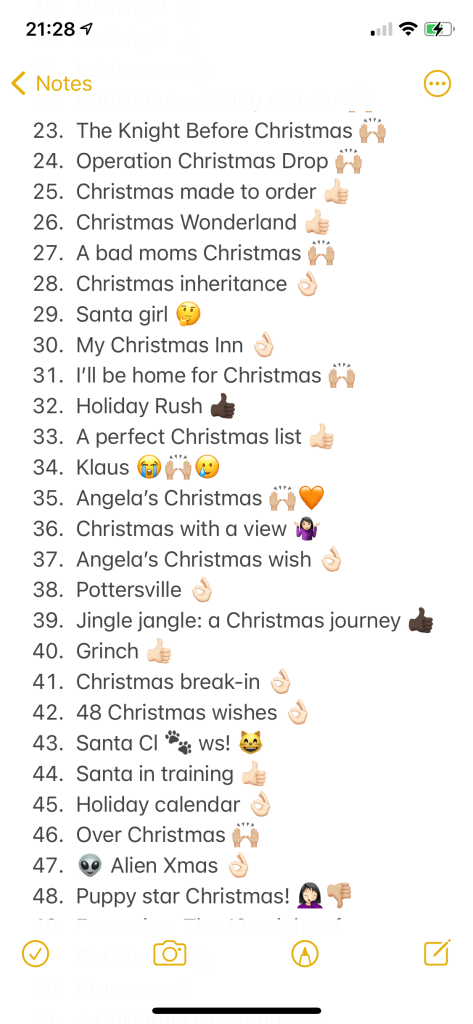


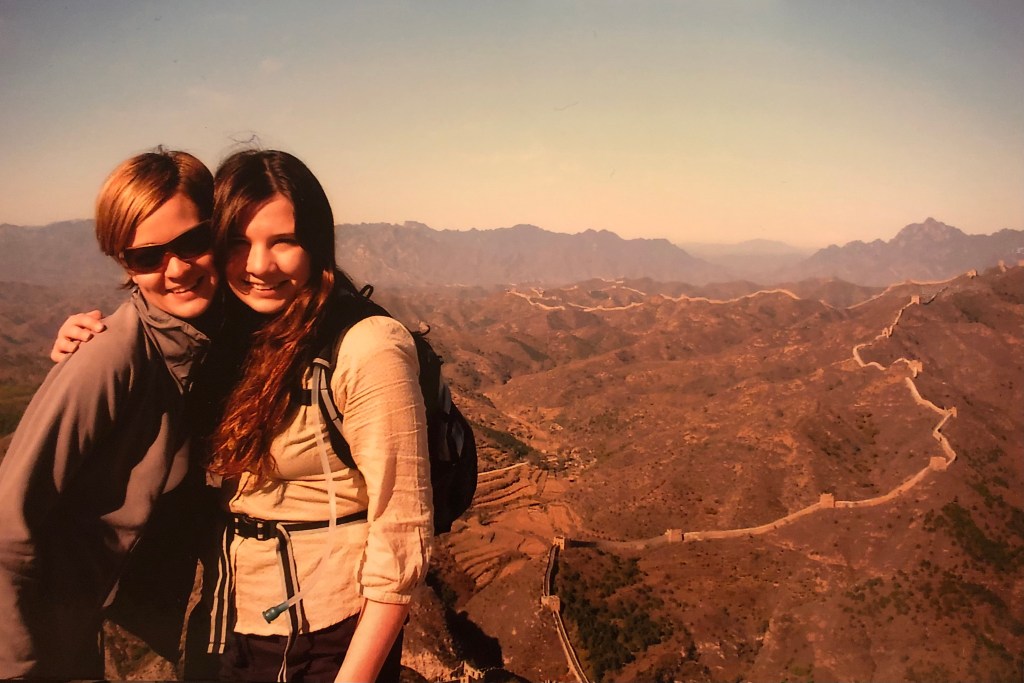

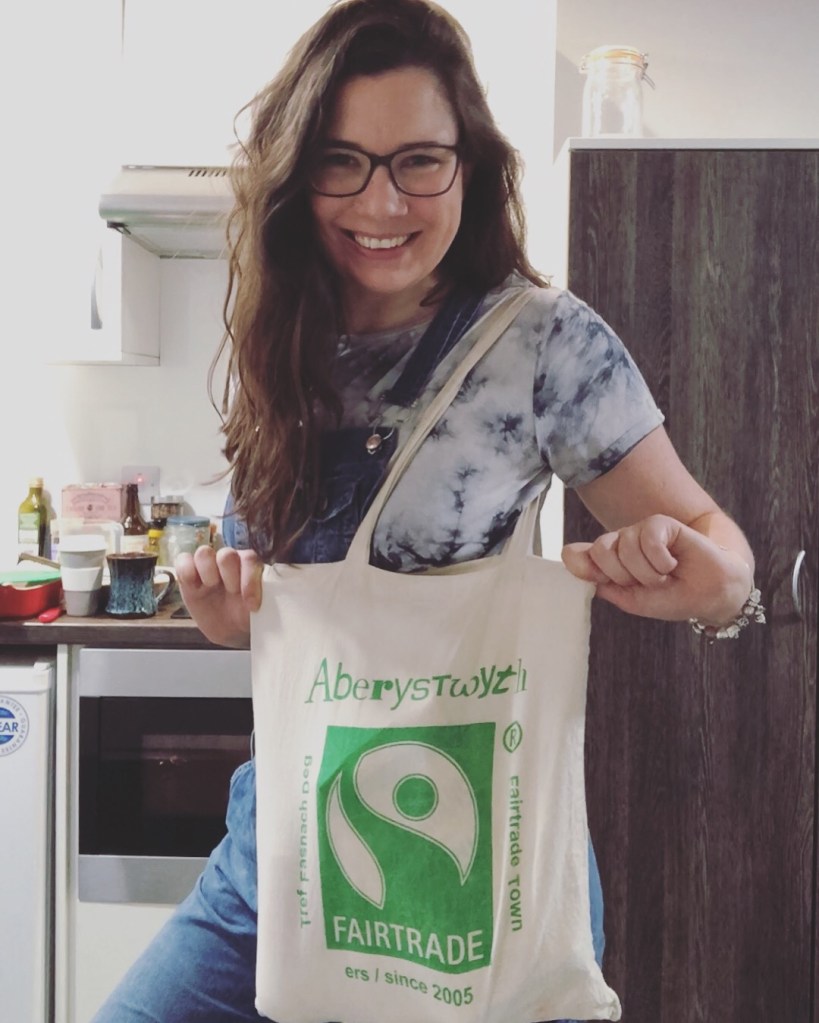




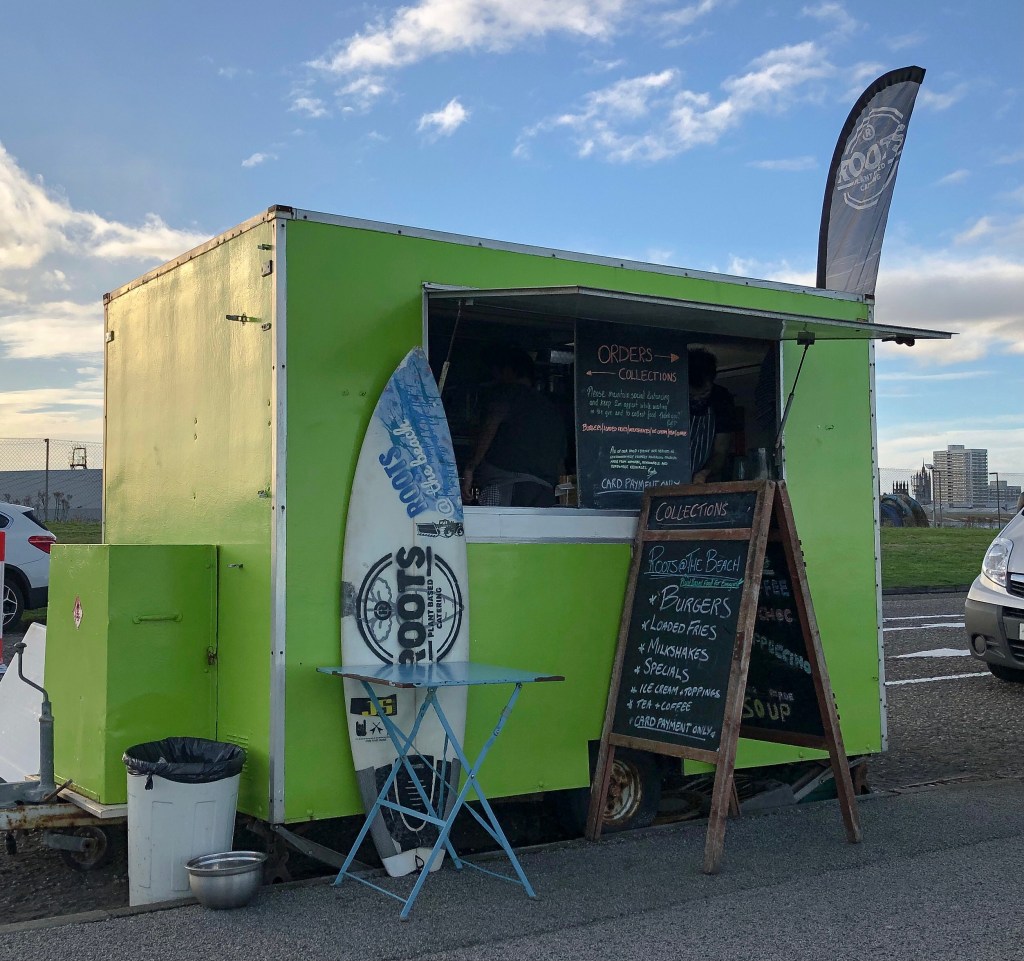
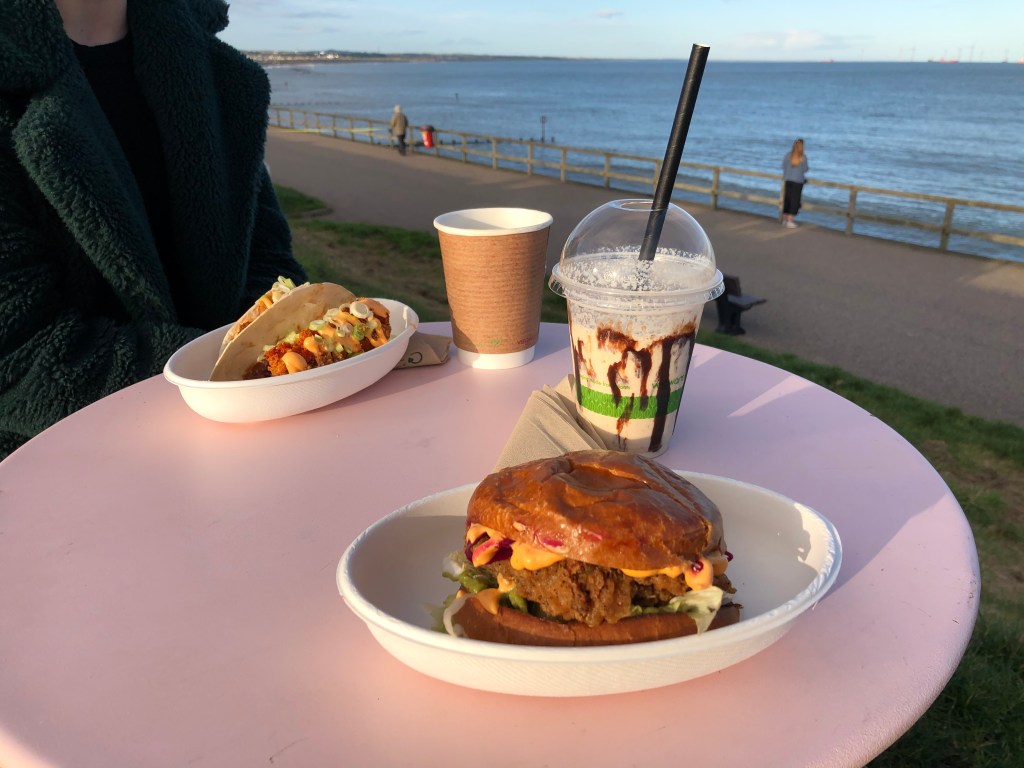


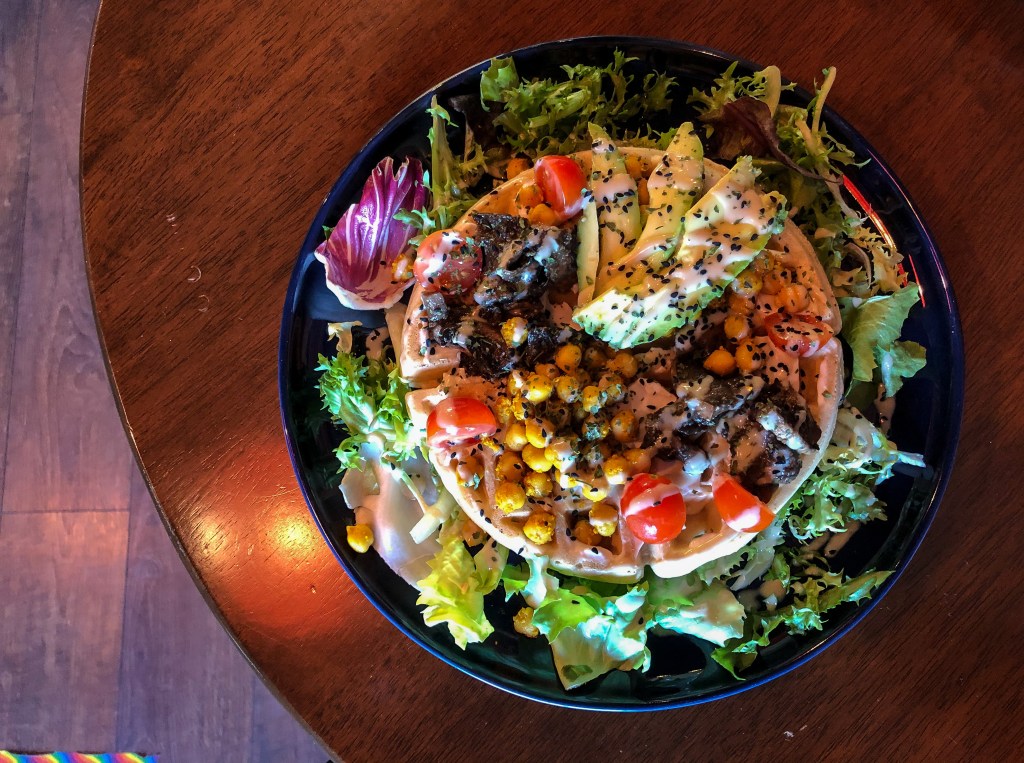


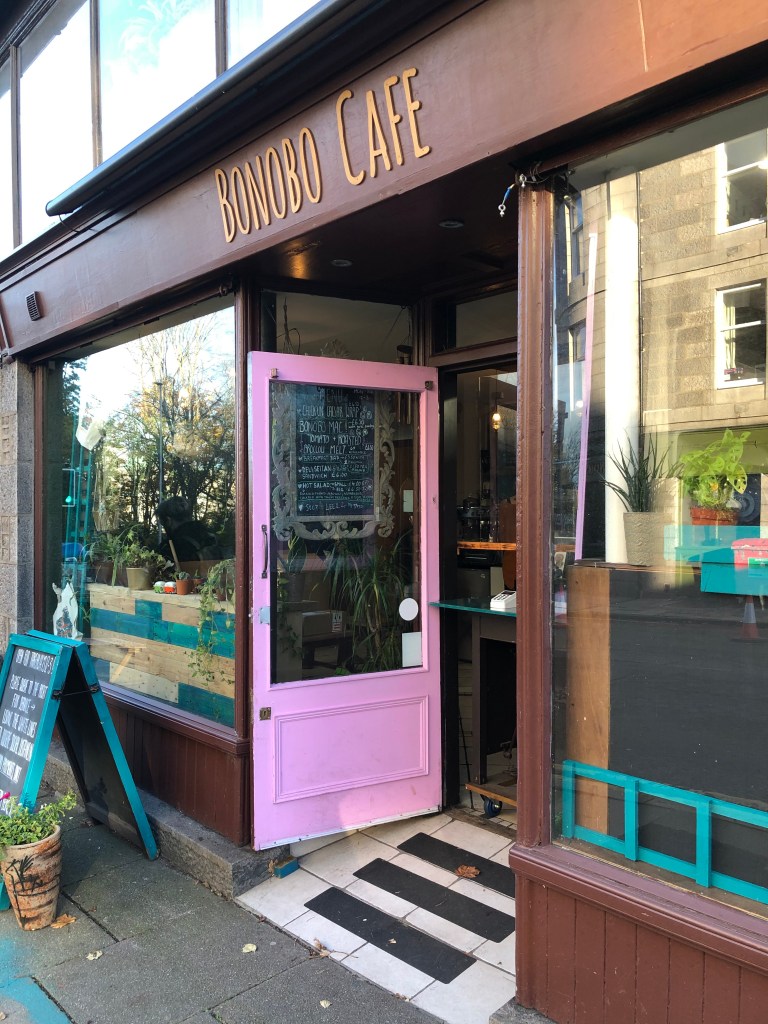

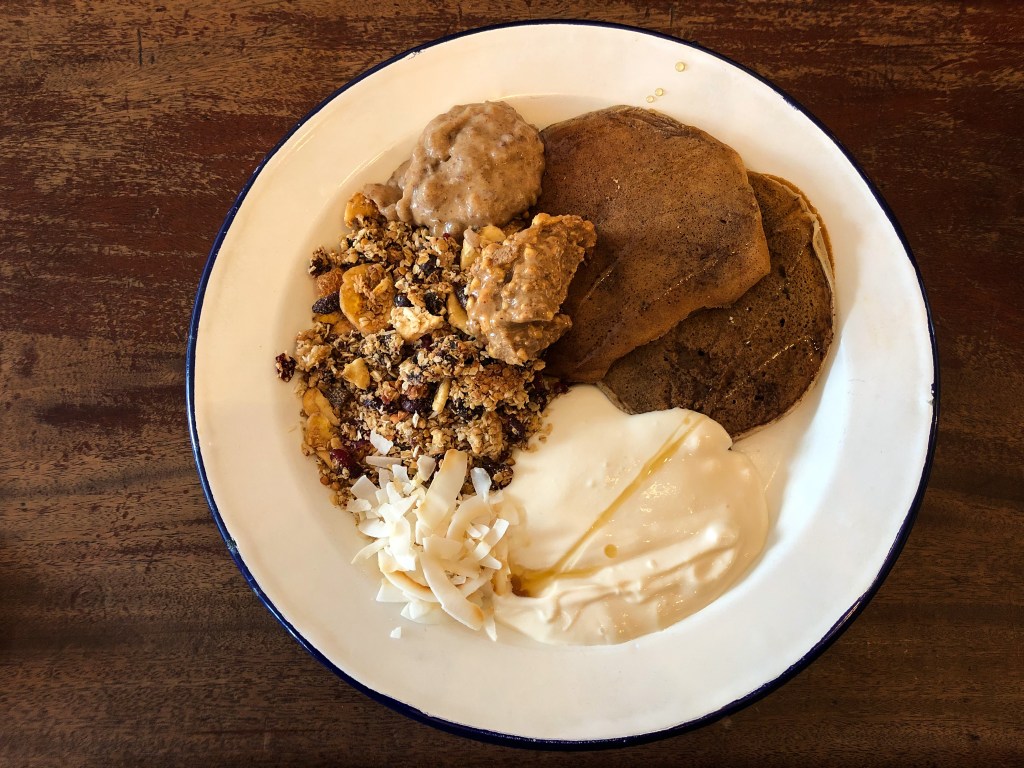
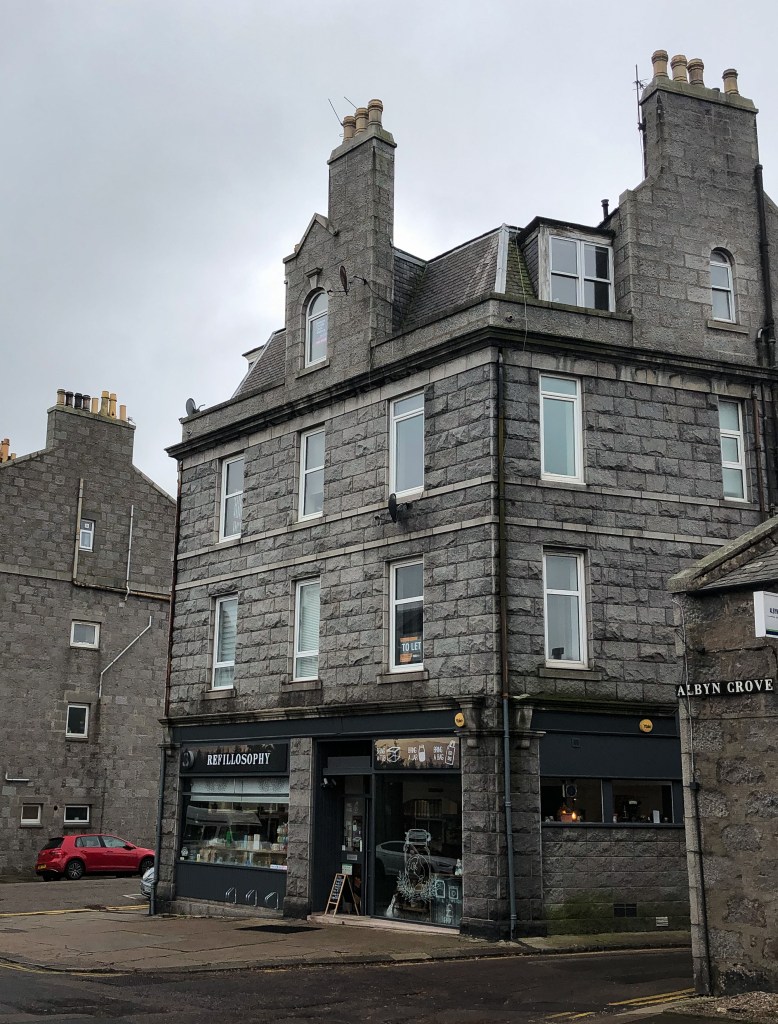
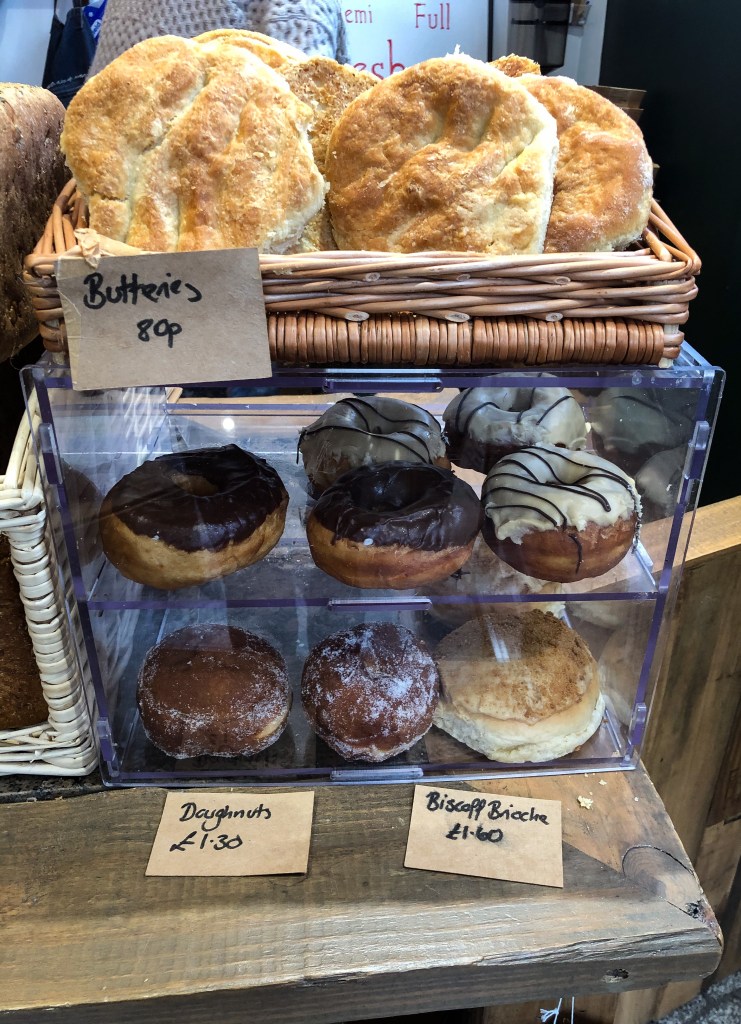


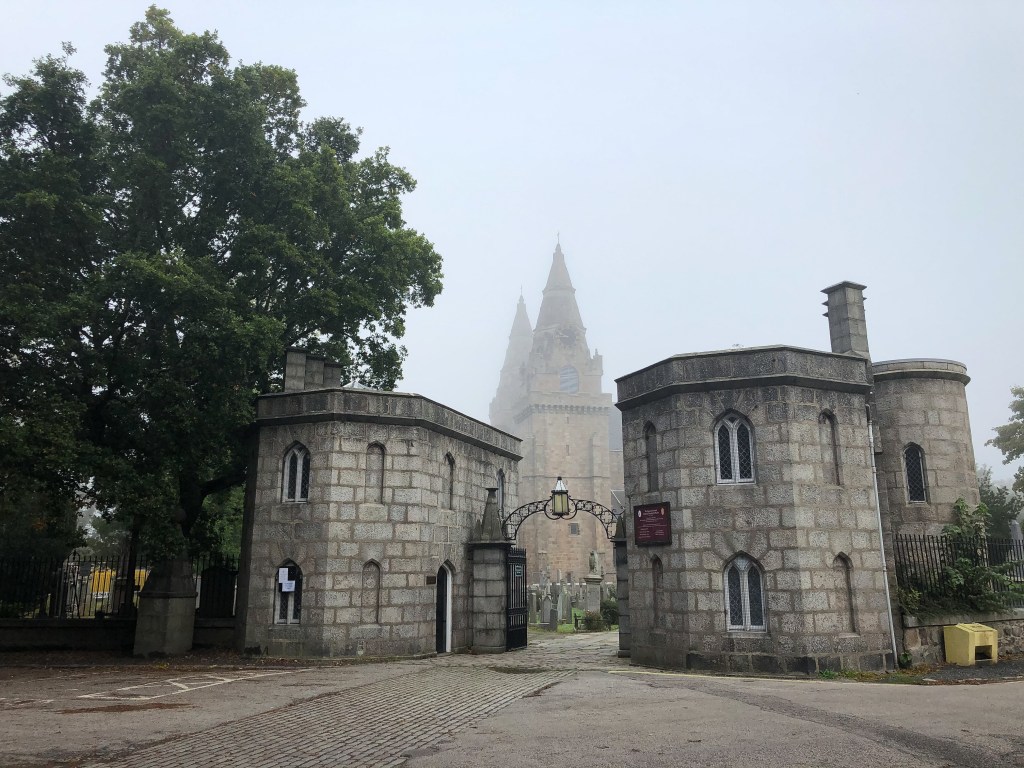
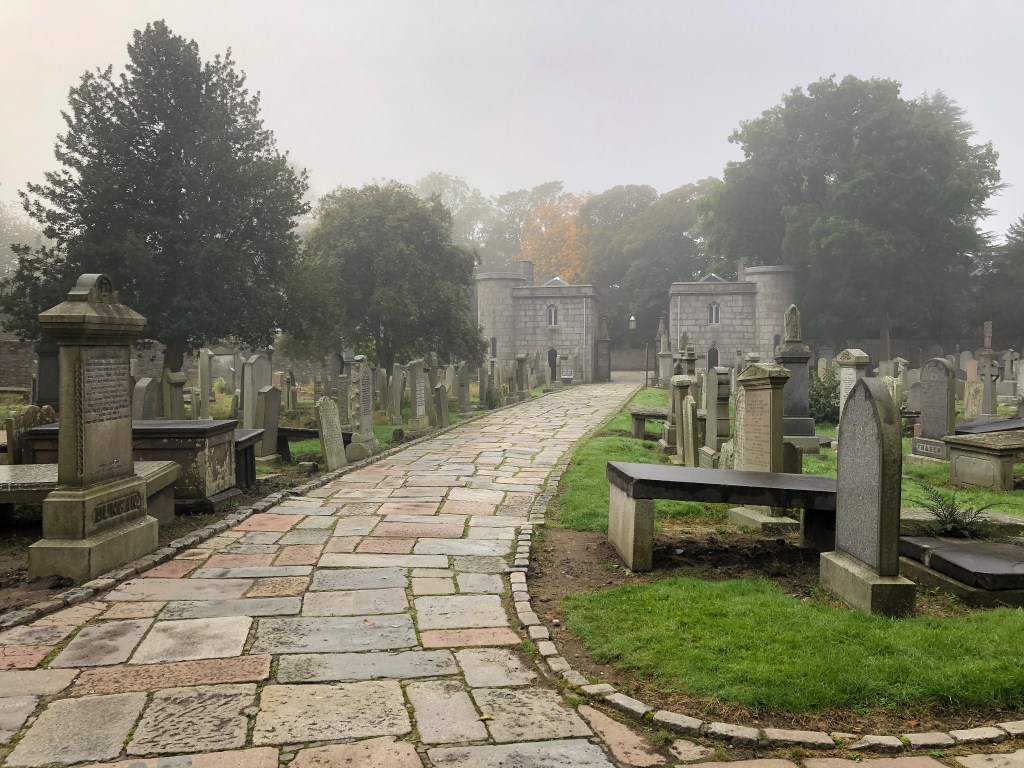

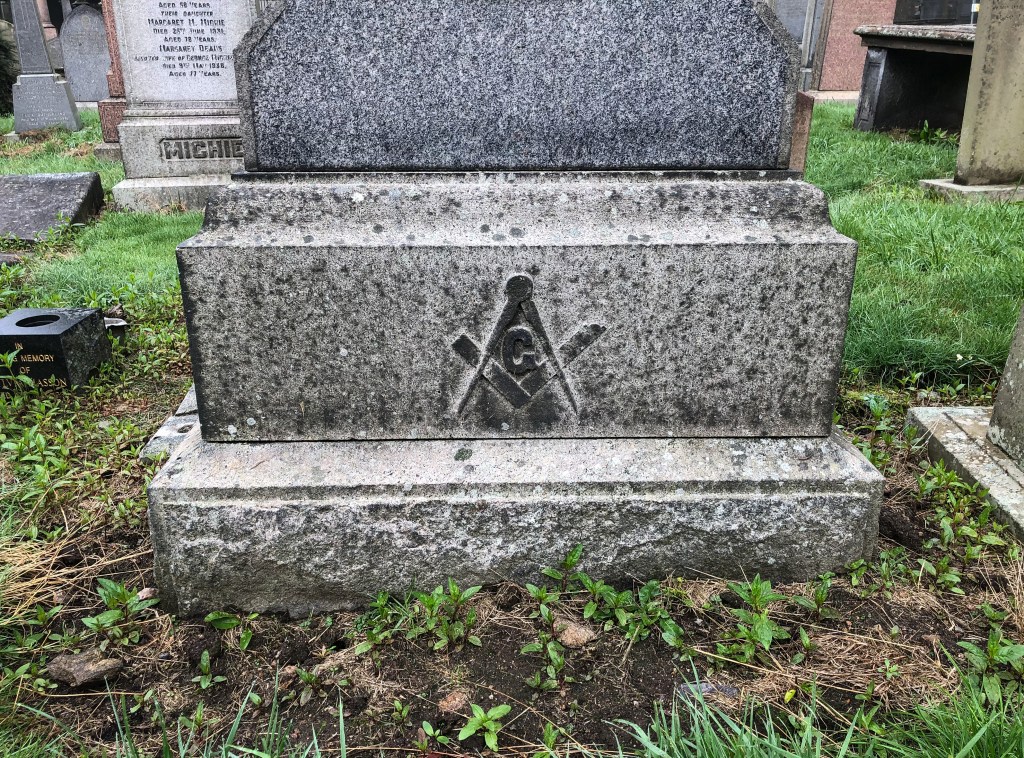
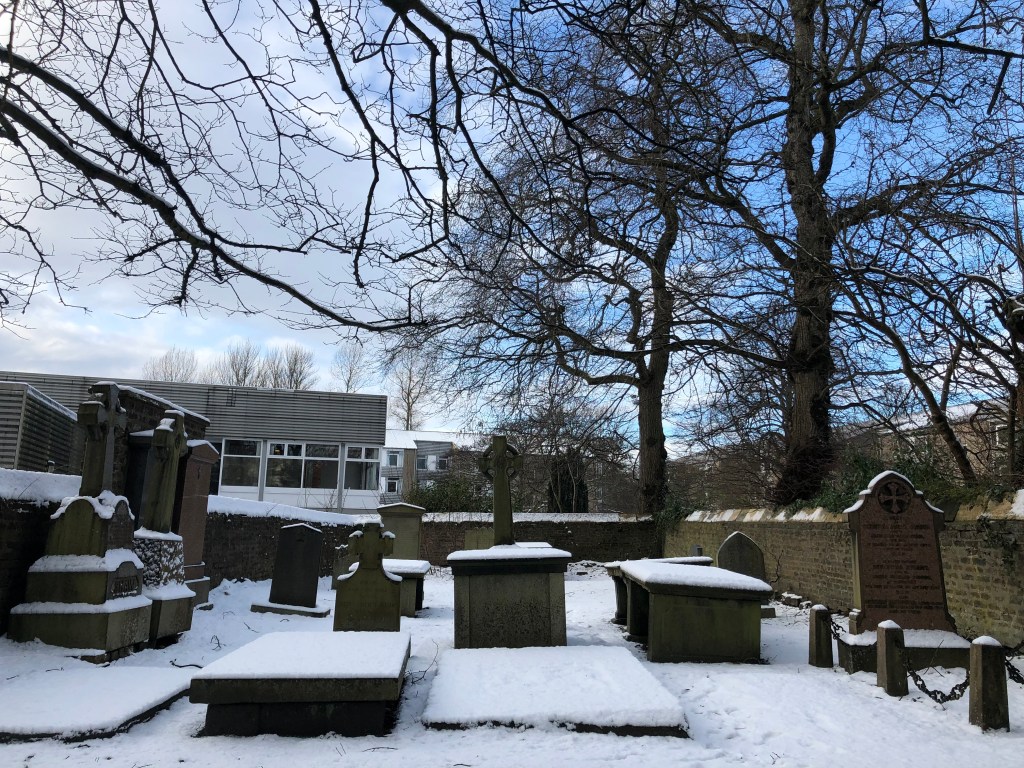
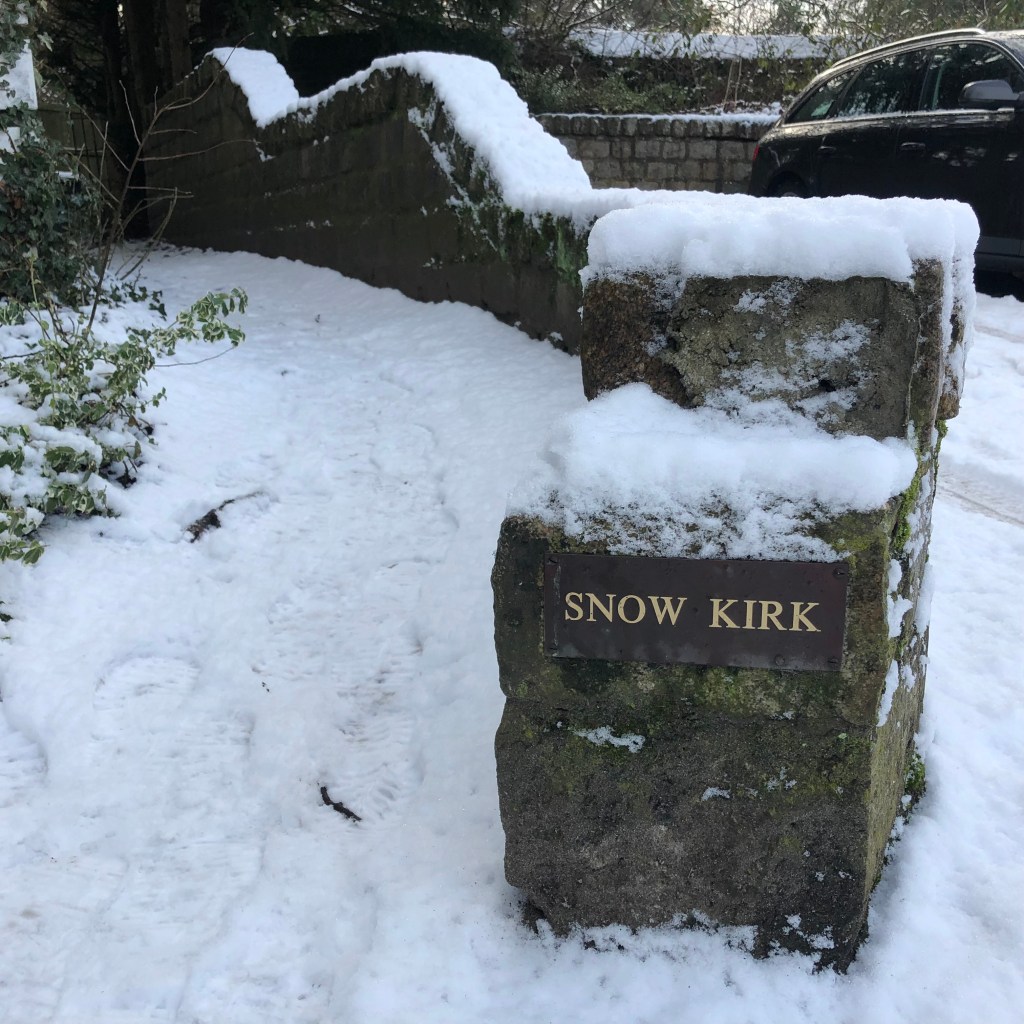


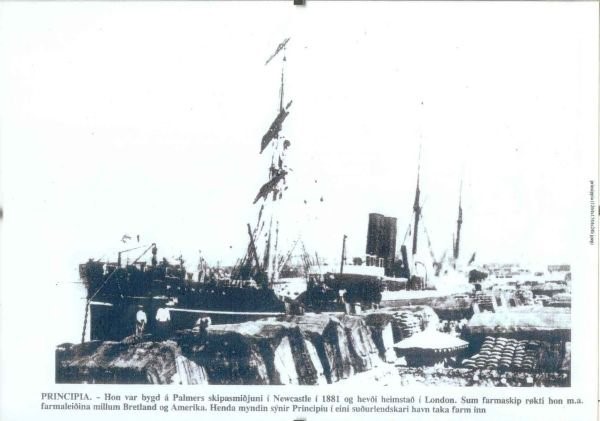

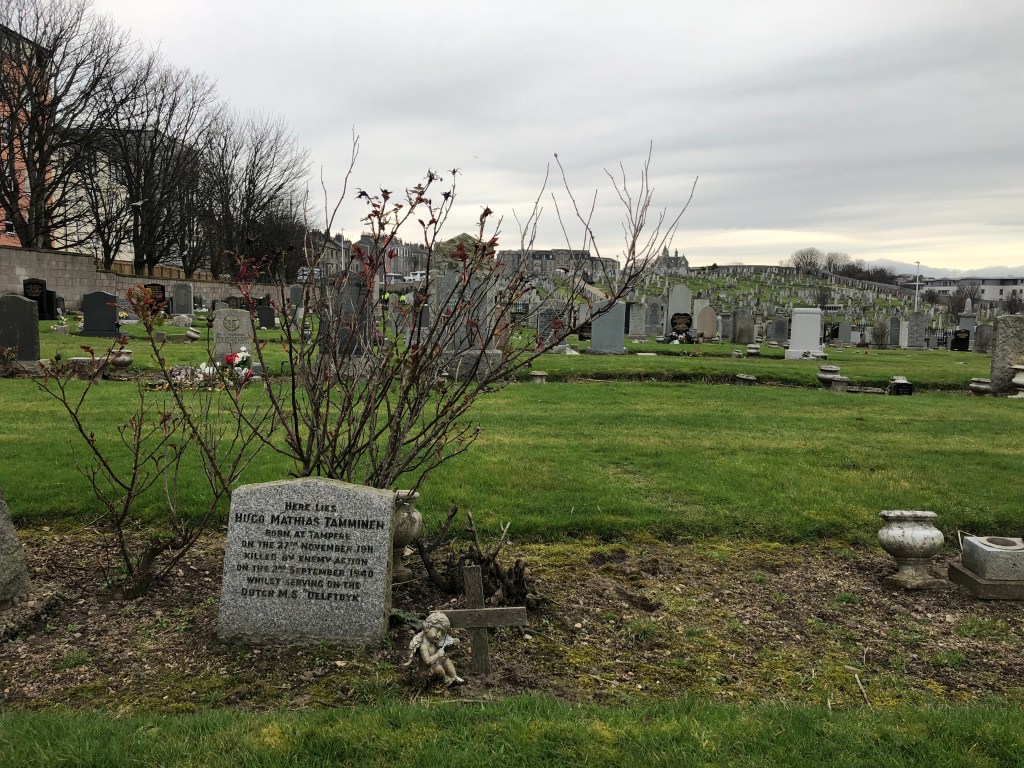

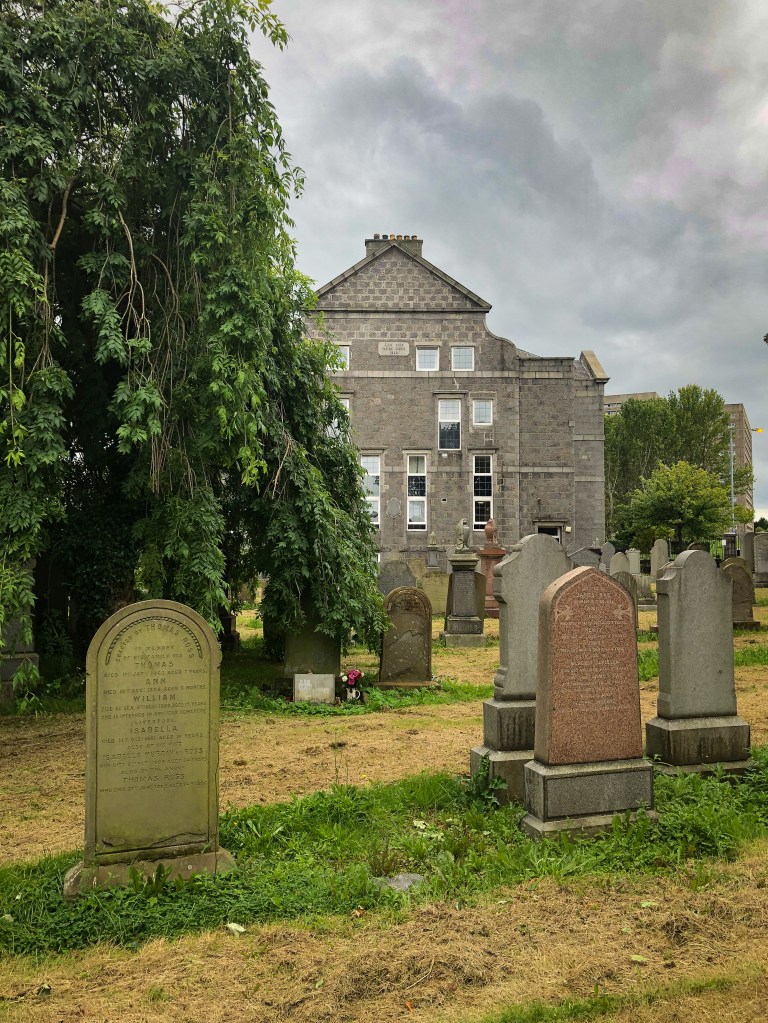
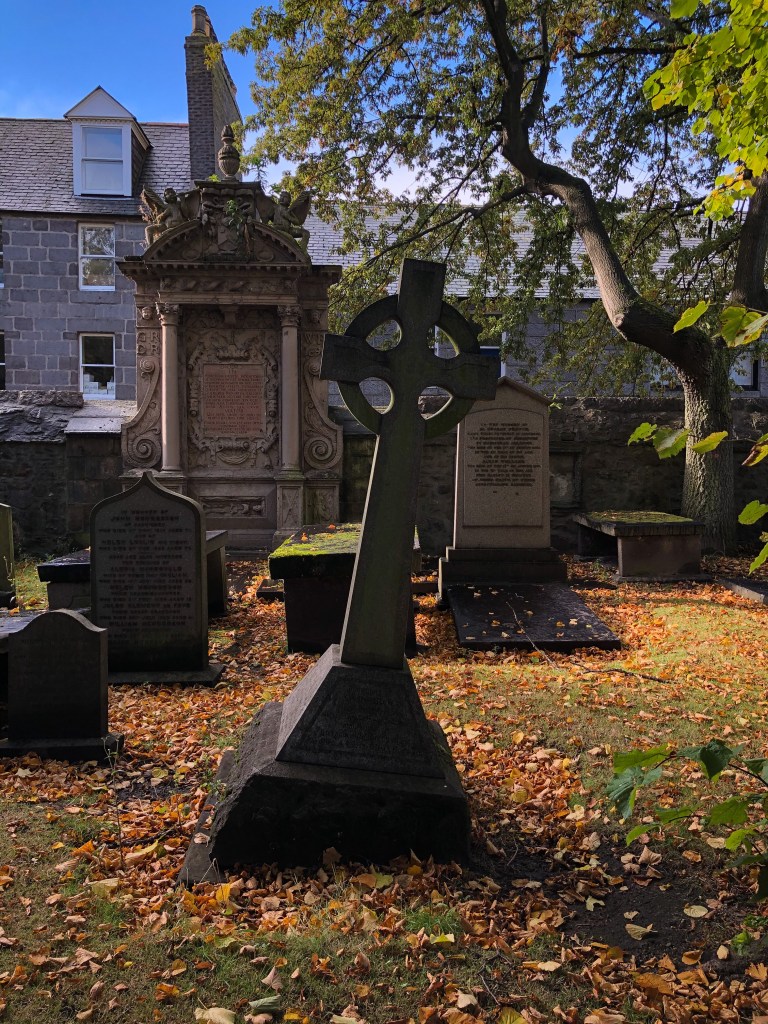
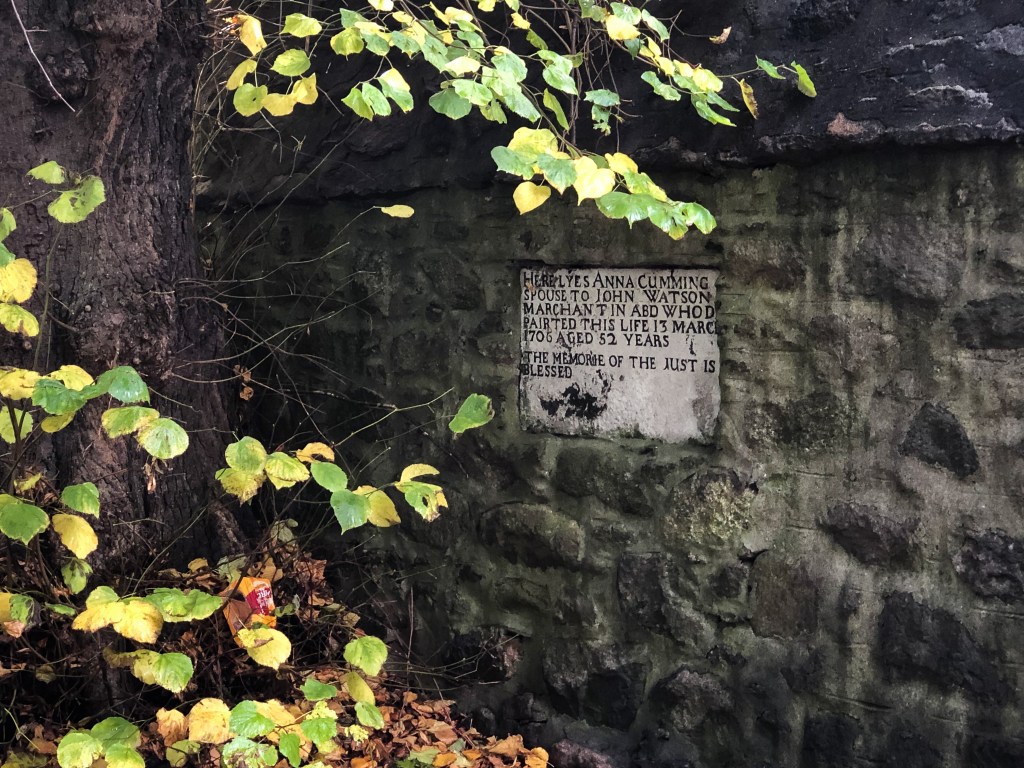
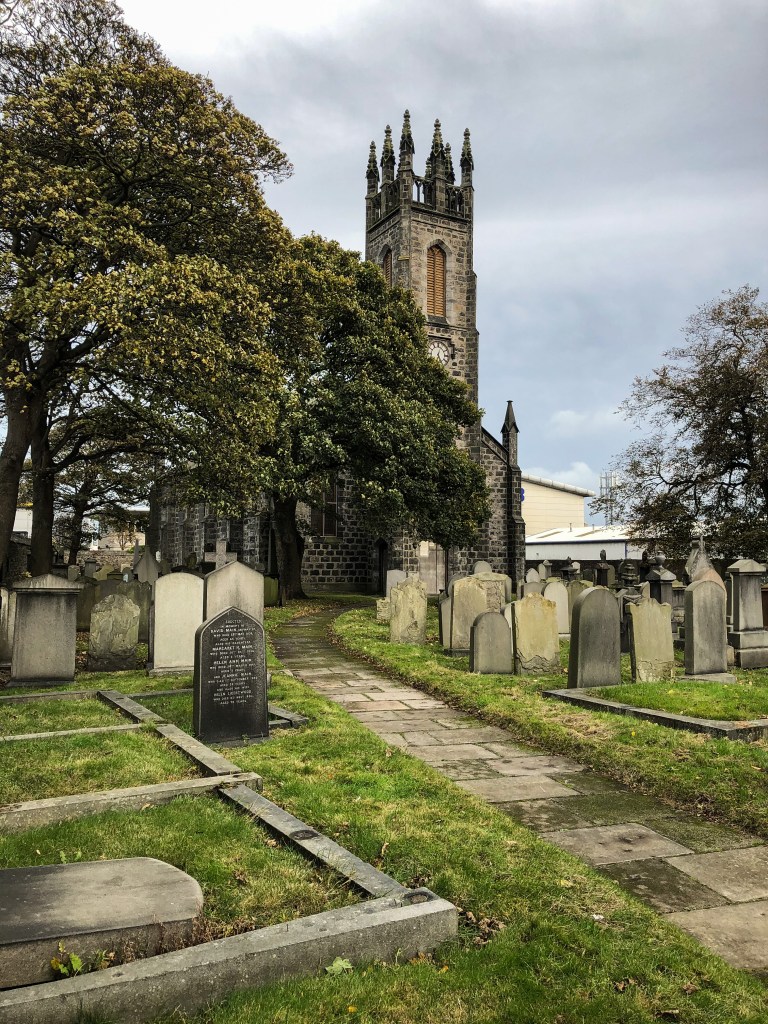


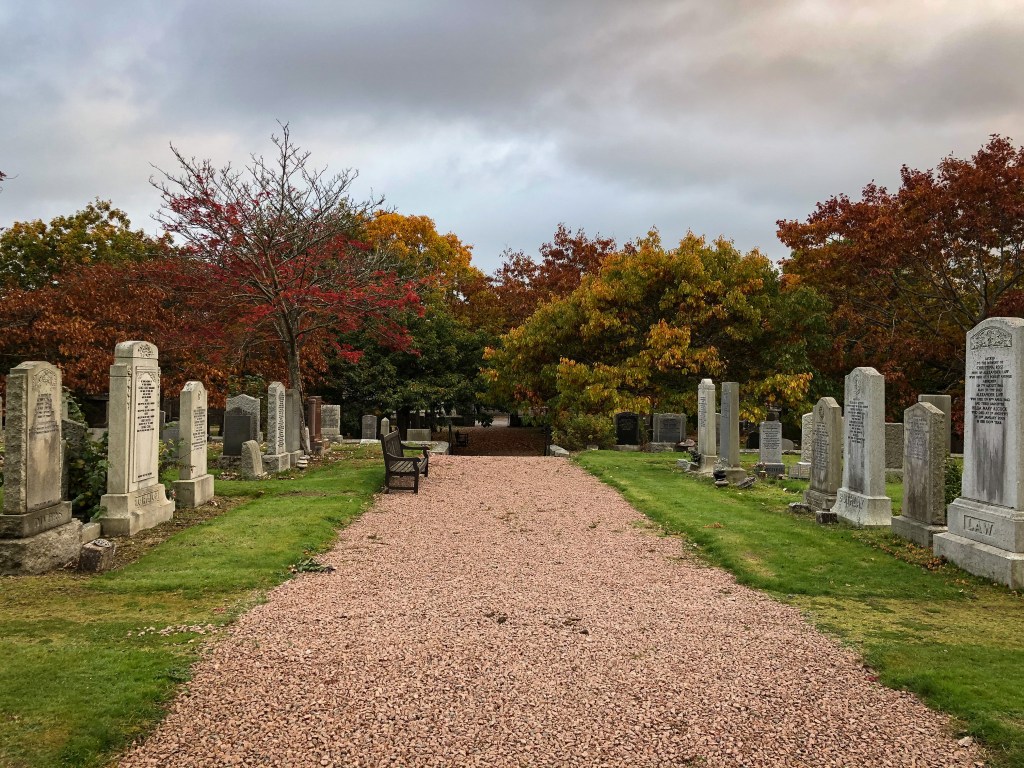


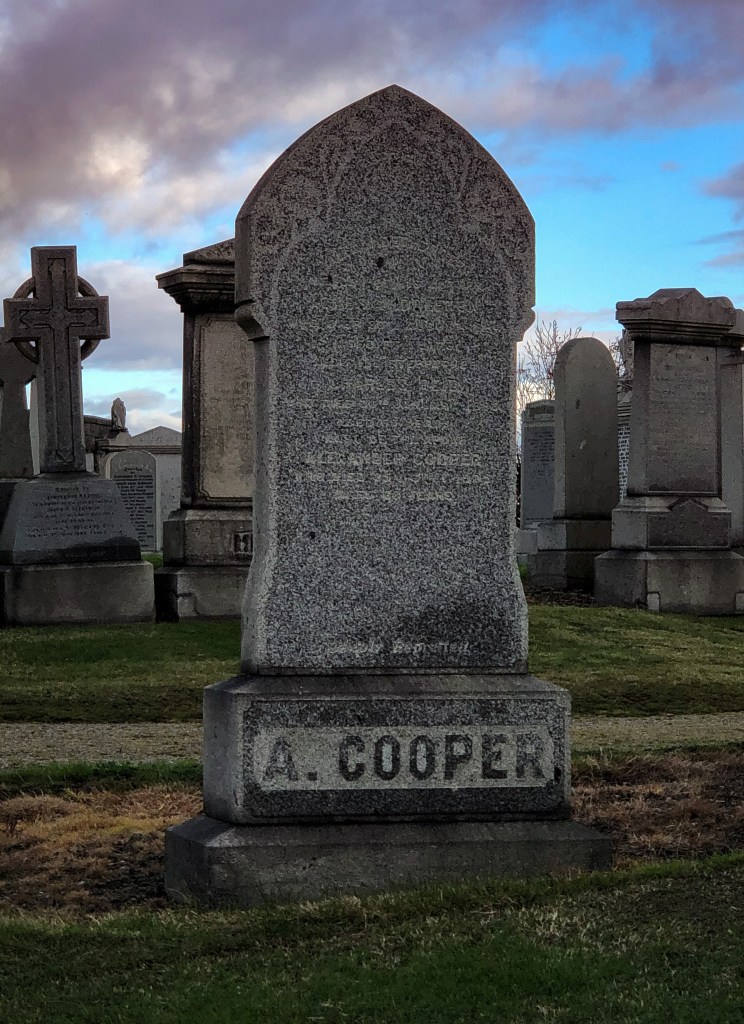
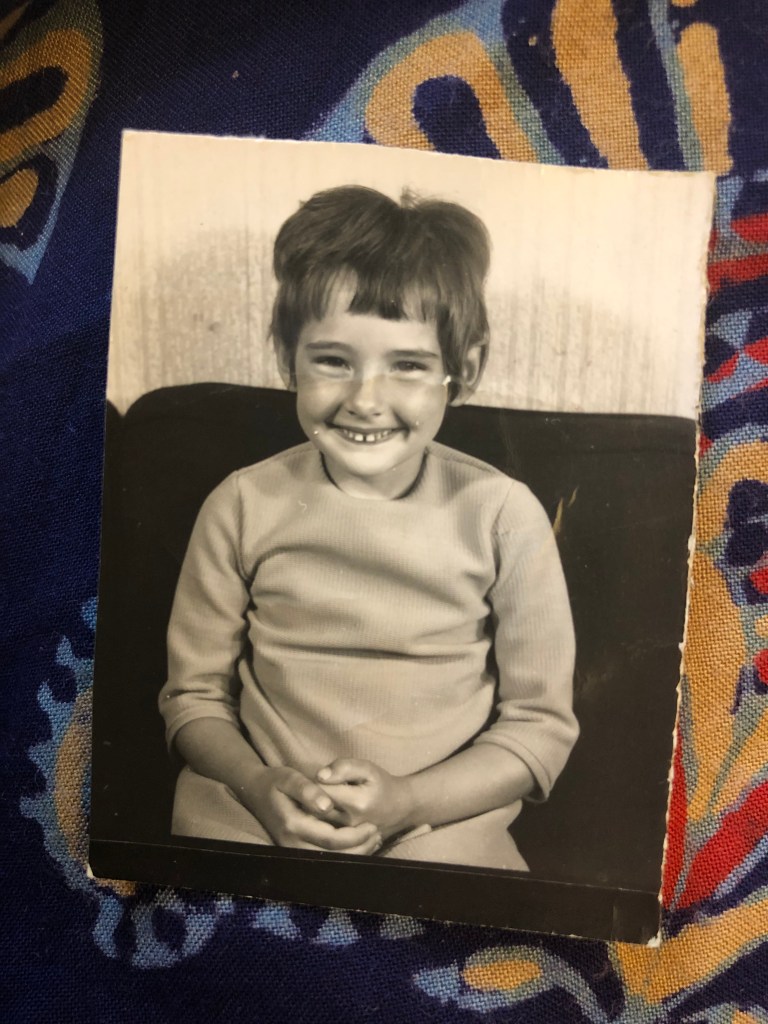

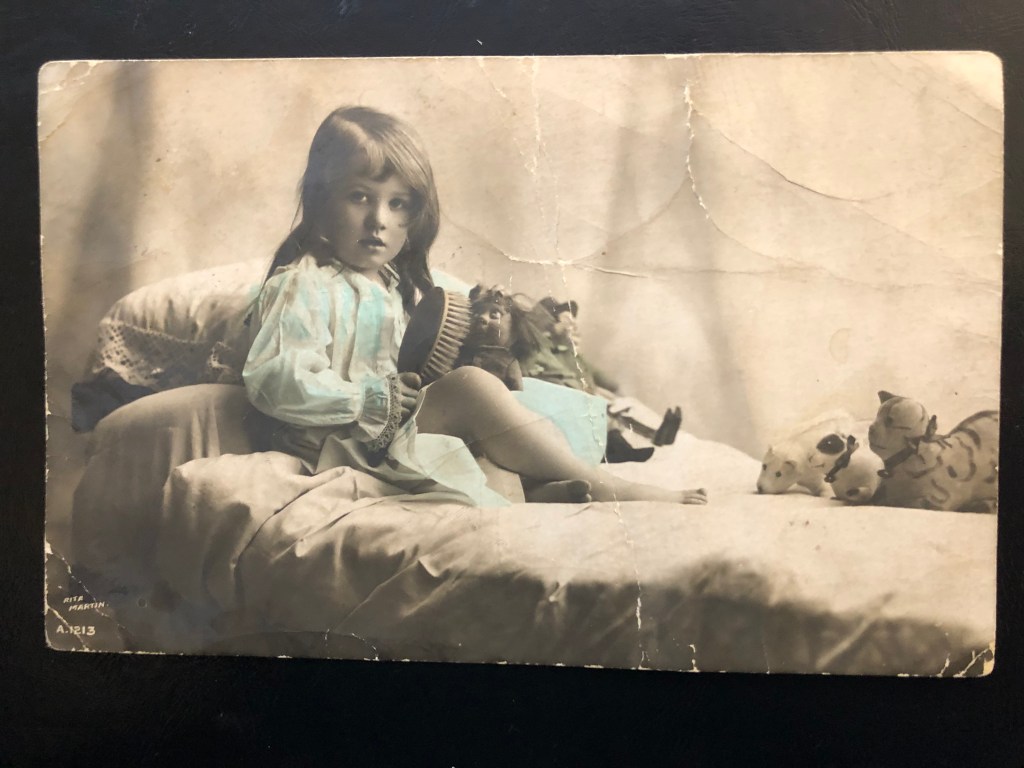
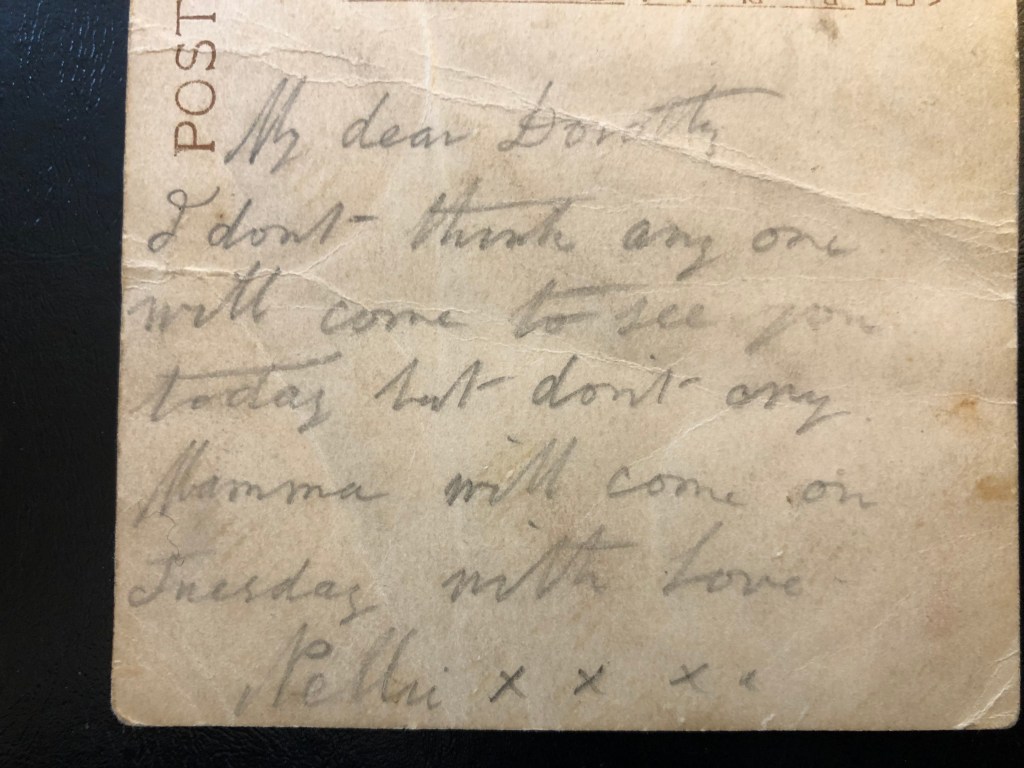

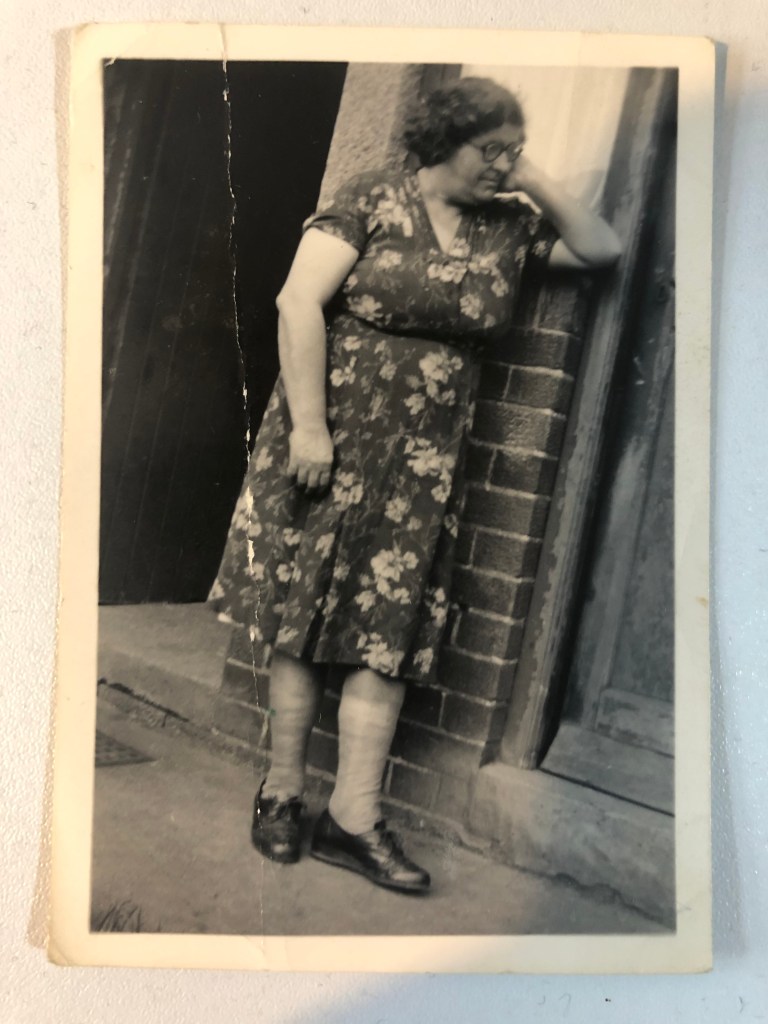


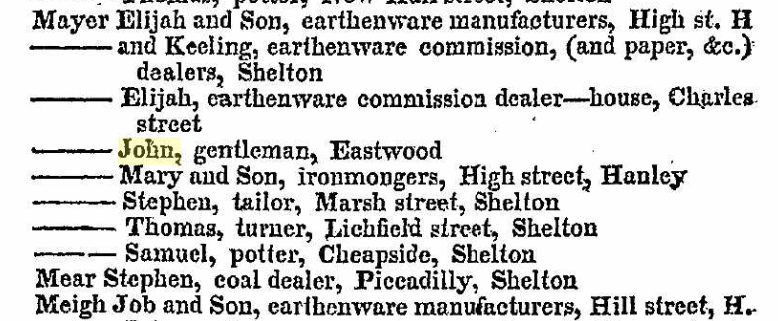

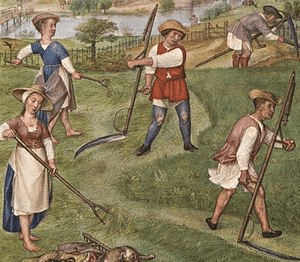
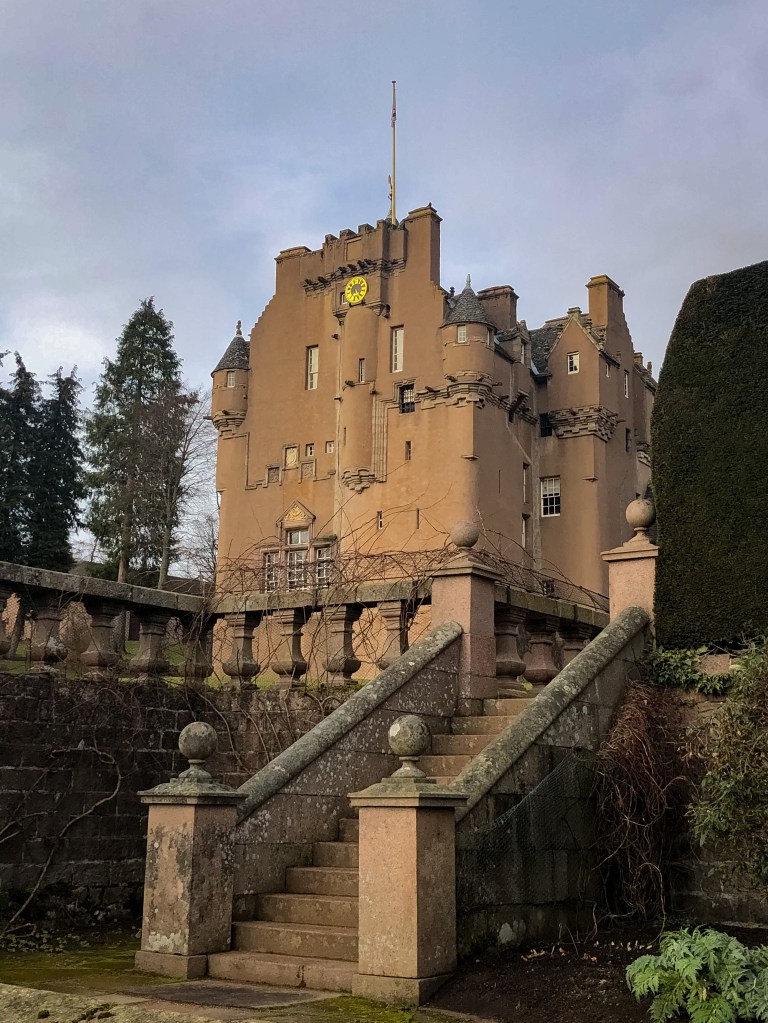
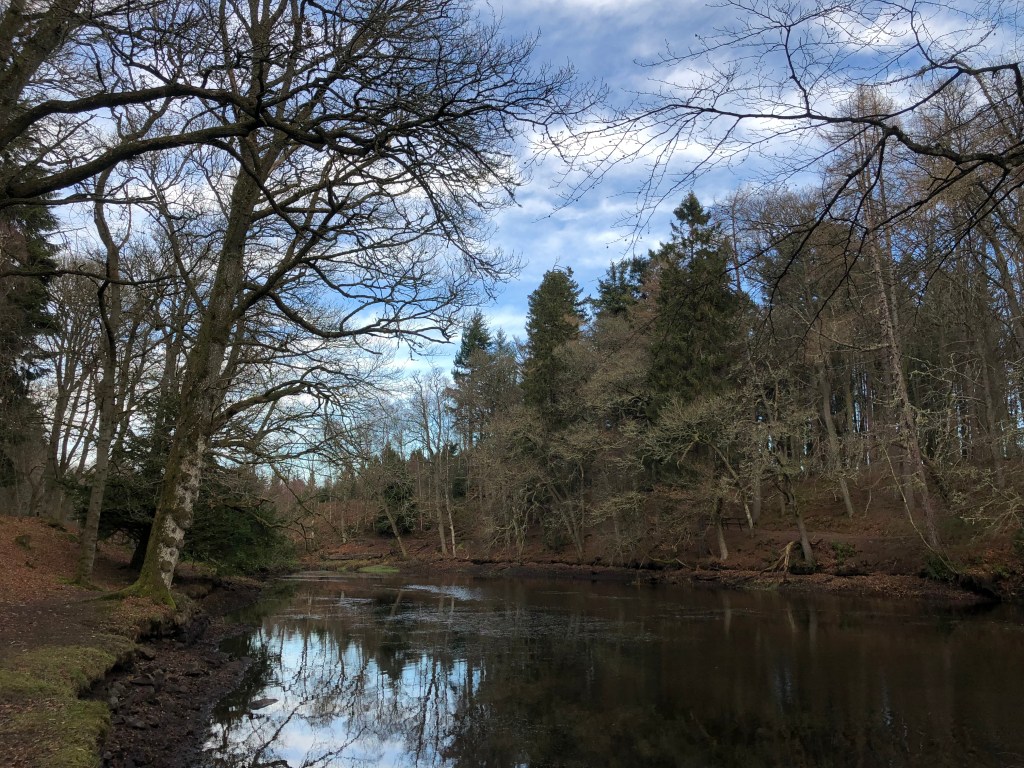


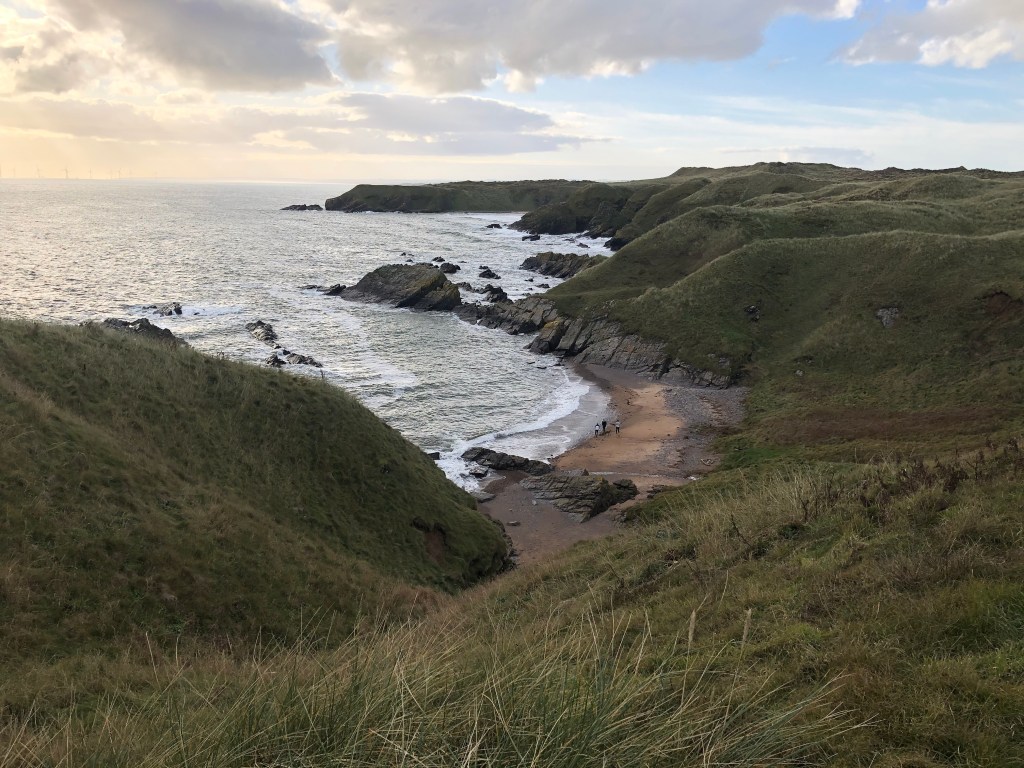


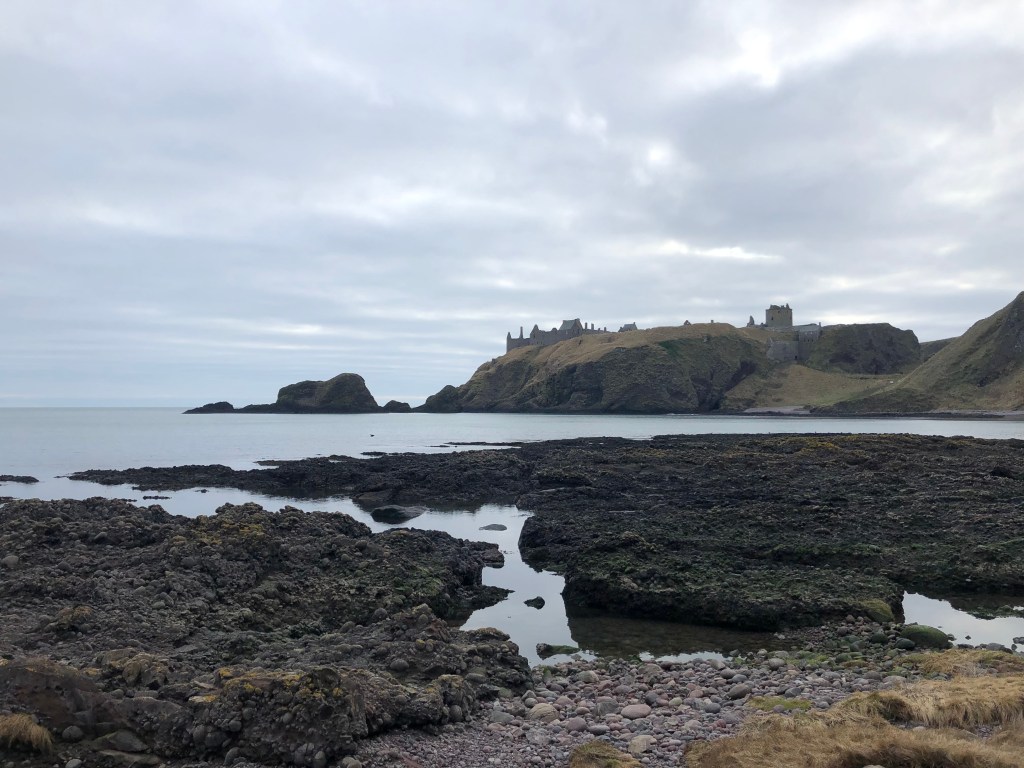
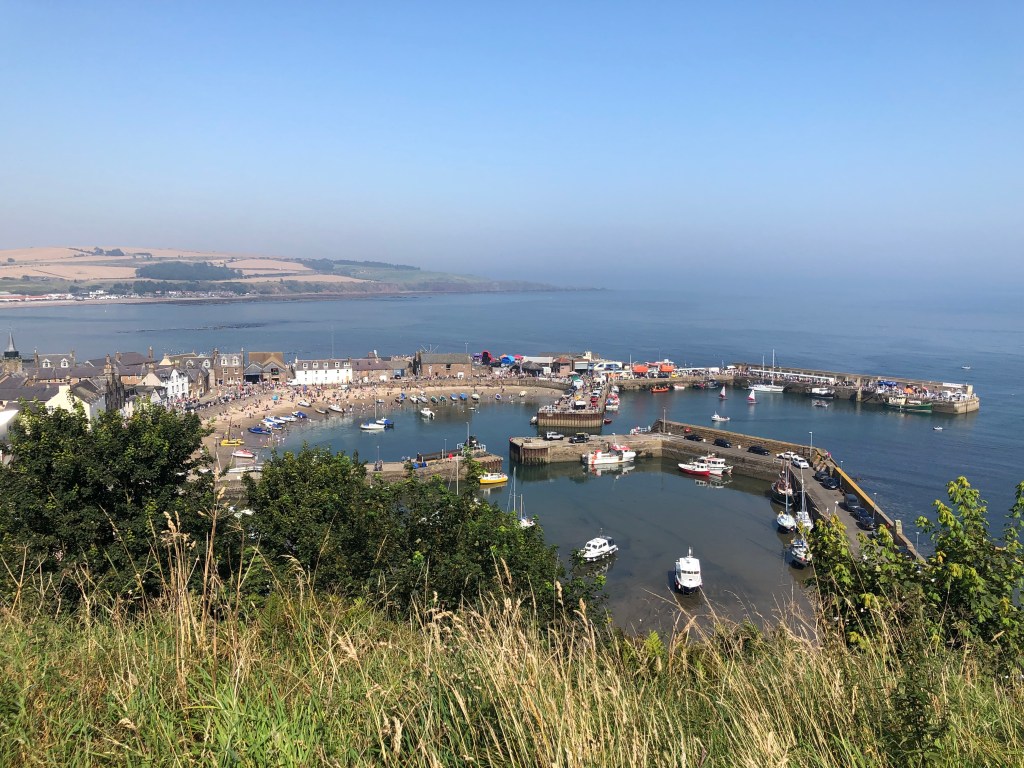
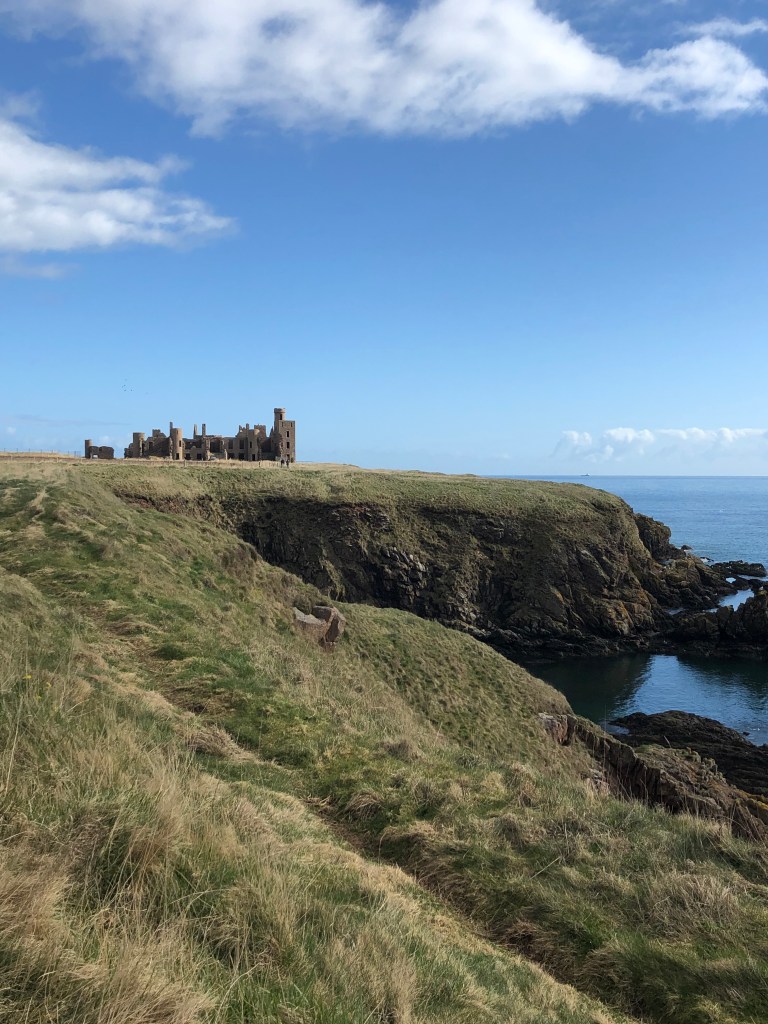


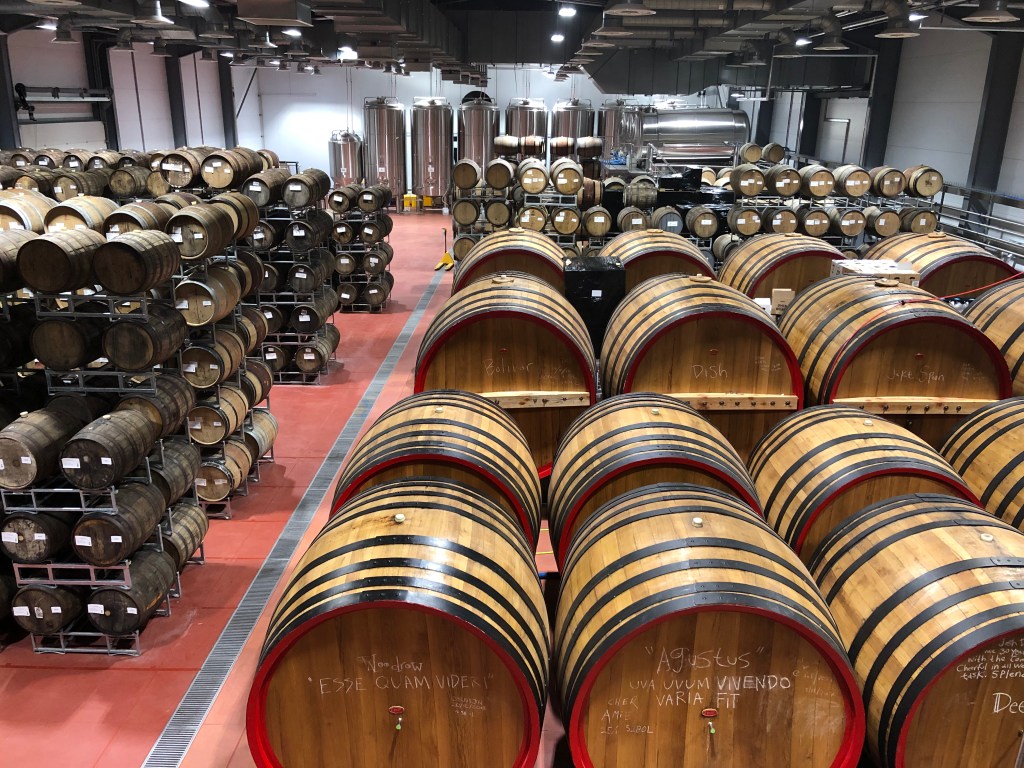
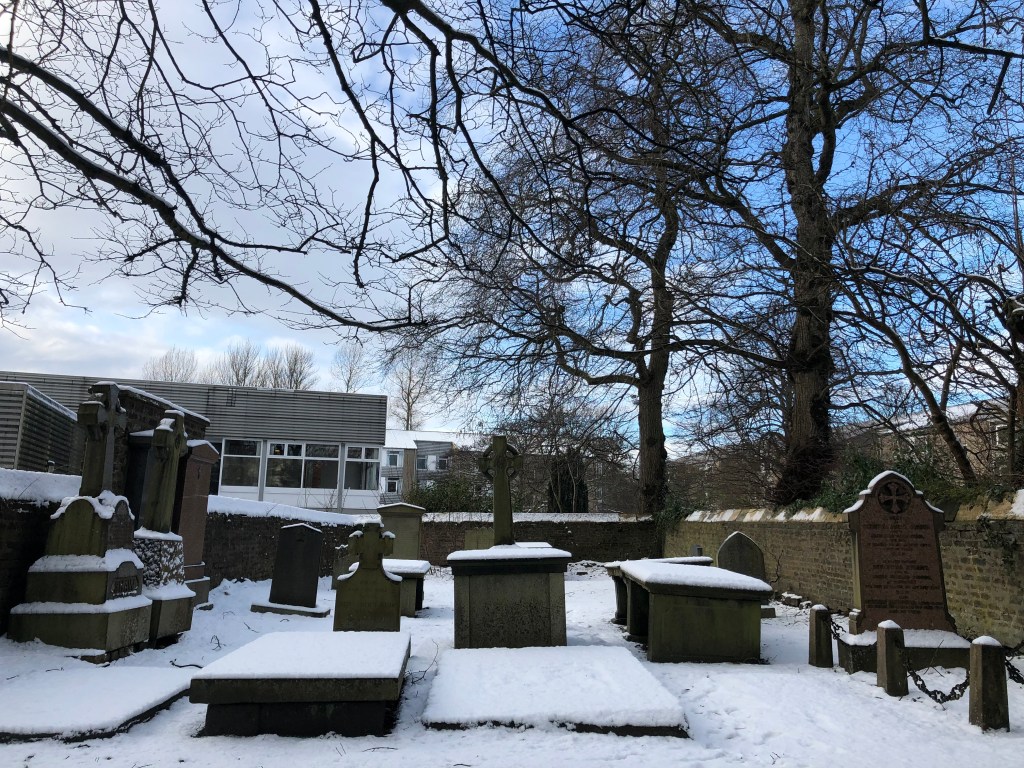
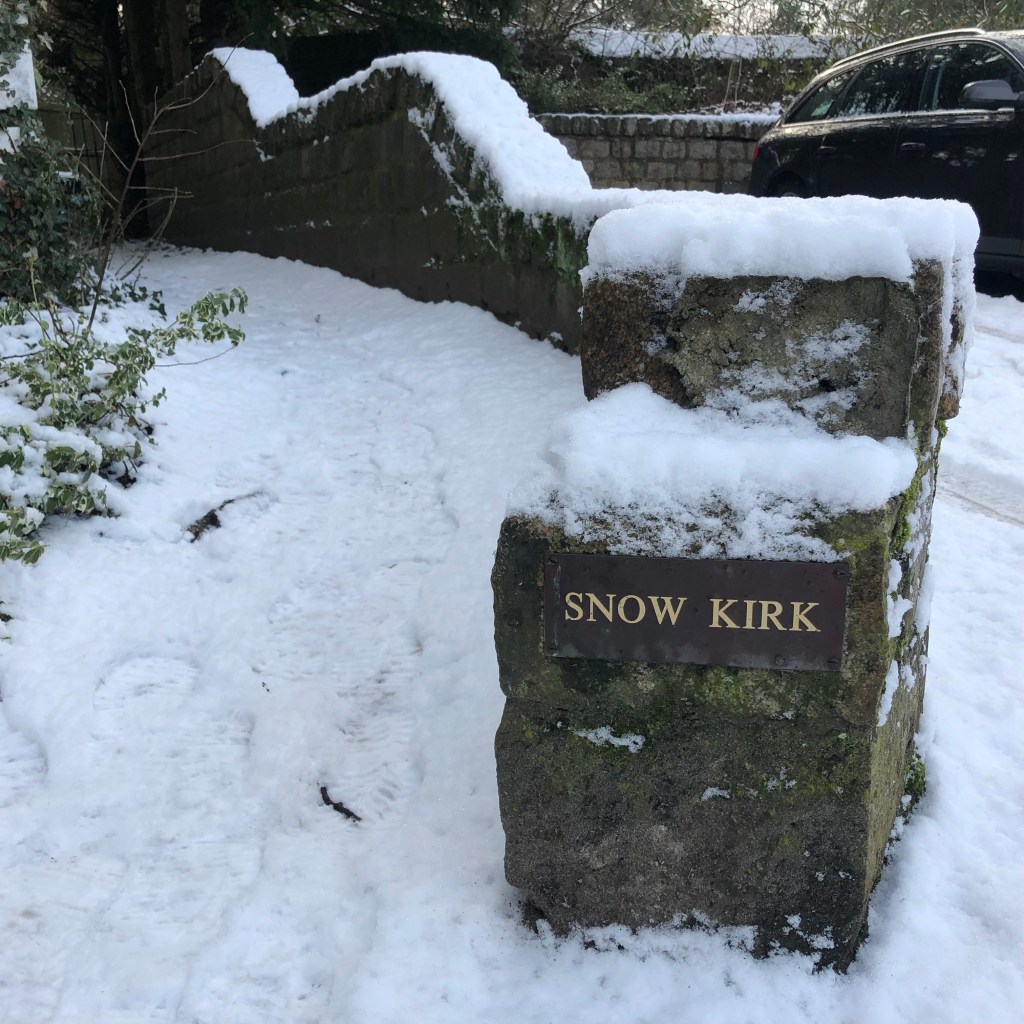
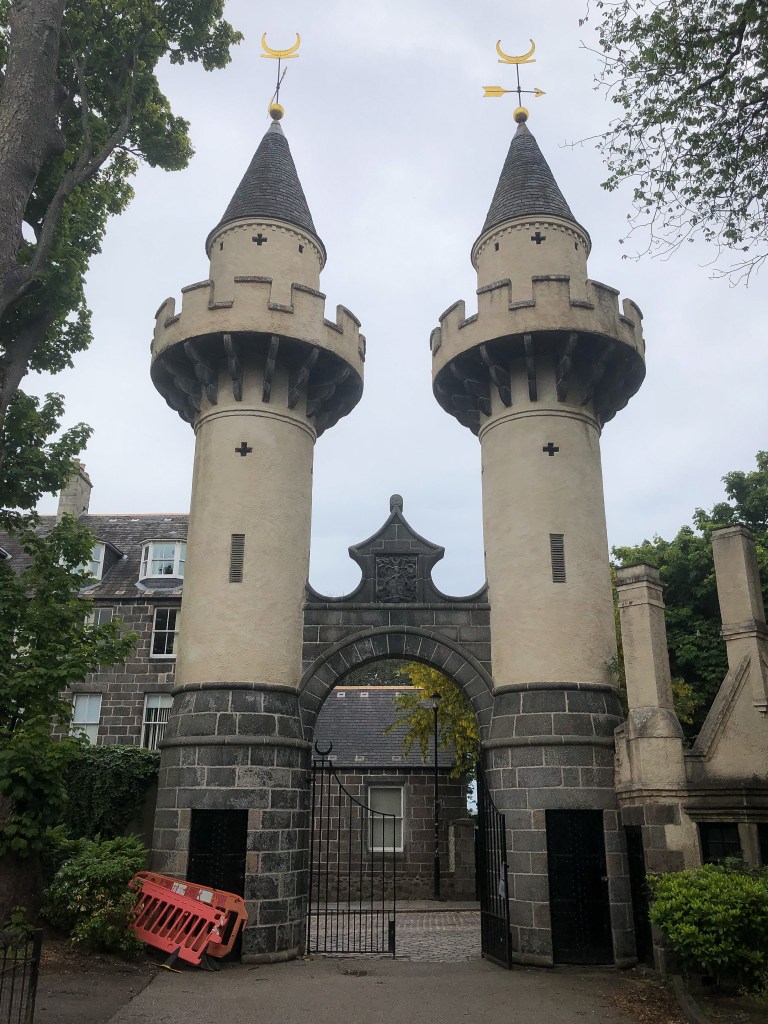

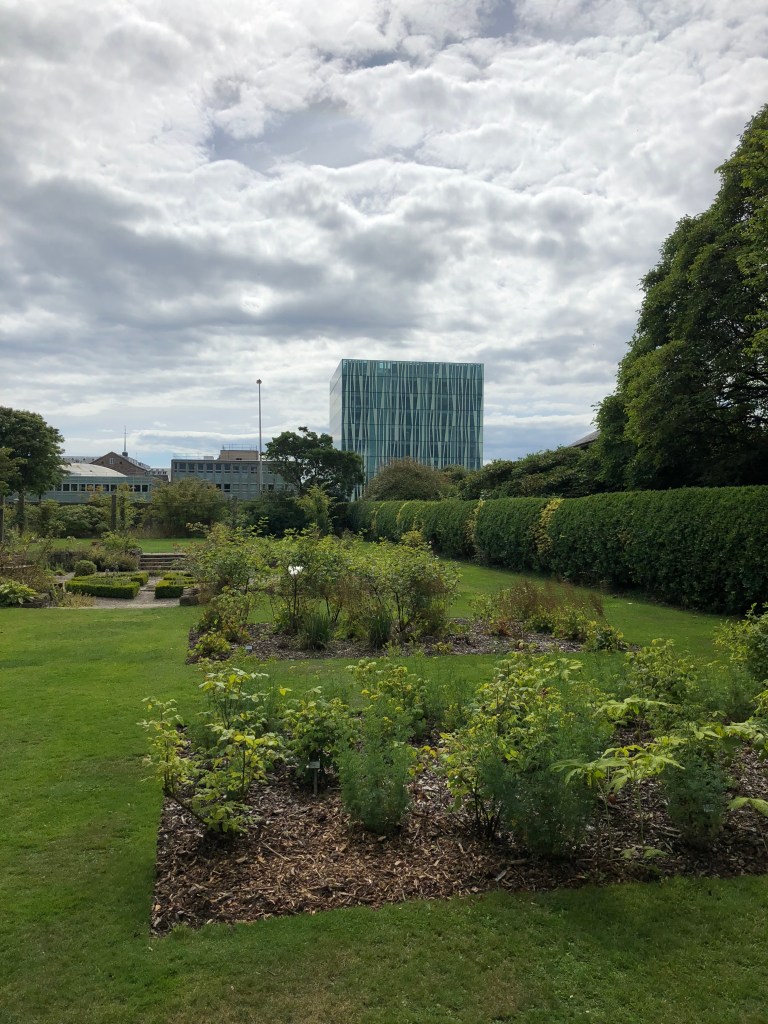

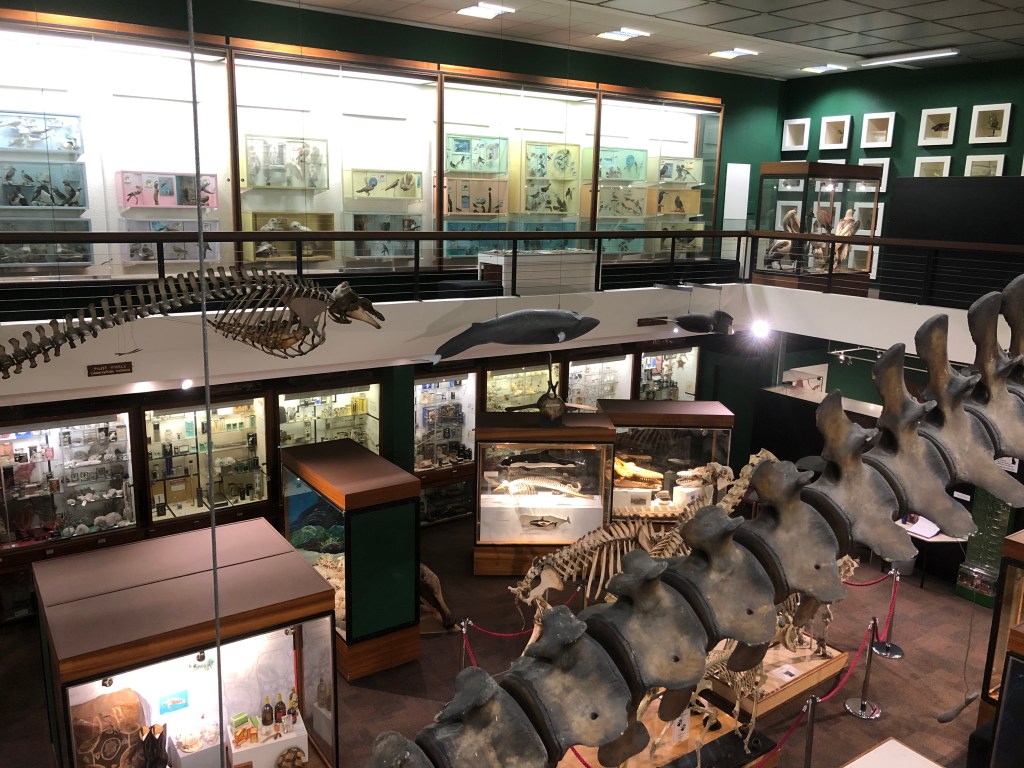


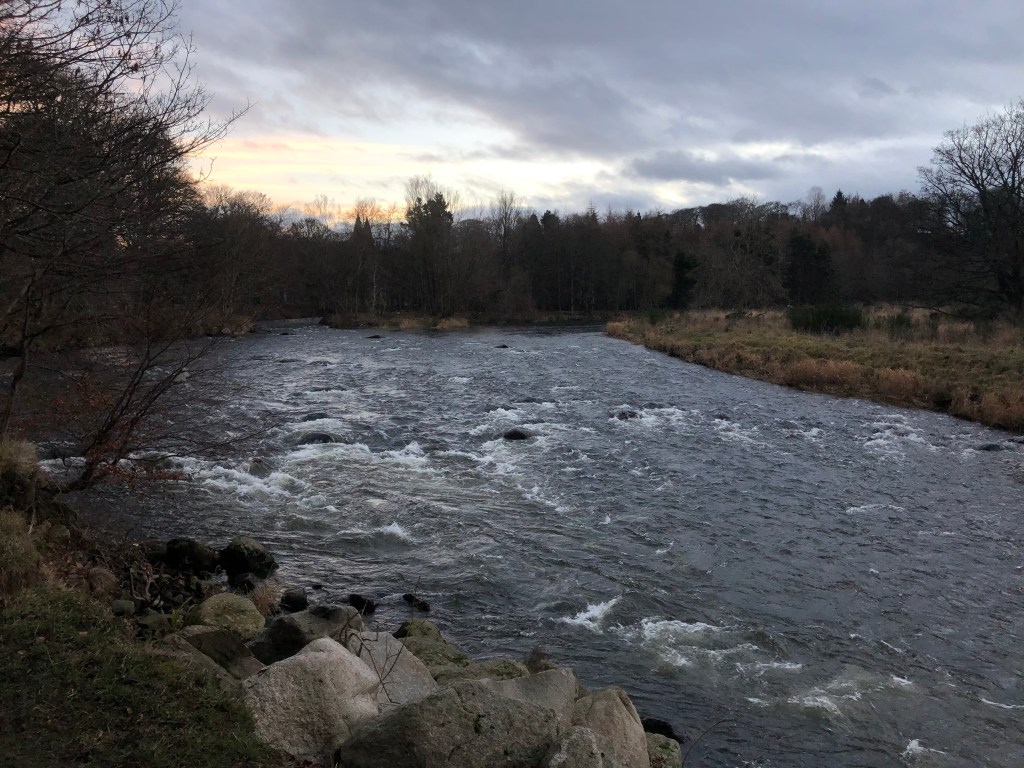

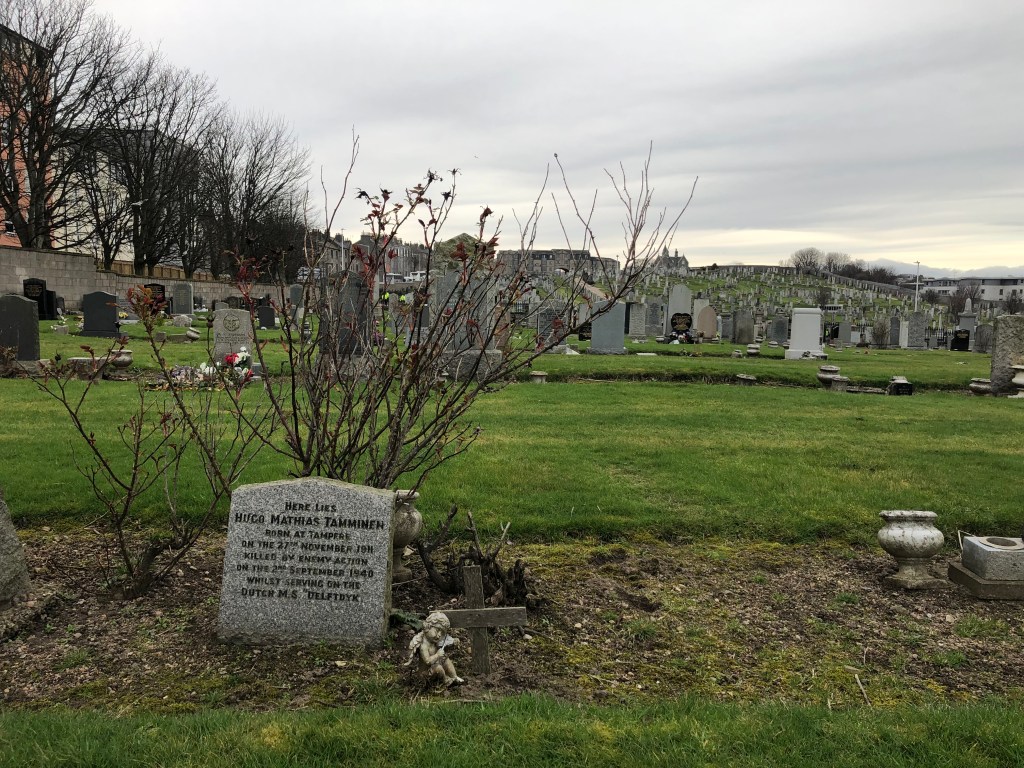

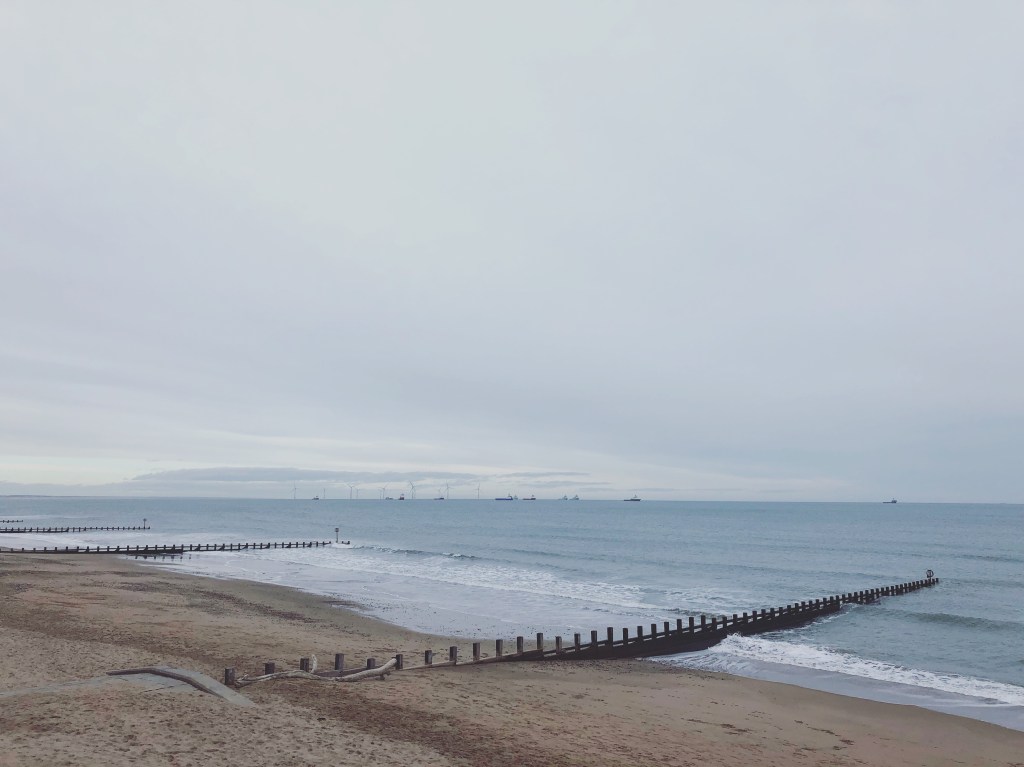


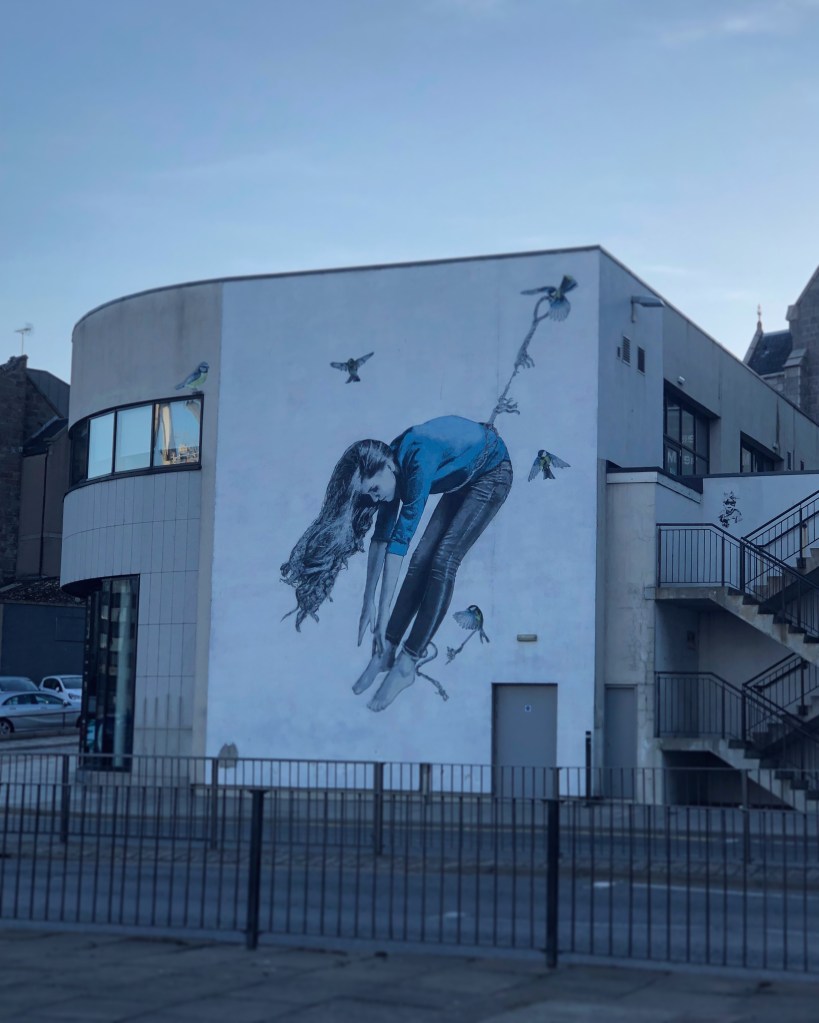


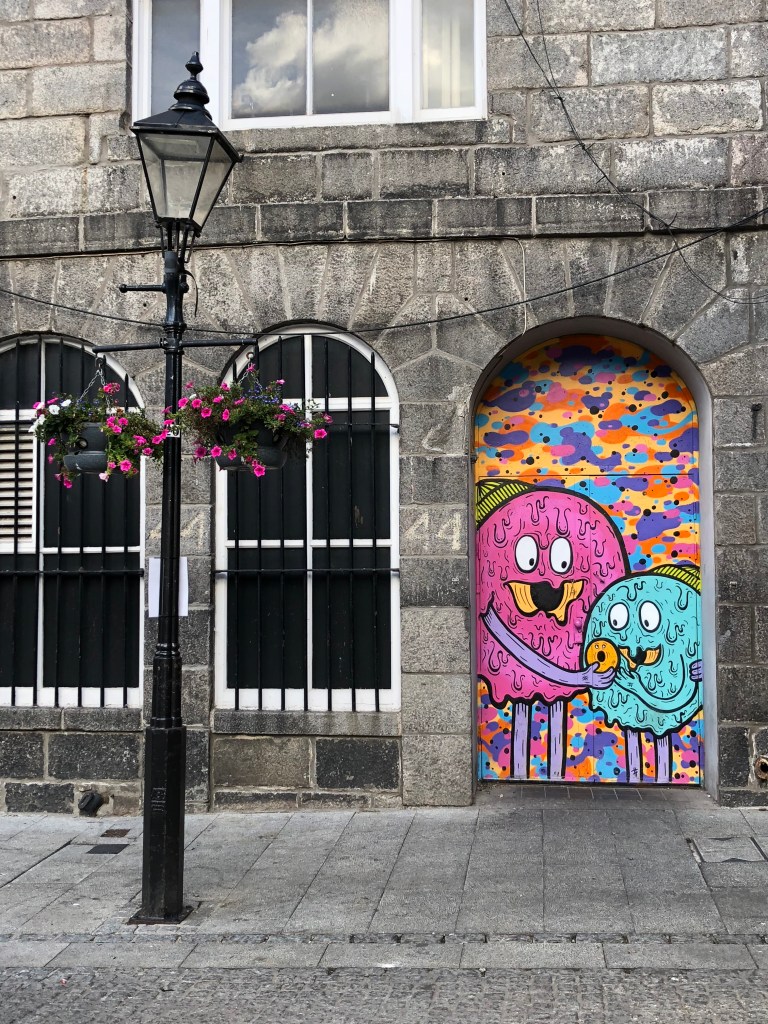


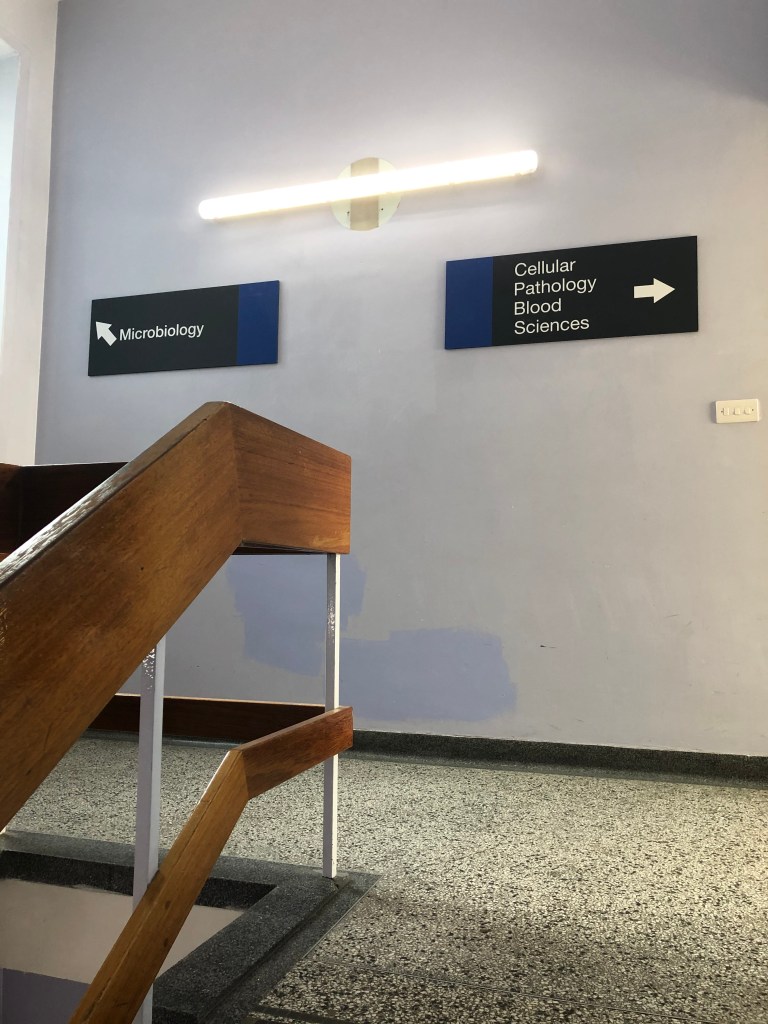






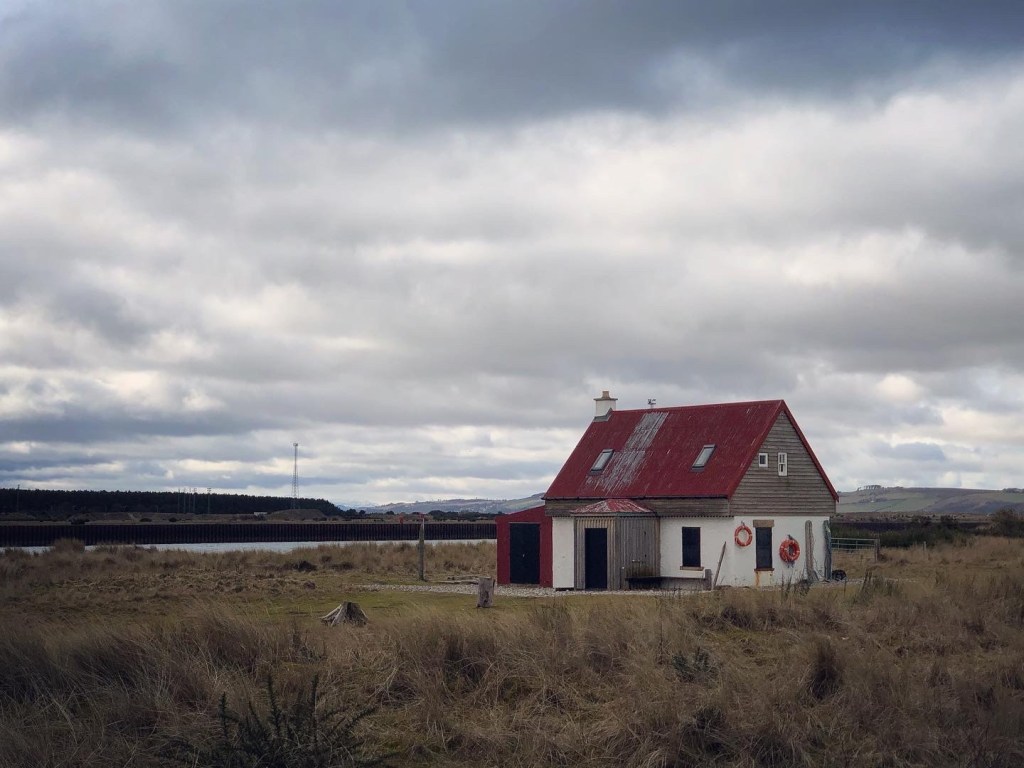
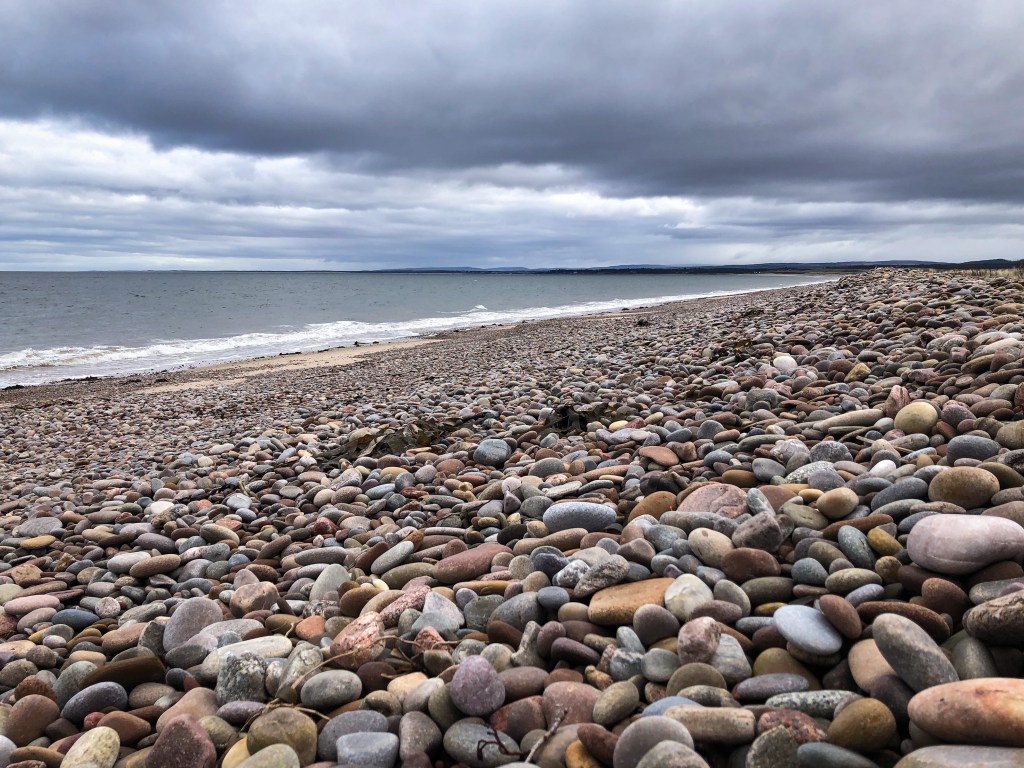


 In A Kingdom By The Sea